

Peugeot 308 and 508 AdBlue Faults: Warning Lights, Codes and How to Fix Them
If your Peugeot 308 or 508 diesel is showing an AdBlue warning, this guide explains what is happening, what the fault codes mean, and what your options are.
In This Guide
- Peugeot BlueHDi and the SCR system
- What does the AdBlue warning mean on a Peugeot?
- Common AdBlue fault codes on the 308 and 508
- Why does the AdBlue fault come on?
- Is the 308 different from the 508 and 3008?
- Can you reset it yourself?
- How AdBlue Specialist fixes Peugeot AdBlue faults
- Frequently asked questions
An AdBlue fault on a Peugeot 308 or 508 BlueHDi is most commonly caused by a failed NOx sensor, an AdBlue quality fault (P207F), or an SCR catalyst efficiency fault (P20EE). Topping up the tank clears a simple low-fluid warning, but a fault code requires a diagnostic scan and software reset. The car will show a start-limitation countdown if the fault is not addressed.
Peugeot BlueHDi and the SCR System
Peugeot’s BlueHDi technology, introduced across the PSA group from 2014, uses Selective Catalytic Reduction (SCR) to reduce NOx emissions from diesel engines. It works by dosing AdBlue — a urea solution — into the exhaust stream upstream of an SCR catalyst. The urea reacts with the NOx gases and converts them into nitrogen and water, significantly reducing harmful emissions.
The 308 BlueHDi and 508 BlueHDi use a 1.5 or 2.0-litre diesel engine paired with this SCR system. The AdBlue tank is separate from the fuel tank — typically around 17 litres on passenger car versions — and has its own filler cap, often in the boot or alongside the fuel filler. The system includes an AdBlue pump, a dosing injector, and NOx sensors that monitor SCR performance.
Peugeot’s system is shared with Citroen, Vauxhall (Opel), and DS models that use the same PSA platform, so fault patterns and codes are consistent across these brands.
What Does the AdBlue Warning Mean on a Peugeot?
The Peugeot 308 and 508 display AdBlue warnings through the instrument cluster and the central display. There are two distinct types of warning, and understanding the difference is important.
Low Fluid Warning
A blue warning light with a message such as “Top up AdBlue” or “AdBlue: 2000 km remaining” indicates that the tank is running low. This is a reminder, not a fault. Refilling the AdBlue tank will clear it. These warnings typically begin when around 2,500 km of range remains.
System Fault Warning
A more urgent message — such as “AdBlue: Fault. Engine start impossible in X km” — indicates a system fault rather than low fluid. Topping up the tank will not resolve this. It requires a diagnostic scan to identify the specific fault code and the correct repair approach.
If you have filled the AdBlue tank and the warning light or countdown is still showing, you have a system fault rather than an empty tank. The same fault-triggered no-start countdown applies to the 308 and 508: once the countdown reaches zero, the engine will not restart after being switched off.
Common AdBlue Fault Codes on the 308 and 508
| Code | Description | What It Means |
|---|---|---|
| P20EE | SCR NOx Catalyst Efficiency Below Threshold | The SCR catalyst is not reducing NOx to the required level. Could be sensor, catalyst, or dosing related. |
| P207F | Reductant Quality Performance | The AdBlue concentration is outside normal parameters. Fluid contamination or wrong product used. |
| P20E8 | Reductant Pressure Too Low | The dosing pump is not generating sufficient pressure. Pump failure or blockage in the dosing circuit. |
| P204F | Reductant System Performance | General SCR system performance fault. Often appears alongside P20EE. |
| P2200 | NOx Sensor Circuit (Upstream) | The upstream NOx sensor has failed or is sending incorrect data. |
| P2202 | NOx Sensor Circuit (Downstream) | The downstream NOx sensor has failed. Common on higher-mileage vehicles. |
On Peugeot vehicles, these codes are often displayed alongside Peugeot-specific sub-codes (such as P20EE:92 or P207F:1C) which give more detail about the exact fault type. A Peugeot-compatible scan tool is needed to read these extended codes accurately.

Why Does the AdBlue Fault Come On?
Peugeot 308 and 508 AdBlue faults are more common in passenger cars than some drivers expect, partly because these vehicles are often used on shorter journeys where the SCR system does not fully warm up. Here are the typical causes.
NOx Sensor Failure
The downstream NOx sensor is the most frequent failure point on the Peugeot BlueHDi platform. It monitors SCR efficiency and reports to the engine ECU. When it fails, the system cannot confirm that emissions are being reduced to legal levels, triggering a P20EE or P2202 code. Sensor failures are more common after 60,000 to 80,000 miles.
AdBlue Quality Fault (P207F)
The SCR system measures the electrical conductivity of the AdBlue fluid to verify its urea concentration. If the concentration falls outside the expected range — either too low because of dilution, or because the wrong fluid has been used — the system raises a P207F fault. This sometimes happens after a partial top-up with non-specification fluid or if water has entered the AdBlue tank.
AdBlue Pump or Injector Fault
The dosing pump on Peugeot models sits inside the AdBlue tank assembly and is responsible for pressurising the fluid for injection. A failed pump produces a P20E8 fault. Crystallised AdBlue residue around the injector tip can also restrict flow and generate dosing faults, particularly if the vehicle has been unused for an extended period.
SCR Catalyst Degradation
On older, higher-mileage Peugeot 308 and 508 models, the SCR catalyst itself can lose effectiveness. When it can no longer achieve the required NOx reduction, a P20EE code appears. The threshold for this becomes relevant on pre-2019 vehicles above 80,000–100,000 miles.
Short-Journey Use
Peugeot passenger cars used predominantly for short urban journeys may develop AdBlue-related issues because the exhaust temperature never reaches the level needed for effective SCR operation. This can lead to AdBlue crystallisation in the dosing circuit and increased wear on the dosing components.
Is the 308 Different from the 508 and 3008?
The 308, 508, and 3008 BlueHDi all share the same PSA SCR platform, so the fault codes, warning behaviour, and repair approach are essentially identical. The 1.5 BlueHDi used in the 308 and early 3008 has a slightly smaller AdBlue tank than the 2.0 BlueHDi in the 508, but the system architecture and known failure points are the same.
If you own a DS 7 Crossback, Vauxhall Grandland X BlueHDi, or Citroen C5 Aircross BlueHDi, you will likely encounter identical fault codes and the same repair process, as these models share the platform.
Can You Reset a Peugeot AdBlue Fault Yourself?
For a low-fluid warning, yes — add AdBlue through the blue filler cap, usually in the boot or alongside the fuel filler. Use only AdBlue meeting ISO 22241 standard. The warning will clear once the car detects a sufficient fluid level.
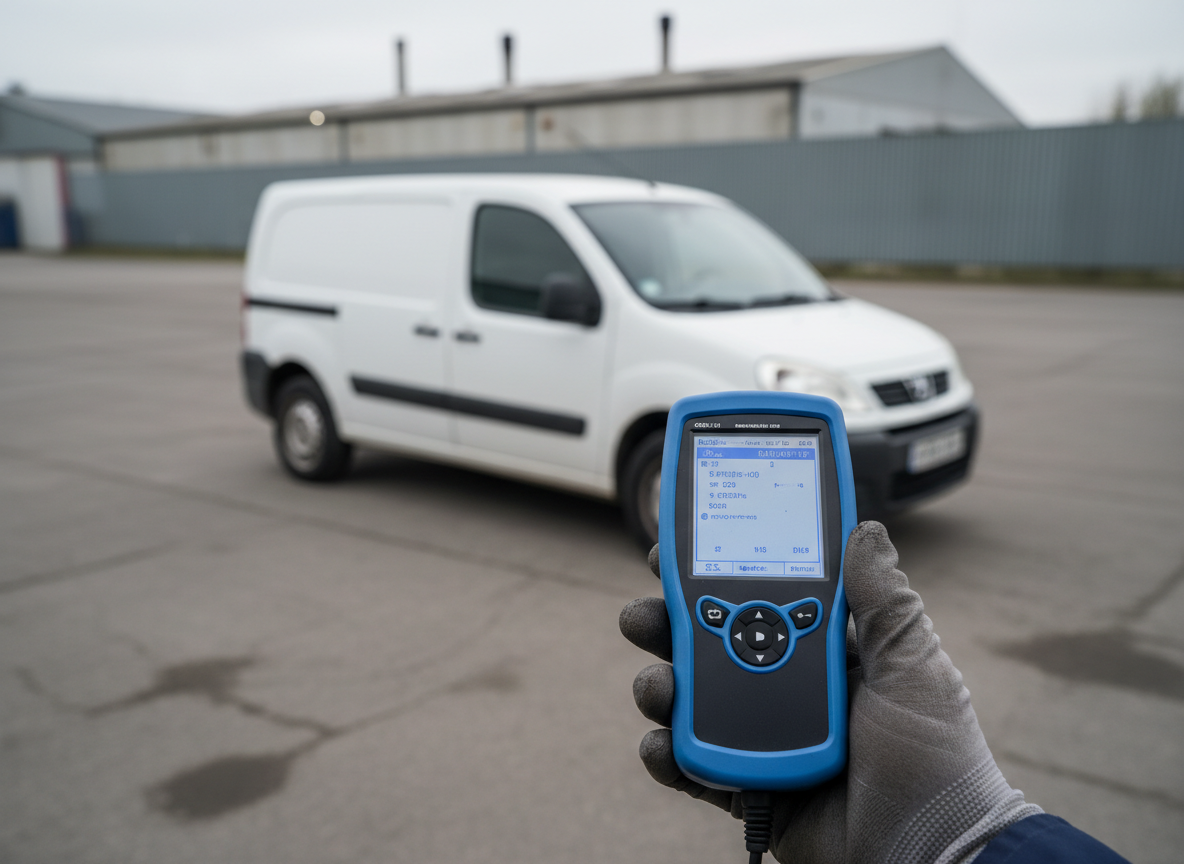
For a fault code, no. You will need a Peugeot-compatible diagnostic tool capable of reading and clearing SCR system faults. Tools such as Diagbox (Peugeot dealer software) or multi-brand professional tools with Peugeot coverage are needed. Generic OBD tools will read the code but cannot perform the manufacturer-level resets and adaptations needed to clear the fault and re-enable starts.
If the car has already refused to restart, the no-start lockout must be cleared through software after the underlying fault has been resolved. This is not possible without professional diagnostic tools.
How AdBlue Specialist Fixes Peugeot AdBlue Faults
AdBlue Specialist offers mobile diagnostics and fault resolution for Peugeot 308 and 508 BlueHDi models across Staffordshire, Cheshire East, and Staffordshire Moorlands. The mobile approach means you do not need to organise recovery or a workshop visit.
- Full diagnostic scan: Using Peugeot-compatible software, all active and stored codes are read and live SCR data is reviewed.
- Root cause identification: The fault is traced to its specific cause — whether sensor, pump, fluid quality, or catalyst-related.
- Software-based resolution: Where the fault can be resolved through software reset or adaptation, this is carried out at your location.
- Component advice: Where a physical component needs replacing, the correct options are explained before any work proceeds.
- No-start unlock: If the 308 or 508 is in a countdown lockout state, this is cleared once the fault is resolved.
Most Peugeot BlueHDi AdBlue faults can be diagnosed and software-resolved in one visit, typically within one to two hours.
Peugeot AdBlue Warning? We Come to You.
AdBlue Specialist provides same-day mobile diagnostics for Peugeot 308 and 508 BlueHDi across Staffordshire, Cheshire East, and Staffordshire Moorlands. No towing. No workshop wait.
Frequently Asked Questions
Will my Peugeot 308 stop while I am driving if the AdBlue runs out?
No. The vehicle will not cut out during a journey. The no-start system only activates when the ignition is switched off after the countdown reaches zero. You are safe to continue the current journey but should not switch the engine off until the fault is resolved.
How much AdBlue does a Peugeot 308 BlueHDi use?
Approximately 1 litre per 600 to 1,000 miles, depending on driving style and the engine variant. The 1.5 BlueHDi 130 typically has a tank of around 17 litres, giving a range of around 10,000 to 17,000 miles between refills under normal driving.
Can I use any AdBlue in a Peugeot 308?
You should only use AdBlue meeting the ISO 22241 standard. This ensures the correct urea concentration of 32.5%. Using tap water, sub-standard fluid, or the wrong additive can trigger a P207F quality fault and disable the SCR system.
Why does my 508 show an AdBlue fault even after I topped it up?
If the warning persists after a refill, the fault is system-related rather than caused by low fluid. A diagnostic scan is needed to identify the cause — typically P20EE, P207F, or P2202 — and clear it with professional software.
Does an AdBlue fault affect the car’s performance?
In most cases the car runs normally until the countdown lockout activates. Some fault conditions can cause limp mode — typically if a NOx-related fault is severe enough to limit engine output. If the car is running poorly alongside the AdBlue warning, get it scanned promptly.
If you’d prefer a permanent fix, our Peugeot AdBlue removal service eliminates the system entirely — ending the fault cycle for good.