
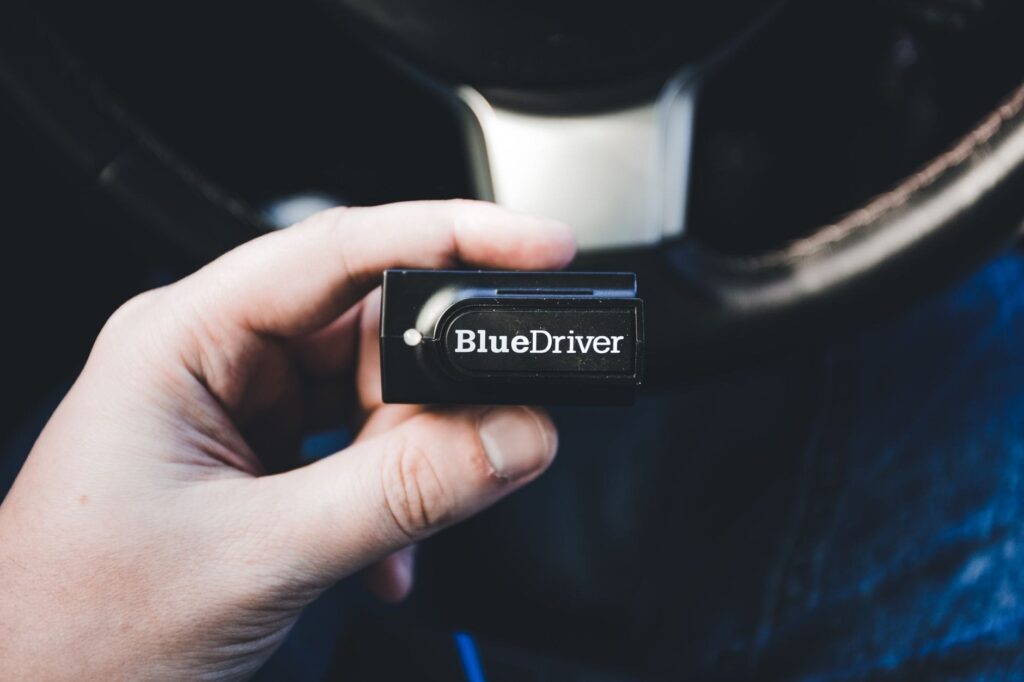
AdBlue Diagnostics — Scan Tools
Can an OBD2 Scanner Read AdBlue Faults? What Cheap Tools Miss
A £25 plug-in reader and a £3,000 dealer tool both connect to the same 16-pin socket, and that is where the similarity ends. Knowing whether an OBD2 scanner can read AdBlue faults properly is the difference between a repair and a very expensive guess.
Quick Answer
A basic OBD2 scanner will usually read the generic emissions codes an AdBlue fault sets, such as P20EE or P207F, and it can clear them. What it cannot do is show live SCR data, command the pump and injector, read the dosing and quality counters, or reset the no-start countdown — which is why the warning comes straight back.
In This Guide
Two Very Different Tools, One Socket
Every car and van sold in the UK since the mid-2000s has the same diagnostic socket under the dashboard. That standardisation is what makes a £25 Bluetooth dongle possible at all, and it is also what misleads people.
The socket is standard. The data behind it is not.
Generic OBD access was designed for one job: letting a tester confirm that a vehicle’s emissions monitoring is working and read the standard fault codes it has stored. It was never designed to diagnose a modern selective catalytic reduction system, because when the standard was written that system did not exist on light vehicles.
Manufacturer-level diagnostics sit in a different layer entirely. Same plug, different protocol, different permissions, and a great deal more of the vehicle exposed. That is the layer an AdBlue fault actually lives in.
What an OBD2 Scanner Reads on an AdBlue Fault
Plug a budget reader into a van with an AdBlue warning on the dash and you will usually get something. Typically:
- Stored generic powertrain codes. P20EE, P207F, P20E8, P204F and their neighbours are standardised codes, so most readers will display them.
- A one-line description. Often a very literal one — “SCR NOx catalyst efficiency below threshold” tells you what the ECU concluded, not what broke.
- Freeze-frame data, sometimes. Better readers capture the conditions at the moment the code set. This is genuinely useful.
- The ability to clear the code. Every reader can do this. Almost none of them should.
That is a real starting point, and we would rather a driver arrived knowing their van has a P207F than knowing only that “a light came on”. It narrows the job. It just does not finish it.
The Four Blind Spots
Here is where a generic tool stops, and why each gap matters on an AdBlue system specifically.
1. Live SCR data
Generic mode gives you a short list of standard live values — engine speed, coolant temperature, fuel trims. It does not give you AdBlue tank level as the ECU sees it, dosing rate, upstream and downstream NOx readings, urea line pressure, or heater circuit status. Diagnosing an SCR fault without those numbers is diagnosing it blind, because the whole system is a feedback loop between two NOx sensors and a metering pump.
2. Actuator tests
The single fastest way to settle whether an AdBlue pump is dead is to command it to run and watch the pressure build. A manufacturer-level tool can do that from the driver’s seat in under a minute. A generic reader cannot command anything at all — it is a listener, not a controller. That one limitation is the difference between confirming a pump fault and replacing a pump on a hunch.
3. The counters and the countdown
The no-start countdown is not a fault code. It is a separate stored value, and it does not clear because a code was erased. The same is true of the fluid-quality and dosing-fault counters that escalate the warning from a message to a distance limit to a restart restriction. These live in manufacturer-specific memory. A generic reader has no route to them.
4. Adaptations and coding
Fit a new NOx sensor and the ECU does not simply accept it. Learned values from the old sensor stay in memory until they are reset and the adaptation routine has run. Skip that and the fault often returns within days, with a brand-new part fitted. This is the step that turns a correct diagnosis into a failed repair, and no budget tool performs it.
The pattern we see most
Driver reads a code, buys the part the code names, fits it, clears the fault, and the light returns within a week. The code was accurate; the diagnosis was not. A fault code names the circuit or the outcome the ECU noticed, not the component that failed.
Why Clearing the Code Is the Expensive Mistake
Clearing an AdBlue fault with a cheap reader feels like progress. It is usually the opposite, for three reasons.
You destroy the evidence. Freeze-frame data and the fault’s occurrence history are the most useful things on the vehicle when a specialist arrives. Erasing them means the next diagnosis starts from nothing and takes longer, which costs you money rather than saving it.
The underlying counter keeps counting. The lamp going out does not mean the system considers itself healthy. Where a countdown has already started, it usually resumes from where it was.
It can cost you an MOT. The DVSA inspection manual is unambiguous on this: for diesels first used on or after 1 July 2008, an engine malfunction indicator lamp that is inoperative or indicating a malfunction is a Major defect, which is a failure. Clearing the code the morning of the test does not help if the fault re-sets during the drive to the station — and an AdBlue fault very often does.
If you want the fuller picture on what testers look at, our guide to whether an AdBlue fault can fail your MOT covers the emissions equipment checks alongside the lamp itself.

Capability Comparison
| Task | Budget OBD2 reader | Manufacturer-level tool |
|---|---|---|
| Read generic emissions codes | Yes | Yes |
| Read manufacturer-specific SCR codes | Rarely | Yes |
| Live NOx sensor and dosing data | No | Yes |
| Command the AdBlue pump or injector | No | Yes |
| Read fluid-quality and dosing counters | No | Yes |
| Reset the no-start countdown | No | Yes |
| Run sensor adaptation after a repair | No | Yes |
| Clear a stored code | Yes | Yes |
Read that last row next to the rest of the column. A budget tool can do the one thing on the list that you should not do, and none of the things that would actually fix the van.
The Access Rule Most Drivers Do Not Know About
There is a persistent assumption that only a franchised dealer can properly diagnose an emissions fault. That has not been true for years.
Under the type-approval rules that carried into UK law, manufacturers must give independent operators unrestricted, standardised and non-discriminatory access to vehicle OBD information, diagnostic and other equipment, and repair and maintenance information, including access to the remote diagnosis services their own dealers use.
In practice that means a properly equipped independent specialist can see the same SCR data, run the same routines and perform the same adaptations as the main dealer. You are choosing on price, convenience and how well the person knows the system — not on who is allowed to look.
When a Cheap Scanner Is Genuinely Enough
We are not against them. A basic reader earns its money in three situations.
- Working out how urgent this is. Knowing whether you are looking at a quality code or a pressure code tells you a lot about whether to drive it home.
- Telling the repairer something useful. “It set a P20E8 twice last week” is a far better opening than “the light is on”.
- Confirming a repair held. After the fault is fixed properly, a reader is a reasonable way to check nothing has re-set a fortnight later.
What it is not is a substitute for diagnosis. If the warning has escalated to a mileage countdown, if a code keeps returning after being cleared, or if you are about to buy a part on the strength of a code description, that is the point to stop reading and start testing. Our guide to the most common AdBlue fault codes and what each one really points at is a good sanity check before you spend anything.
And if the plan was to disconnect the battery instead, that does even less than the scanner does — we explain why a battery disconnect will not reset an AdBlue system in a separate guide.
Got a Code but Not an Answer?
AdBlue Specialist is a mobile service covering Stoke-on-Trent, Staffordshire and Cheshire East. We bring manufacturer-level diagnostics to your driveway or yard, read the live SCR data your reader cannot see, and test before we replace anything.
Frequently Asked Questions
Will a cheap OBD2 scanner reset my AdBlue warning light?
It will usually switch the lamp off by clearing the stored code, but that is not a reset. The no-start countdown and the system’s fault counters are held separately and a generic tool cannot reach them, so the warning normally returns once the SCR monitor next runs.
Can an OBD2 scanner tell me which AdBlue part has failed?
No. It tells you which code the ECU stored, which describes what the system noticed rather than what broke. A quality code, for example, is frequently a sensor or dosing problem rather than bad fluid. Confirming the cause needs live data and actuator testing.
Are more expensive scan tools worth it for a home mechanic?
For general engine work, often yes. For AdBlue specifically, the useful functions are the manufacturer-level ones — adaptations, counter resets and pump commands — and tools that do those properly across several makes cost more than most one-off repairs.
Should I clear the code before an MOT?
No. If the underlying fault is still present the lamp will illuminate again, and a malfunction indicator lamp indicating a malfunction is a Major defect. Clearing it also removes the diagnostic history that would have made the repair quicker.
Does an independent specialist have the same access as a main dealer?
For diagnostics, yes. Manufacturers are required to give independent operators standardised access to vehicle OBD information, diagnostic equipment and repair information on non-discriminatory terms, so a properly equipped independent can run the same routines.