
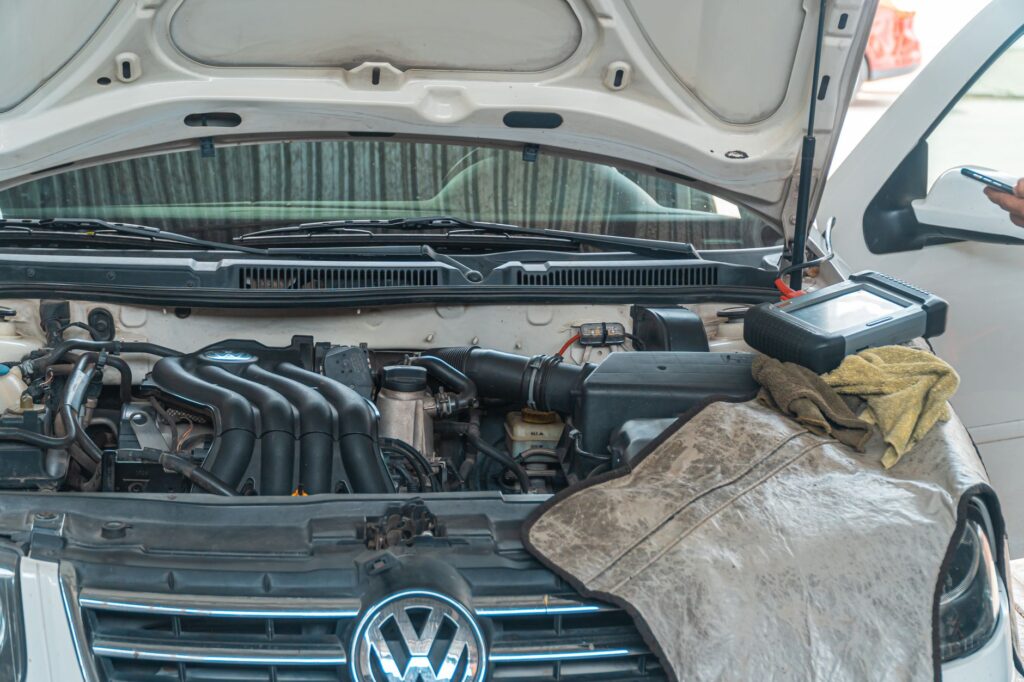
AdBlue Delete — Insurance
AdBlue Delete and Your Insurance: What You Have to Declare
Almost every discussion of AdBlue delete insurance gets stuck on whether the delete itself is legal. That is the wrong first question. Your insurer does not need the modification to be illegal to have a problem with it — it only needs to be something you did not tell them about.
Quick Answer
An AdBlue delete is a modification to the vehicle’s emissions system and should be declared to your insurer. If you are asked about modifications and do not disclose it, you risk a claim being reduced or refused and the policy being treated as if it had never been issued on those terms. Declaring it may raise the premium or lose you cover altogether — but that is a known cost, not a surprise after an accident.
In This Guide
Why an AdBlue Delete Counts as a Modification
Owners tend to file a delete alongside things like a service or a repair, because it was done to fix a fault and it changed nothing they can see. Insurers file it somewhere else entirely.
A delete does two things an underwriter cares about. It removes or disables emissions hardware the manufacturer fitted, and it involves altered engine management software. Software changes in particular are the category insurers are most alert to, because that is the same box that performance remapping sits in.
The fact that your motivation was repair rather than power makes no difference to the question you are asked. The proposal form does not say “have you modified this vehicle to make it faster”. It asks whether the vehicle has been modified from the manufacturer’s specification.
Here is the part that catches people. Most deletes are done to avoid the cost of a proper repair. So the owner has, in one transaction, both a modification to declare and a fault they never fixed. That combination is far harder to explain after a claim than it is to mention up front.
What the Law Actually Asks of You
For an ordinary private motor policy, the governing rule is the duty set out in the Consumer Insurance (Disclosure and Representations) Act 2012, which places a duty on the consumer to take reasonable care not to make a misrepresentation to the insurer before the contract is entered into or varied.
Two things follow from that wording, and both matter.
First, this is a duty about answering questions carefully, not a duty to volunteer your entire service history. If the insurer asks about modifications and you say no while knowing about a delete, that is a misrepresentation. It is not a grey area.
Second, the Act also covers variations. Telling your insurer at renewal is not optional tidying up — if the vehicle changes mid-policy, that is the moment the question arises again.
What the insurer can then do depends on how the misrepresentation is characterised. Where it is deliberate or reckless, the remedies available are severe. Where it is careless, the insurer is generally put back into the position it would have been in had it known — which can mean a proportionate reduction in what is paid out, or the policy being avoided if it would never have offered cover at all.
AdBlue Delete Insurance Claims: What Actually Happens
The realistic risk is not that someone spots a delete during a routine renewal. It is what happens after an incident.
On anything more than a small claim, the vehicle gets inspected. On a modern diesel, an engineer looking at a total loss or a significant repair estimate will have the vehicle interrogated, and altered emissions software is not subtle. Missing hardware is even less so.
The sequence we hear about from customers is consistent. The claim is not refused on the spot. It is delayed, then queried, then the engineer’s report comes back naming the modification, and the conversation moves from “when is my car being repaired” to “why was this not disclosed”.
It is worth being clear about scale here, because the internet is not. Most deletes do not end in a voided policy. But the ones that do, do so at the single worst moment — when the vehicle is written off, or when someone is injured.
The Third-Party Point Most People Miss
There is a common piece of reassurance on forums that runs: “they still have to pay the third party, so it doesn’t matter.”
The first half is broadly right and the second half is wrong.
UK road traffic law is built so that an innocent third party is not left uncompensated because of a dispute between a driver and their own insurer. But the same legislation lets the insurer come after the policyholder afterwards. Under section 151 of the Road Traffic Act 1988 an insurer who becomes liable to pay in those circumstances is entitled to recover that amount from the person insured.
So the third party is protected. You are not. On a serious injury claim, that is a life-changing sum to be personally exposed to over an undeclared emissions modification.
The MOT and Roadworthiness Knock-On
Insurance is not the only place this surfaces. The DVSA inspection manual treats emission control equipment fitted by the manufacturer that is missing, obviously modified or obviously defective as a Major defect — and the manual explicitly names selective catalytic reduction components among the visible parts a tester checks.
That matters to an insurer for a second reason. Policies generally require the vehicle to be roadworthy and legally usable. A car that cannot honestly pass an MOT is a weaker position to be arguing from, quite separately from the disclosure question. We cover what testers do and do not look at in our guide to passing an MOT after an AdBlue delete.
If You Have Already Had a Delete Done
Plenty of people reading this are past the decision point. There are three honest options and no fourth.
Declare it and take the outcome
Some insurers will cover it with a loading. Some will decline and you will need a specialist modified-vehicle broker. Either result is better than the alternative, and you will know where you stand before anything happens rather than after.
Put it back
The software can usually be returned to a standard file and removed hardware refitted. If the original fault is still there it will come straight back — which means this route almost always has to be paired with an actual repair. Our page on weighing a delete against a proper repair goes through how that decision usually falls.
Fix the fault that made you consider it
This is the one we would push hardest, and we are obviously not neutral about it. But the reason most people look at deleting is a quote for a part they were told had to be replaced, and in a meaningful share of cases the diagnosis was wrong or the failed component was cheaper than the one quoted. It is worth a second opinion before you accept a permanent modification to a vehicle you will eventually sell.
Selling the vehicle later
A delete does not disappear when the car changes hands. Describing a modified vehicle as standard in a private sale is its own problem, and a trade buyer will find it. Assume it is permanent unless you reverse it properly.
Been Quoted for a Delete? Get the Fault Diagnosed First
AdBlue Specialist is a mobile service covering Stoke-on-Trent, Staffordshire and Cheshire East. We read stored codes and live SCR data and tell you what has actually failed, so the decision you make is an informed one rather than a price-driven one.
Frequently Asked Questions
Do I have to tell my insurance about an AdBlue delete?
If you are asked whether the vehicle has been modified, yes. An AdBlue delete alters emissions hardware and engine management software, both of which fall squarely within what insurers mean by a modification.
Will an AdBlue delete void my insurance?
Not automatically. The risk arises from non-disclosure rather than from the modification itself. Declared and accepted, it is simply a rated risk; undeclared and discovered at claim stage, it gives the insurer grounds to reduce or refuse a payout.
How would an insurer find out about an AdBlue delete?
Usually through an engineer’s inspection after a claim. Altered emissions software and missing hardware show up readily on a diagnostic check, and inspections are routine on write-offs and larger repair estimates.
Does a delete affect third-party cover?
An innocent third party is protected by road traffic law, but that protection does not extend to you. Section 151 of the Road Traffic Act 1988 allows an insurer in that position to recover the amount it paid from the person insured.
Is repairing the AdBlue system instead cheaper than the insurance risk?
Almost always, once you price the risk properly. A repair is a known, one-off cost. An undeclared modification is an open-ended exposure that only presents itself at the worst possible moment.