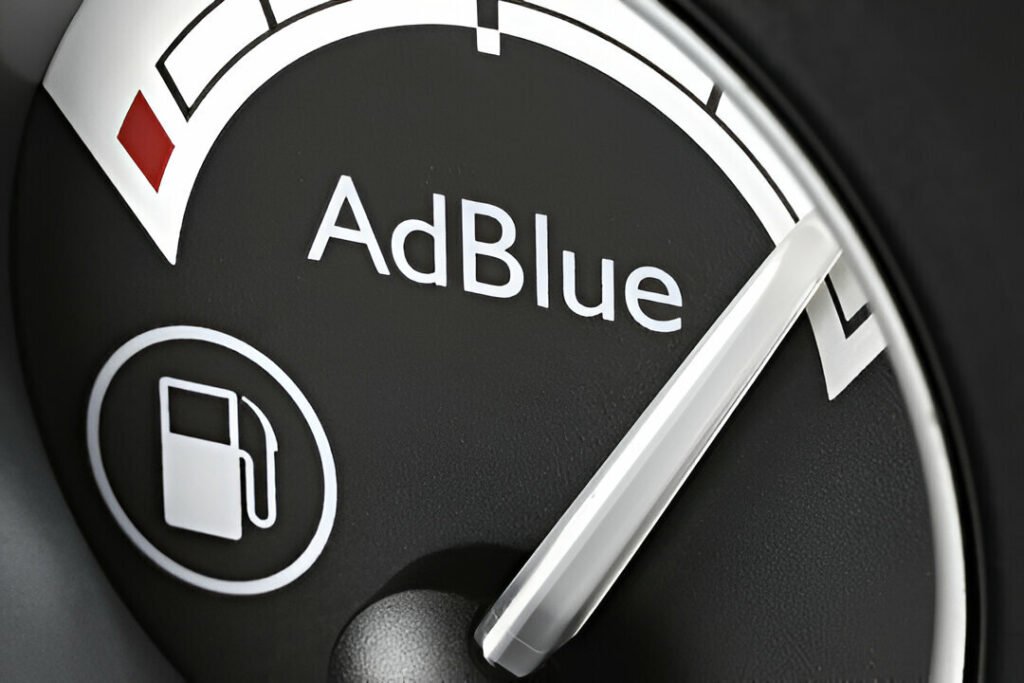
Crusty white crystals down the side of your van? That’s dried AdBlue, and it only takes one rushed top-up to make the mess. Worse, spilled fluid corrodes paint and fools the level sensor, lighting the dreaded countdown. Follow the five-minute method below to refill cleanly anywhere in Stoke-on-Trent—lay-by, yard or service station—and keep the “No start in 500 miles” warning off your dash.
What you need before you pop the cap
- Sealed ISO-22241 AdBlue – never use watered-down fluid from agricultural drums or opened containers.
- Nitrile gloves – AdBlue is non-toxic but stings cuts and irritates skin.
- Long-neck funnel or bottle with built-in spout – prevents splash-back and air pockets.
- Old towel or kitchen roll – for wipe-ups around the filler neck.
The RAC’s 2025 AdBlue guide reminds drivers to “use only sealed containers to avoid contamination that triggers SCR faults.” Contaminated AdBlue is the number-one cause of P20EE and P204F fault codes in modern diesel vans.
Pro tip: Buy AdBlue from petrol stations, Halfords or Euro Car Parts in Stoke-on-Trent. Avoid bulk drums from agricultural suppliers unless you’re filling a fleet – they’re often opened and exposed to moisture.
Step-by-step: the spill-proof method
- Park level. Sloping ground fools the float sensor. A flat supermarket bay in Hanley or a level lay-by on the A500 does the trick. If the van’s nose-down, the sensor will read low even after you’ve topped up.
- Kill the ignition. Pump priming stops and fluid won’t froth back when you open the cap.
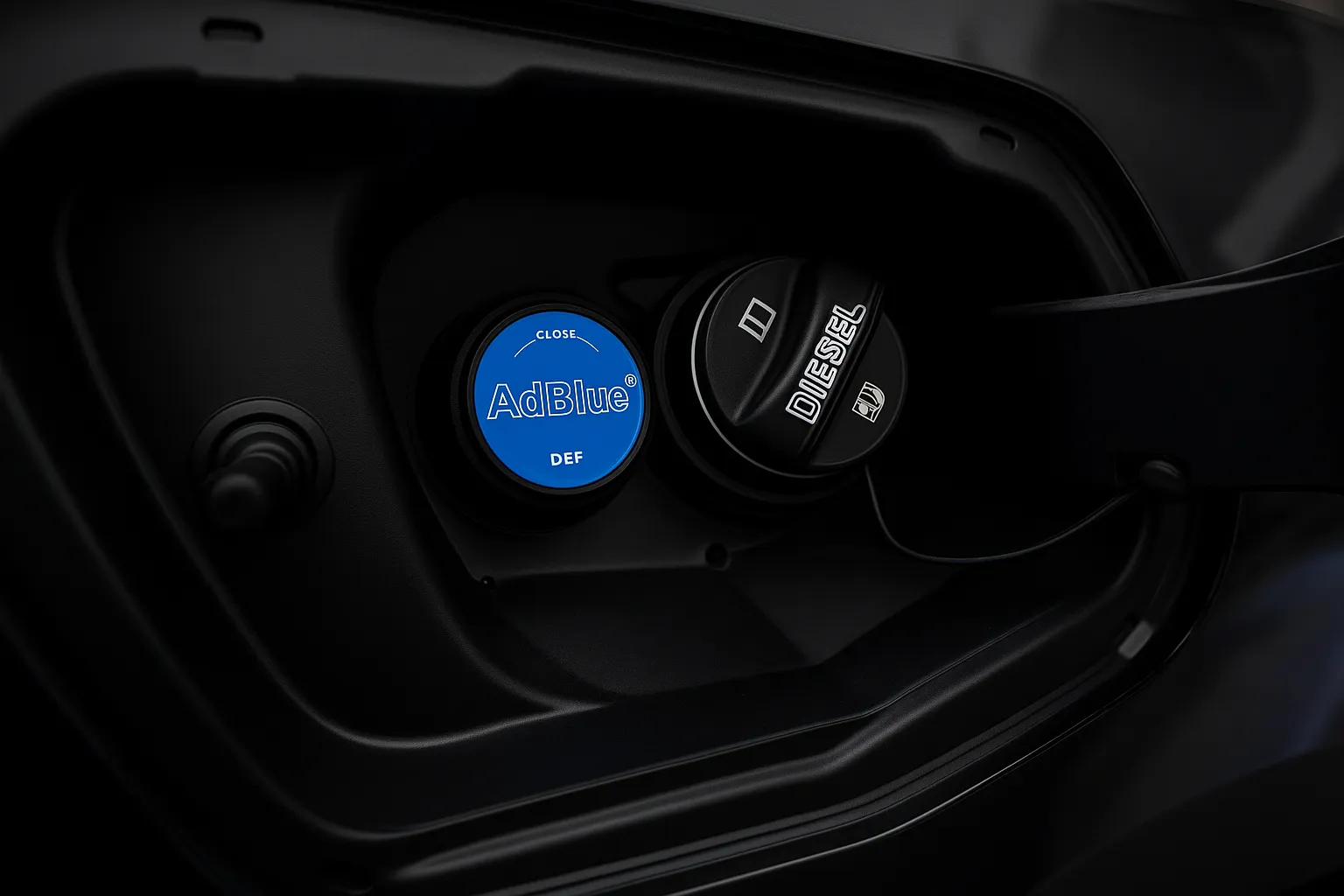
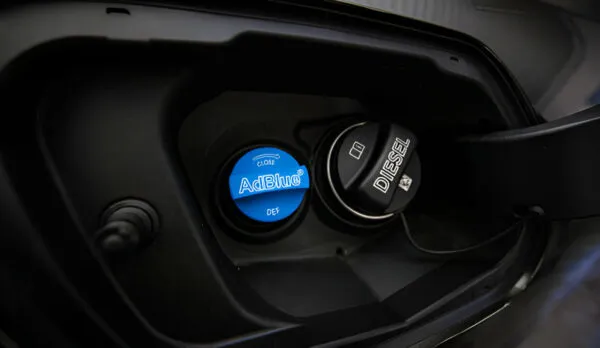
- Pop the blue cap. It’s usually next to the diesel filler on modern Sprinters, Crafters and Transits. Some Peugeot Boxers hide it under the bonnet or in the load bay – check your handbook if you’re not sure.
- Fit your funnel. Make sure the neck seals the rim tightly – no air gaps. A loose funnel causes splash-back and spills AdBlue onto paintwork.
- Slow pour two to three litres. The tank neck is narrow; a glugging bottle causes splash-back. Pour steadily and pause every litre to let the fluid drain past the anti-siphon flap.
- Wait ten seconds. Fluid drains past the anti-siphon flap and settles in the tank. Rushing this step leaves air pockets that confuse the level sensor.
- Wipe and reseal. Tighten the cap until it clicks – usually two or three turns. Wipe any residual AdBlue from the filler neck and cap threads now, before it evaporates and leaves white crystals.
- Key on and idle 30 seconds. The SCR module runs a level check. Many vans will bump the range back to 1,500+ miles instantly. If the light stays on, see the troubleshooting section below.
If the warning light stays on
Still flashing after a perfect top-up? You may have low pressure (P20E8), a heater fault (P13DF) or a contaminated tank (P204F). Dive deeper with our pump-vs-heater fault guide to diagnose which component has failed.
If fault codes return or the warning won’t clear after topping up, our AdBlue repair service in Stoke‑on‑Trent offers mobile diagnostics and on‑site fixes. We’ll flash the ECU, clear fault codes and test the system in 20 minutes at your depot, home or roadside.
For a complete breakdown of Mercedes Sprinter AdBlue faults, check our Sprinter fault-code guide (P20E8 to P204F).
“Spilled half a bottle outside a Fenton café and the light stayed red,” Dave the courier told me. We flushed the filler neck, added clean fluid and cleared P204F with Autotuner on-site—van back on the road before the bacon bap cooled. Moral of the story: wipe the neck before you pour, and always use sealed bottles.
When to call a mobile AdBlue specialist
If you’re stuck with an AdBlue warning and don’t want to risk a DIY top-up—or if the light won’t clear after refilling—our same‑day mobile AdBlue repair service covers Stoke‑on‑Trent, Newcastle‑under‑Lyme, Stafford, Crewe and surrounding areas.
We come to you—home, workplace, lay-by or roadside—and aim to diagnose and fix AdBlue faults on the same visit. No recovery truck, no waiting at a garage. Call 07503 134 362 or email info@adbluespecialist.co.uk to book.
AdBlue Top-Up FAQ
Can I top up AdBlue anytime?
Yes – you can top up AdBlue at any time, even if the tank isn’t empty. Most manufacturers recommend topping up when the warning light comes on or when the range drops below 1,500 miles. Keeping the tank above quarter-full helps avoid air in the system and prevents the “no start in 500 miles” countdown from appearing on your dash.
How much AdBlue should I add?
Most vans and cars take 10–20 litres of AdBlue in total. Check your handbook for the exact tank capacity. If you’re topping up to clear a warning light, add 5–10 litres – that’s usually enough to reset the countdown and bump your range back above 1,000 miles. Don’t overfill, as AdBlue expands slightly when warm and excess fluid will vent through the overflow pipe, leaving white crystals on the ground.
Where can I buy AdBlue near me?
You can buy AdBlue at most petrol stations (Shell, BP, Tesco, Asda), motorway services, and car parts shops like Halfords and Euro Car Parts in Stoke-on-Trent. For vans and HGVs, bulk AdBlue (20-litre drums or 1,000-litre IBCs) is available at truck stops and agricultural suppliers. Always check the bottle or drum is sealed and marked ISO 22241 to avoid contamination that can trigger P20EE and P204F fault codes.
What happens if I run out of AdBlue?
If you run out of AdBlue completely, most modern diesel vehicles (Euro 6 and newer) will not restart once the engine is turned off. The SCR system locks the ECU to prevent emissions breaches, and you’ll see a message like “AdBlue empty – engine start not possible” or “No start in 0 km” on the dash. You’ll need to refill the AdBlue tank with at least 5–10 litres and, in many cases, reset the system using diagnostics before the engine will start again. If you’re stranded in Stoke-on-Trent or surrounding areas, our same-day mobile service can refill, reset and get you moving again.
How often do I need to top up AdBlue?
Most vans need AdBlue every 6,000–10,000 miles, but short-trip Sprinters, Crafters and Transits can use more – especially in winter when the AdBlue heater runs constantly. Check your dash display for the remaining range and top up when it drops below 1,500 miles to avoid the countdown warning.
Can I overfill the AdBlue tank?
Yes, but it’s not a disaster. AdBlue tanks are vented, so excess fluid will drain through the overflow pipe and pool under the van. You’ll lose the extra fluid and it’ll leave white crystals on the ground, but it won’t damage the system. To avoid waste, stop pouring when the filler neck is about three-quarters full.
Does AdBlue brand matter?
No – any AdBlue marked ISO 22241 meets the same purity standard, whether it’s a premium brand from a petrol station or a cheap 10-litre bottle from Tesco. The key is to use sealed containers only. Opened drums, DIY mixes or “budget” fluid from unknown sources can contain water, dirt or the wrong concentration of urea, which triggers SCR efficiency faults (P20EE, P204F, P207F).
For code-by-code fixes on Mercedes vans, Peugeot Boxers and Ford Transits, check our top AdBlue fault codes guide or dive into our Sprinter fault-code bible (P20E8 to P204F).
Warning light still flashing after topping up?
We diagnose and fix AdBlue faults on-site across Stoke-on-Trent, Stafford, Crewe and Newcastle-under-Lyme.
📞 07503 134 362 | ✉ info@adbluespecialist.co.uk
Hours: Mon–Sun 09:00–20:00