
AdBlue Diagnostics — Intermittent Faults
Intermittent AdBlue Faults: Why the Warning Comes and Goes
An intermittent AdBlue fault is the most misread warning on a modern diesel. The light clears on the next start, the van drives normally, and the owner assumes it fixed itself. It did not — and the way the SCR system logs faults is exactly why.
Quick Answer
An intermittent AdBlue fault means the ECU saw a genuine problem and then stopped seeing it. The warning clearing does not mean the fault has gone; it means the condition that triggered it is not present right now. Wiring, connectors, earths and temperature-sensitive sensors are the usual causes, and the fault almost always returns worse.
In This Guide
Why an Intermittent AdBlue Fault Is Worse News Than a Permanent One
A warning light that stays on is at least honest. You know something is wrong, you get it looked at, and the fault is sitting there in the scan data waiting to be read.
An intermittent AdBlue fault does the opposite. It gives you a week of normal driving between warnings, which is long enough to convince yourself it was a glitch. Meanwhile the ECU is still counting. The SCR monitoring strategy escalates based on how often and how severely it sees the problem, not on whether the dashboard happens to be lit at the time.
That is why the first sign of trouble for a lot of drivers is not the light at all — it is a distance countdown appearing without warning, weeks after a flicker they had already forgotten about.

Cleared Is Not the Same as Fixed
Engine management systems store faults in stages. A condition seen once may be logged as pending. Seen again across a further drive cycle, it is confirmed and the warning lamp comes on. If the condition then stops occurring, many systems will extinguish the lamp after a set number of clean drive cycles — while keeping the fault in memory.
So the light going out tells you one thing only: the ECU has not seen the problem again recently. It says nothing about whether the cause has been repaired.
This is the single most useful thing to understand about an intermittent AdBlue fault, and it is why a scan matters even when the dashboard is clear. The stored history, and the freeze-frame data captured at the moment the fault triggered, is where the answer usually is.
Do not let the codes be cleared before diagnosis
Clearing fault codes on an intermittent AdBlue problem destroys the freeze-frame snapshot — the temperature, speed, load and sensor values recorded when the fault occurred. On an intermittent fault that snapshot is often the only real evidence available.
Wiring, Connectors and Earths: The Usual Culprits
Sensors and pumps fail in reasonably predictable ways. Wiring fails in ways that come and go, which is precisely the pattern an intermittent fault describes.
Chafed underbody loom
The AdBlue tank, its heater and its sensors sit under the vehicle, and the loom that serves them is routed along the floorpan. Where a clip has broken or a heat shield has moved, the loom rubs. The insulation wears through slowly, and the fault appears only when the vehicle flexes over a particular kind of bump.
Corroded connector pins
Connectors at the tank module and at the NOx sensors live in road spray and winter salt. Green corrosion on a pin raises resistance rather than breaking the circuit outright, so the signal is fine when everything is warm and dry and out of range when it is not.
Poor earth points
A high-resistance earth is the classic cause of a fault that moves around. Because several components share an earth path, a bad connection can produce apparently unrelated codes on different visits — which is how an intermittent AdBlue fault gets misdiagnosed as three separate failing sensors.
Water ingress
Water that has found its way into a connector or a loom section takes days to dry out. That gives you the frustrating pattern of a fault that appears reliably after heavy rain or a jet wash and vanishes by the middle of the week.
Faults That Only Appear in Certain Conditions
If you can spot a pattern in when the warning appears, you have already done a large part of the diagnostic work. A few of the more common ones:
- Cold mornings only. Points towards the AdBlue heater circuit, a temperature-sensitive connection, or a sensor that is drifting out of range when cold.
- After refuelling or topping up. Suggests the level or quality sensor, or fluid that is not what it should be.
- Only on rough roads or when loaded. Almost always mechanical movement in a loom, connector or mounting.
- After a wash or heavy rain. Water ingress, usually at a connector.
- Only on short journeys. The exhaust never gets hot enough for proper dosing, so efficiency-based faults trigger on cold, stop-start runs and clear on a long motorway drive.
That last pattern is worth flagging, because it is not really an electrical fault at all. A vehicle used only for short local trips can log genuine SCR efficiency complaints simply because the system never reaches operating temperature — and if that continues, deposits build up and the fault stops being intermittent.
How an Intermittent AdBlue Fault Is Actually Found
The honest answer is that you cannot find one with a code reader alone. Reading a code takes thirty seconds and tells you which circuit complained. Finding an intermittent fault takes three things beyond that.
Freeze-frame data. The snapshot stored at the moment the fault set — coolant temperature, road speed, engine load, exhaust temperature. Compare a few of those across repeat occurrences and the pattern usually declares itself.
Live data under load. Watching the dosing pressure, the AdBlue injector command and both NOx sensor signals while the system is actually working shows whether the system is doing what the ECU asked. A sensor that reads plausibly at idle can be badly wrong at temperature.
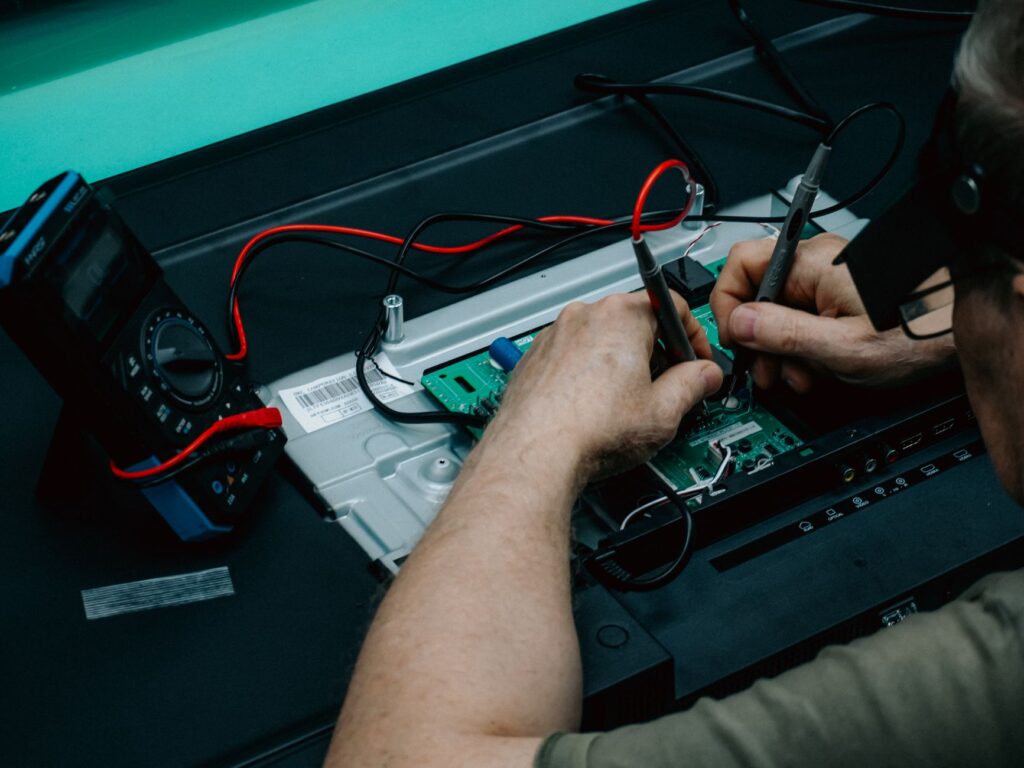
A physical wiggle test. Unglamorous and highly effective. Flexing the loom and connectors while live data is being watched will reproduce a chafe or a corroded pin that no amount of scanning will find.
If the fault turns out to be a genuine component failure rather than a wiring issue, our guides to NOx sensor failures behind AdBlue warnings and to an AdBlue warning light that will not go off cover what happens next.
What Not to Do With an Intermittent AdBlue Warning
Do not just disconnect the battery. It is the first thing most people try and it does not do what they hope. We have written separately about whether disconnecting the battery resets an AdBlue warning — the short version is that it clears volatile memory, not the SCR system’s stored counters.
Do not keep clearing the codes. Each clear throws away the freeze-frame evidence and resets the monitors, which means the next diagnosis starts from nothing.
Do not reach for an emulator or a delete. Beyond the fact that it hides a fault rather than fixing it, the DVSA inspection manual treats emission control equipment fitted by the manufacturer that is missing, obviously modified or obviously defective as a Major defect, which is an MOT failure. For a road-going vehicle, that is the end of the conversation.
Do not wait for it to become permanent. Intermittent faults very rarely improve. The cheapest moment to fix one is while it is still occasional, because at that point the damage is usually limited to the thing that is actually broken.
AdBlue Warning That Comes and Goes?
AdBlue Specialist is a mobile service covering Stoke-on-Trent, Staffordshire and Cheshire East. We read the stored history and freeze-frame data even when your dashboard is currently clear — which is exactly when an intermittent fault is easiest to catch cheaply.
Frequently Asked Questions
Why does my AdBlue light come on and then go off?
Because the ECU stopped seeing the condition that triggered it. Most systems extinguish the lamp after a number of clean drive cycles while keeping the fault stored in memory. The light going out is not evidence that anything has been repaired.
Can a loose or corroded connector cause an AdBlue fault?
Yes, and it is one of the most common causes of a fault that comes and goes. Corrosion raises resistance rather than breaking the circuit, so the signal drifts out of range only under certain temperature or vibration conditions.
Will disconnecting the battery clear an intermittent AdBlue warning?
It may switch the lamp off temporarily, but it does not clear the SCR system’s stored fault history or its counters, and it destroys nothing useful except your own diagnostic evidence. The warning comes back.
Is it safe to keep driving with an intermittent AdBlue warning?
In the short term the vehicle will usually drive normally. The risk is that the system escalates to a distance countdown and then a restart restriction, and that tends to happen without much notice. Get it read before it reaches that stage.
Can a garage find the fault if the light is off when I arrive?
Usually, yes. Stored codes and freeze-frame data survive the lamp going out, and a wiggle test with live data on screen can often reproduce a wiring fault on the spot. Just make sure nobody clears the codes first.