
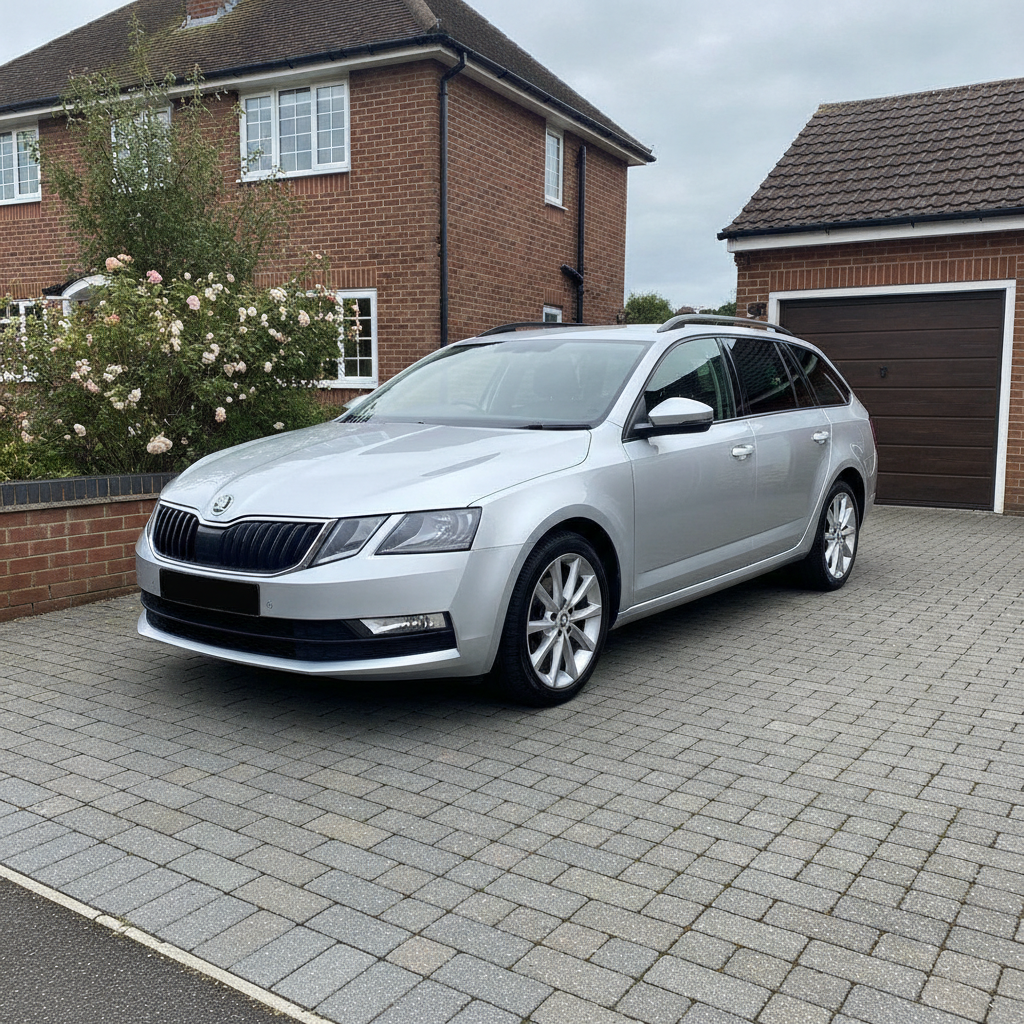
SEAT and Skoda Diesel AdBlue Faults: Warning Lights, Codes and What to Do
A complete guide to AdBlue faults on SEAT and Skoda TDI models — what the warning means, which fault codes appear, and how to resolve them without a main dealer visit.
In This Guide
- How AdBlue works on SEAT and Skoda TDI models
- Understanding the AdBlue warning on SEAT and Skoda
- Common fault codes and what they mean
- Root causes of SEAT and Skoda AdBlue faults
- Which models are affected?
- What you can fix yourself
- How AdBlue Specialist resolves these faults
- Frequently asked questions
SEAT and Skoda diesel AdBlue faults are usually triggered by a NOx sensor failure, AdBlue quality fault (P207F), or SCR efficiency fault (P20EE). Because these vehicles share the VW Group EA288 TDI platform, fault codes, warning behaviour, and repair procedures are identical to those found on VW and Audi TDI models. A professional diagnostic scan and software reset are needed to clear the fault and re-enable starts after a countdown lockout.
How AdBlue Works on SEAT and Skoda TDI Models
SEAT and Skoda diesel models from 2016 onwards — those conforming to Euro 6 emissions standards — use Selective Catalytic Reduction (SCR) to reduce NOx exhaust emissions. This system injects AdBlue, a solution of urea and deionised water, into the exhaust upstream of an SCR catalyst. The urea reacts with the nitrogen oxides and converts them into nitrogen and water, which are harmless.
The SEAT Leon, SEAT Ateca, SEAT Tarraco, and Skoda Octavia, Skoda Superb, Skoda Kodiaq, and Skoda Karoq diesel variants all use this system on their 1.6 TDI and 2.0 TDI engines. The EA288 engine family and its successor the EA288 Evo underpin the vast majority of these models, and the AdBlue SCR system is consistent across them.
The AdBlue tank is typically located in the spare wheel well or boot area, with a filler cap separate from the diesel filler. Tank size varies by model — typically 12–20 litres on passenger cars and SUVs — with a refill interval of around 10,000 to 15,000 miles depending on usage.
Understanding the AdBlue Warning on SEAT and Skoda
SEAT and Skoda use the standard Volkswagen Group warning progression for AdBlue faults. Understanding which type of warning you have saves time and avoids unnecessary repairs.
Low Fluid Warning (Not a Fault)
When the AdBlue tank drops below a set threshold — usually around 1,500 to 2,000 km range remaining — a yellow warning appears in the instrument cluster. The message typically reads “AdBlue: Please top up” or gives a specific distance remaining. The engine runs normally. Topping up the tank clears the warning.
System Fault Warning (Requires Diagnostics)
A more serious warning — often accompanied by “AdBlue: Engine will not start in X km” or “AdBlue fault. Visit workshop” — indicates a system fault. Topping up the tank will not clear it. The fault must be identified through a diagnostic scan and resolved before the countdown expires. If the countdown reaches zero and the engine is switched off, the vehicle will refuse to restart until the fault is cleared with software.
The no-start lockout on SEAT and Skoda models is controlled by the engine control unit. It is not a mechanical failure — the engine is physically capable of running — but software prevents restart as a compliance measure. Only a vehicle with the appropriate VW Group diagnostic software can unlock the start function once the countdown reaches zero.
Common Fault Codes on SEAT and Skoda
Because SEAT and Skoda share the VW Group platform and diagnostic architecture, the fault codes for AdBlue issues are the same OBD codes seen on Volkswagen and Audi TDI vehicles.
| Code | Name | Typical Cause |
|---|---|---|
| P20EE | SCR NOx Catalyst Efficiency Below Threshold | Failed NOx sensor, degraded SCR catalyst, dosing fault |
| P207F | Reductant Quality Performance | Contaminated or diluted AdBlue, wrong fluid added |
| P20E8 | Reductant Pressure Too Low | Failed AdBlue pump, blocked injector, frozen fluid in winter |
| P204F | Reductant System Performance | General SCR system efficiency below threshold |
| P2200 | NOx Sensor Circuit (Upstream) | Failed upstream NOx sensor |
| P2202 | NOx Sensor Circuit (Downstream) | Failed downstream NOx sensor — most common on higher-mileage models |
| P20BA | Reductant Heater Control Circuit | AdBlue heater fault, typically triggered in cold weather |
SEAT and Skoda often log these with manufacturer-specific sub-codes that provide more diagnostic detail. Reading and interpreting these sub-codes requires a VW Group-compatible diagnostic tool such as VCDS, OBD Eleven, or a dealer-equivalent system.
Root Causes of SEAT and Skoda AdBlue Faults
The EA288 TDI platform has well-documented AdBlue fault patterns. The following are the most common causes across SEAT and Skoda models.
Downstream NOx Sensor Failure
The downstream NOx sensor — positioned after the SCR catalyst in the exhaust — is statistically the most common component failure on high-mileage SEAT Leon and Skoda Octavia TDI models. It reports SCR efficiency to the engine control unit and typically becomes unreliable between 60,000 and 100,000 miles. A failed downstream sensor triggers a P20EE or P2202 code, and the system initiates a no-start countdown even when the SCR catalyst itself is working correctly.
This is important: replacing the SCR catalyst in response to a P20EE code is often unnecessary and expensive. The sensor is the more likely culprit and should be checked first.
AdBlue Quality Fault
The SCR system continuously monitors the electrical conductivity of the AdBlue fluid to verify that the urea concentration is correct. If it detects a deviation — because of diluted fluid, incorrect product, or fluid degradation over time — it logs a P207F code and disables dosing. This can happen if tap water has been added to top up the tank, or if a sub-standard product has been used.
AdBlue Pump Failure
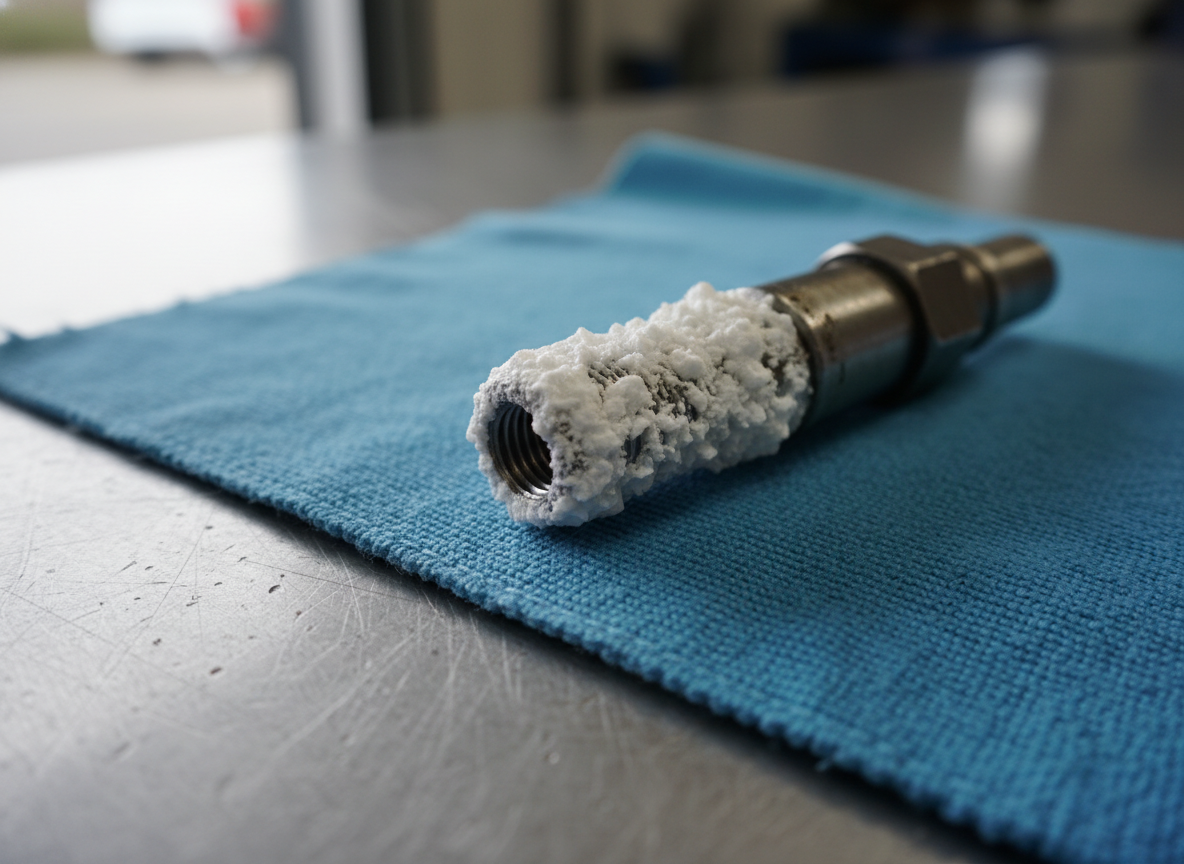
The AdBlue dosing pump on SEAT and Skoda models is typically located inside the AdBlue tank or adjacent to it. It pressurises the fluid for injection into the exhaust. If the pump fails — due to wear, crystallised AdBlue residue blocking the inlet, or electrical failure — dosing stops and a P20E8 code is logged. This is more common on models used for short journeys where the AdBlue system never fully warms up.
Frozen AdBlue in Winter
AdBlue freezes at -11 degrees C. Most SEAT and Skoda models include a heating element in the AdBlue tank to prevent this, but if the heater fails — generating a P20BA code — the fluid can freeze in cold weather. A frozen AdBlue system produces low-pressure faults and may prevent dosing until the vehicle has warmed up. In severe cases, frozen expansion can damage the pump or tank.
SCR Catalyst Degradation
On high-mileage examples approaching or exceeding 120,000 miles, the SCR catalyst itself can degrade to the point where it can no longer achieve the required NOx reduction threshold even with correct dosing. This produces a persistent P20EE fault that does not respond to sensor replacement or dosing corrections. Catalyst replacement is the most significant and expensive repair in this category.
Which SEAT and Skoda Models Are Affected?
AdBlue SCR is standard on all Euro 6 diesel variants of the following models:
- SEAT: Leon (Mk3 1.6/2.0 TDI from 2016), Ateca (all 2.0 TDI), Tarraco (2.0 TDI), Ibiza (1.6 TDI, some variants)
- Skoda: Octavia (Mk3/Mk4 1.6/2.0 TDI from 2016), Superb (all 2.0 TDI), Kodiaq (2.0 TDI), Karoq (2.0 TDI), Scala (1.6 TDI)
Pre-2016 diesel models using older emissions standards do not include AdBlue. If your SEAT or Skoda was registered before late 2015 and uses a 2.0 TDI, check the registration date carefully — the introduction of Euro 6 varied by model and variant.
What You Can Fix Yourself
If the warning is a simple low-fluid message, you can top up the AdBlue tank yourself. The blue filler cap is typically marked with a water droplet symbol and the letters “AdBlue”. Use only fluid meeting the ISO 22241 standard — available from petrol stations, motor factors, and online suppliers. Do not overfill, and do not use tap water or other substitutes.
If the tank was completely empty when you refilled it, the warning may persist briefly while the system re-checks the fluid quality. If it does not clear within a few miles, a fault code is likely stored alongside the low-fluid condition.
For fault codes, a consumer-level OBD tool will detect the code, but will not be able to clear it or perform the manufacturer-level adaptations needed. Professional software is required for anything beyond reading the code.
How AdBlue Specialist Resolves SEAT and Skoda AdBlue Faults
AdBlue Specialist provides mobile diagnostics and software-based fault resolution for SEAT and Skoda TDI models across Staffordshire, Cheshire East, and Staffordshire Moorlands. The service is carried out at your location — home, workplace, or roadside — without the need for recovery or a main dealer appointment.
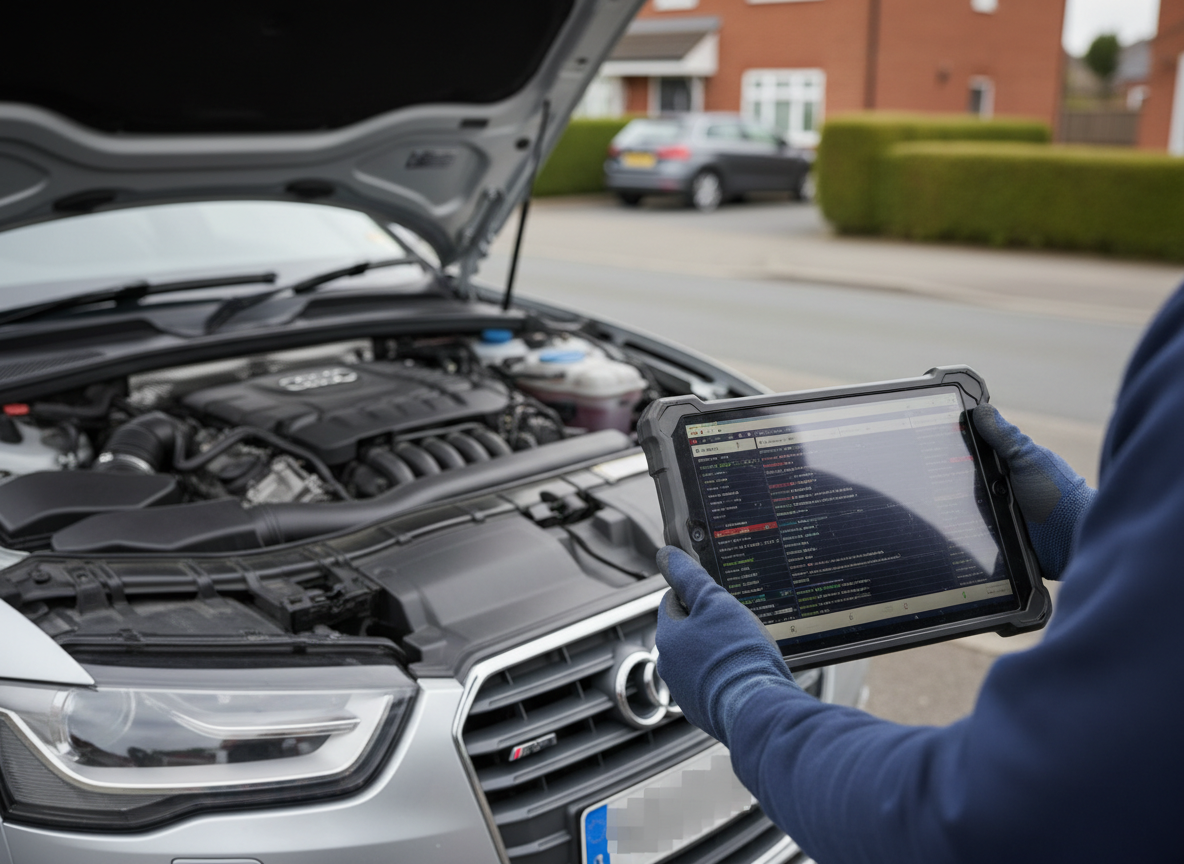
- VW Group diagnostic scan: All active and stored fault codes are read using compatible software. Live data — including NOx sensor readings, dosing pressures, and SCR efficiency figures — is reviewed to identify the root cause.
- Component or calibration fault identification: The correct cause is confirmed before any repair recommendation is made. A P20EE code, for example, may require sensor replacement rather than catalyst replacement.
- Software reset and adaptation: Where the fault is resolved through sensor replacement or fluid quality correction, the relevant ECU adaptations are reset so the system learns the corrected baseline values.
- No-start unlock: If the vehicle is already in a countdown lockout state, the start restriction is cleared once the fault is resolved.
- Post-repair verification: A final scan confirms no active codes and the SCR system is operating within specification.
For SEAT and Skoda owners who are out of warranty and want to avoid main dealer pricing, this mobile approach offers a direct, technically sound alternative.
SEAT or Skoda AdBlue Fault? Get It Fixed Today.
AdBlue Specialist provides fast mobile diagnostics and software fault resolution for SEAT and Skoda TDI models across Staffordshire, Cheshire East, and Staffordshire Moorlands. Same-day service available.
Frequently Asked Questions
My Skoda Octavia TDI says the engine will not start in 1,500 km. Can I keep driving?
Yes, but you need to resolve the fault before the countdown reaches zero. Once it does, the engine will not restart after being switched off. Top up the AdBlue tank first to eliminate low fluid as a cause. If the countdown continues, book a diagnostic scan promptly.
Is a SEAT or Skoda AdBlue fault expensive to fix?
It depends on the cause. A software reset after a quality fault is significantly less expensive than a NOx sensor or catalyst replacement. Most AdBlue faults on SEAT and Skoda models can be resolved at a fraction of main dealer pricing through mobile diagnostics and software-based repair.
Can I use VW-compatible diagnostic tools on a SEAT or Skoda?
Yes. SEAT and Skoda vehicles use the same VAG (Volkswagen Audi Group) diagnostic architecture. Tools such as VCDS, OBD Eleven, and dealer-level systems all work on SEAT and Skoda alongside VW and Audi. The fault codes and adaptation procedures are identical.
My SEAT Leon shows P20EE. Does that mean the SCR catalyst has failed?
Not necessarily. P20EE means the SCR system is not reducing NOx to the required efficiency — but the most common cause is a failed downstream NOx sensor, not a degraded catalyst. The sensor should be checked and tested before assuming the catalyst needs replacing.
Will my Skoda AdBlue fault show up on a standard MOT check?
An active AdBlue fault causing elevated NOx emissions could result in an MOT failure if the emissions test is affected. An unresolved AdBlue system fault should be addressed before presenting the vehicle for test.