

Buying Advice — Used Diesels & SCR Systems
Buying a Used Van with an AdBlue Fault: What to Check Before You Pay
A used van AdBlue fault is the easiest expensive problem to miss on a test drive, because the van that starts, drives and pulls perfectly today can still be counting down to a no-start. This is the ten-minute inspection we would do ourselves before handing over money for a diesel van or car with an SCR system.
Quick Answer
Before buying a used van, start it from cold and watch the full dashboard sequence, read the AdBlue message wording rather than the warning light alone, check the MOT history for emissions-related failures, look under the tank and injector for white crystal staining, and have the stored fault codes read. A live AdBlue fault is a price negotiation, not a deal-breaker — an undisclosed delete usually is.
Contents
- Why the Cheap Diesel With a Warning Light Is Rarely a Bargain
- What the MOT History Tells You — and What It Hides
- The Ten-Minute Check Before You Hand Over Money
- How to Spot a Van That Has Already Been Deleted or Emulated
- Which Faults Are Cheap to Fix and Which Are Not
- Negotiating, or Walking Away
- FAQs
Why the Cheap Diesel With a Warning Light Is Rarely a Bargain
Every week we get called to a van somebody bought last month. It was priced a few hundred pounds under the market, the seller said the AdBlue light “just needs a top-up”, and the buyer believed it because the van drove home fine.
That is the trap. An SCR system does not fail like a clutch. It warns, then it restricts, then it refuses to restart. A van with a live fault can behave normally for weeks while a countdown runs quietly in the background, and the person selling it usually knows exactly where in that sequence it sits.
So the question at the point of sale is never “does it drive?”. It is “what is the system telling me, and how far along is it?”.
What the MOT History Tells You — and What It Hides
The free MOT history service on GOV.UK is the single most useful five minutes of research you can do before viewing. You need only the registration. Read the advisories as carefully as the failures.
What it will show you: a failure on emissions is recorded. Under the DVSA inspection manual, an engine malfunction indicator lamp that is inoperative or indicating a malfunction is a Major defect, and so is manufacturer-fitted emission control equipment that is missing, obviously modified or obviously defective. Repeated emissions-related failures on the same vehicle are a pattern worth taking seriously.
The gap in the record
What it will not show you is an AdBlue leak. The same manual states that a leak of fluid required for Selective Catalytic Reduction is not a reason for failure. A van can have been weeping AdBlue from a tank seam or an injector seal for a year and pass every test in the file.
Treat a clean MOT history as evidence of nothing worse than a warning light being cleared before the test. It is a filter, not a verdict.
The Ten-Minute Check Before You Hand Over Money
Ask the seller not to run the engine before you arrive. Almost everything useful happens in the first sixty seconds of a genuinely cold start, and a warm van hides it.
1. Watch the whole dashboard sequence
Turn the ignition on and watch every lamp illuminate and then extinguish. An AdBlue or emissions lamp that never lights at all is as suspicious as one that stays on — a bulb or a message that has been disabled tells you somebody has been in the instrument cluster.
2. Read the message, not just the light
The wording matters more than the symbol. A range message counting down in miles or kilometres is a different situation from a fault message referring to the emissions system. The first may only need correct fluid and a completed drive cycle; the second means something has already been logged. Our guide to what solid, flashing and countdown AdBlue lights actually mean covers how manufacturers phrase each stage.
3. Look at the fluid itself
Open the AdBlue filler. The fluid should be clear and colourless with no sediment and no smell of anything other than faint ammonia. Anything cloudy, discoloured or oily suggests the tank has been filled with the wrong thing, which is a far bigger job than a top-up.
4. Get underneath with a torch
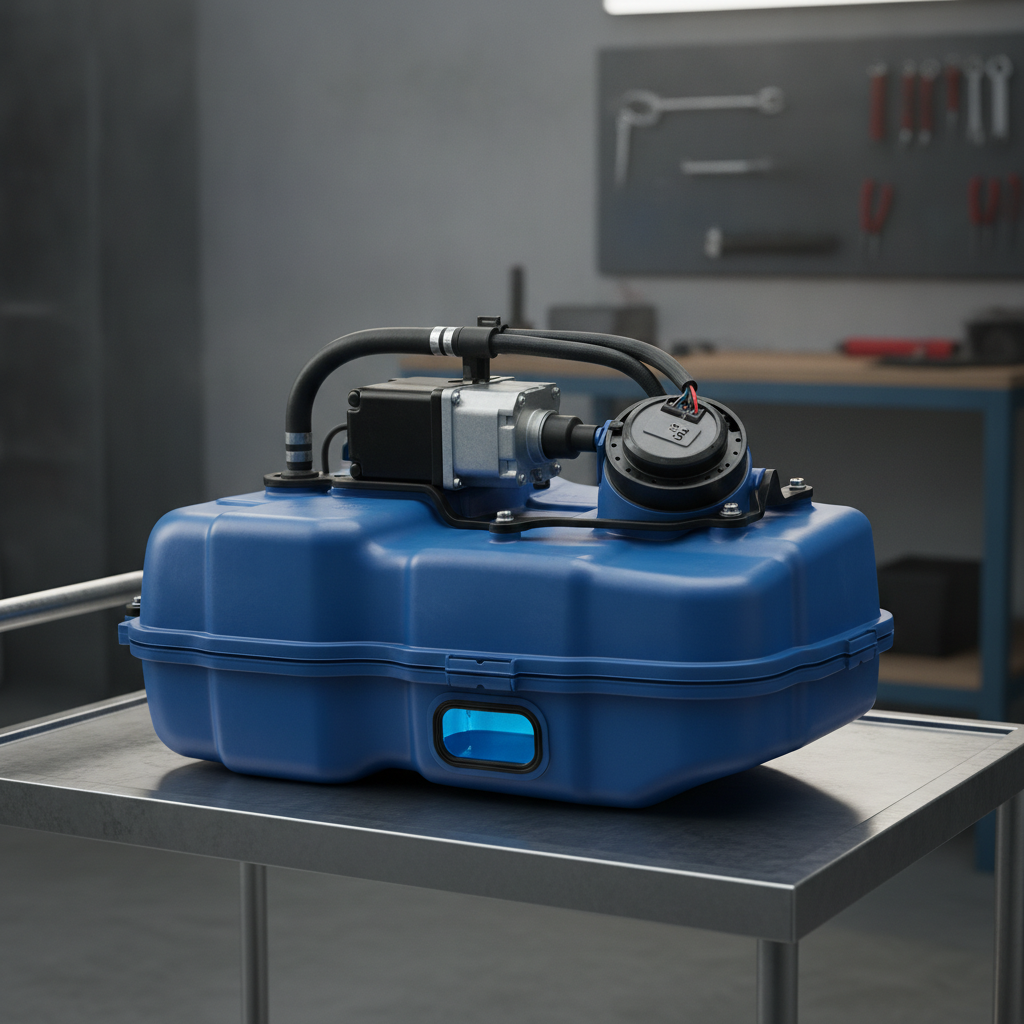
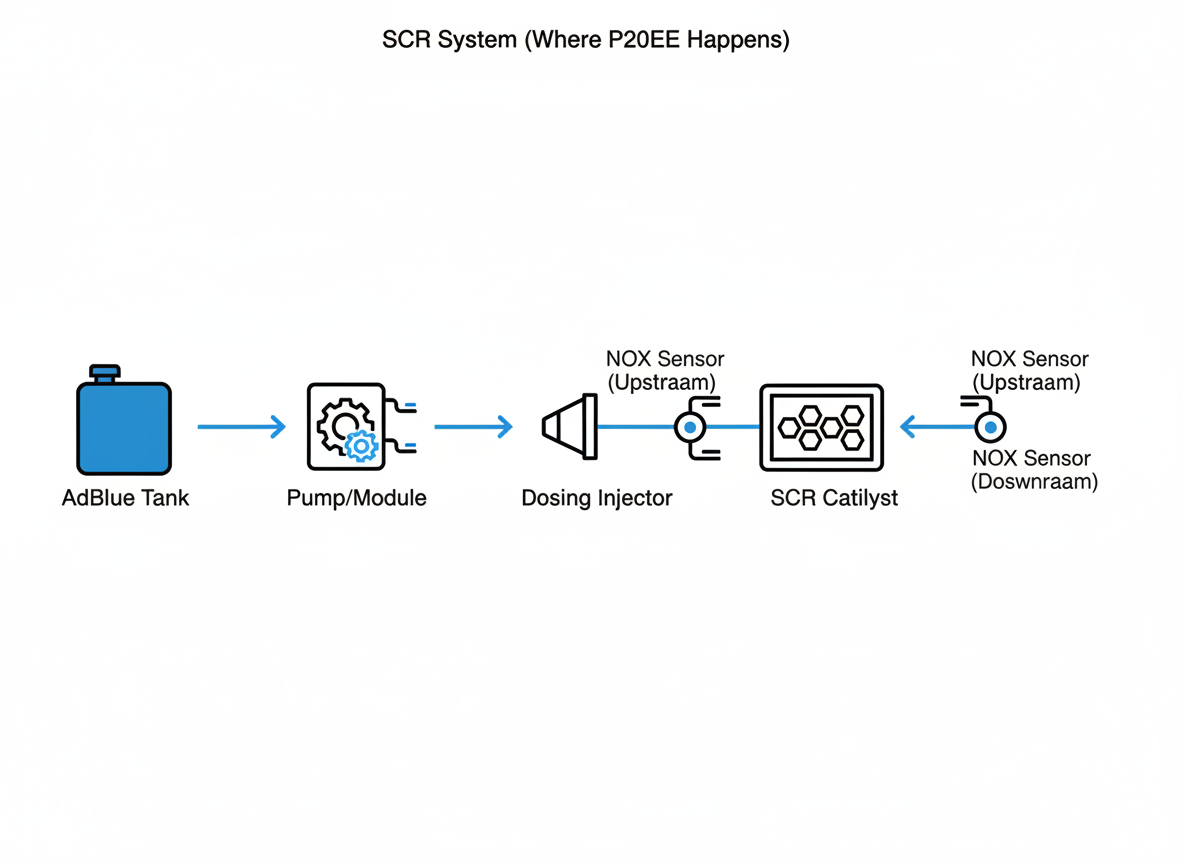
You are looking for white or pale-yellow crystalline deposits around the tank, the dosing line and the injector into the exhaust. Those crystals are dried AdBlue and they mark the spot where it is escaping. It is the clearest physical evidence of a fault that has been ongoing, and we cover why it forms in our guide to AdBlue crystallisation and the damage it does to the SCR system.
5. Have the codes read
A basic code reader is enough to see whether emissions faults are stored, including ones that have been cleared recently but not fully driven out. If the seller refuses a scan on a vehicle worth thousands, that refusal is your answer.
The cleared-code trick
Clearing fault codes shortly before a viewing is common and easy. It resets the warning light but not the underlying condition, and monitors that have not completed will often show as “not ready” on a scan tool. A van with a suspiciously clean scan and incomplete readiness monitors has almost certainly been cleared in the last few miles.
How to Spot a Van That Has Already Been Deleted or Emulated
This is the risk most private buyers never think about. A previous owner facing a large repair bill may have had the SCR system disabled in software, or had an emulator fitted, rather than repaired.
Signs worth looking for: an AdBlue filler that is dusty and clearly unused on a van with high mileage; no AdBlue purchases in the service history of a vehicle that should consume it steadily; a small unexplained module wired near the tank or the NOx sensor loom; and a dashboard with no AdBlue range display at all where the model should have one.
Why it matters to you as the buyer: on a road-going vehicle, emission control equipment that has been modified is a Major defect at MOT in its own right, and you inherit that. You also inherit the cost of putting the system back to standard if you ever want to sell the van on honestly.
Removal is a legitimate route for genuinely off-road and export vehicles, and we do that work. Buying a road van that has quietly had it done to hide a fault is a different thing entirely.
Which Faults Are Cheap to Fix and Which Are Not
Not every AdBlue fault is a disaster, and treating them all as one is how buyers overpay or walk away from a good van. In rough order, cheapest first:
- Wrong or degraded fluid — often resolved with a drain, correct refill and a completed drive cycle.
- Level or quality sensor — a component fault where the system is healthy but the reading is not.
- Heater or line fault — common on vans that sit outside through winter.
- NOx sensor — a genuine parts cost, and frequently misdiagnosed as something dearer.
- Pump or injector — more labour, and often the end point of long-running crystallisation.
- Tank replacement — the one that turns a bargain into a mistake.
We have written up realistic figures in our breakdown of what AdBlue repairs actually cost in 2026. Take a figure from the top of that range into the negotiation, not the bottom, because you cannot yet see which fault you are buying.
Negotiating, or Walking Away
A live AdBlue fault on an otherwise sound van is a negotiating position. You know roughly what the worst case costs and the seller knows the van is hard to sell with a light on.
Walk away when: the seller will not allow a cold start, the fluid looks wrong, there is heavy crystallisation around the injector, or you find evidence of a delete on a vehicle being sold for road use. Those are not price adjustments — the first three point at a system that has been failing for a long time, and the last one is somebody else’s decision that you would be taking on.
If you have already bought it, the sequence that saves money is diagnose first, buy parts second. Guessing at an AdBlue fault is expensive, which is exactly why our mobile AdBlue repair work starts with a diagnosis on site before anything is ordered.
Thinking of Buying? Get It Checked Where It Stands
AdBlue Specialist is a mobile AdBlue and SCR service covering Stoke-on-Trent, Newcastle-under-Lyme, Crewe, Congleton, Nantwich, Stafford, Sandbach and the surrounding area. We can read the system at the seller’s address or at yours, and tell you honestly whether it is a top-up, a sensor or a tank. Call 07503 134 362.
FAQs
Can you drive a used van with the AdBlue light on?
Usually yes, at first. Most systems give a warning stage, then a range countdown, then a restriction on restarting once the countdown expires. The safe assumption when buying is that you are somewhere in that sequence and do not know where.
Does an AdBlue fault fail an MOT?
An engine malfunction indicator lamp indicating a malfunction is a Major defect, so a van presented with an emissions warning lit will normally fail. A leak of AdBlue itself is not listed as a reason for failure, which is why a leaking system can pass.
How do I know if a used van has had an AdBlue delete?
Look for an unused filler on a high-mileage van, no AdBlue in the service history, a missing range display, or extra wiring near the tank or NOx sensors. A diagnostic scan and a look at live SCR data will confirm whether the system is actually dosing.
Is a van with an AdBlue fault worth buying?
It can be, if the rest of the vehicle is right and the price reflects the worst realistic repair rather than the cheapest one. What makes a van not worth buying is a fault that has clearly been running for a long time, or one the seller has tried to conceal.