
Where to Buy AdBlue: Pump, Bottle or Drum — and What the Label Must Say
“AdBlue” is not a generic name. It is a registered trademark, and the company that owns it will only license it to producers whose fluid passes a quality audit. That single fact answers most of the questions drivers ask about where to buy AdBlue — and it tells you exactly what to look for on the container.
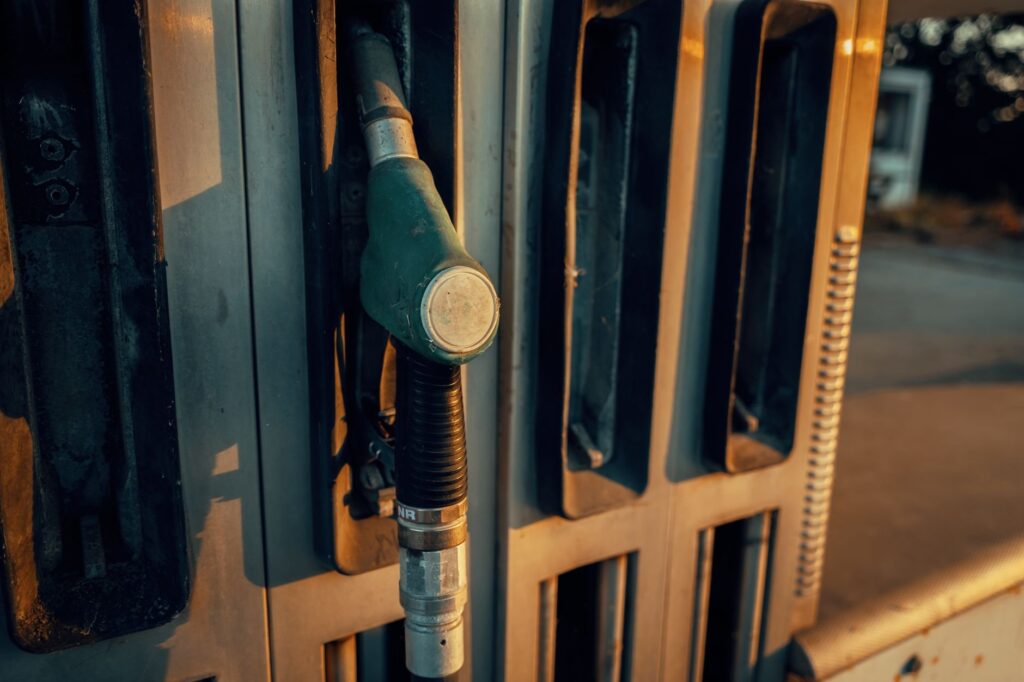
You can buy AdBlue at most fuel stations, motor factors, supermarkets and online, in bottles, drums or from a forecourt pump. The brand matters far less than three checks: the label says AdBlue or ISO 22241, the seal is intact, and the container is clean plastic. Car-specific pumps are usually the cheapest per litre; small bottles cost the most.
IN THIS GUIDE
AdBlue, DEF, AUS 32: What the Names Mean
Walk into a motor factor and you will see the same fluid sold under several names. They are all the same thing: a solution of 32.5 per cent urea in de-ionised water.
- AUS 32 — “aqueous urea solution, 32 per cent”, the technical name used in the ISO standard.
- DEF — “diesel exhaust fluid”, the term used mainly in North America.
- ARLA 32 — another regional name for the same fluid.
- AdBlue® — the trademark used across Europe and the UK.
The trademark is the useful part. According to the German automotive industry association VDA, which owns it, AdBlue® must meet the ISO 22241 standards, and producers must pass a VDA quality audit of their production plant and distribution system before they can be licensed to use the name. The VDA publishes its list of licensees.
That means a container that genuinely says AdBlue® has a licensed, audited supply chain behind it. A container that says “AUS 32” or “DEF” and quotes ISO 22241 may be perfectly good too; it simply is not using the licensed name.
What the Label Must Say
Before you pay, look for these on the container. If any are missing, put it back.
| Check | What good looks like | Why it matters |
|---|---|---|
| Standard | “AdBlue®” and/or “ISO 22241” | Sets the urea concentration and the tiny limits on metals and other impurities that poison the SCR catalyst. |
| Seal | Intact cap seal or foil | An opened container could hold anything, including tap water or diesel. |
| Date | A production or best-before date | AdBlue slowly degrades, faster when warm. |
| Container | Clean plastic, ideally with a spout | Metal containers and dirty funnels add exactly what the standard keeps out. |
| Concentration | 32.5% urea, ready to use | Never buy a “concentrate” to mix yourself. |
The impurity limits are tight. BASF’s AdBlue technical data sheet lists the ISO 22241 maximums in milligrams per kilogram — 0.2 for copper and zinc, 0.5 for iron, aluminium and calcium. A few drops of the wrong thing is enough to put a batch out of specification.
Where to Buy AdBlue: Pump, Bottle or Drum
There are four realistic places to buy it. Each suits a different driver.
Forecourt pumps
A growing number of fuel stations now have an AdBlue nozzle on the car pumps, alongside diesel. You pay for exactly what goes in, there is no container to store, and it is usually the cheapest way to buy per litre. The catch is that not every station has one, and it only works if your filler neck is the standard car type (more on that below).
Bottles and cans (1.5 to 10 litres)
Fuel stations, motor factors, supermarkets and car accessory shops all sell AdBlue in small containers. The smallest bottles are the most expensive per litre, but many come with a built-in spout designed to cut spills. They are ideal for an emergency bottle in the boot.
Drums (10 to 20 litres)
A larger drum costs less per litre and suits vans, which tend to have bigger tanks and use more fluid. You will need a clean spout or funnel, and somewhere sensible to store the part you do not use. Your handbook gives the tank size, which is a good guide to how much to buy at once, so you don’t end up storing more than you can use while it is fresh.
IBCs and bulk supply
For fleets and depots, a 1,000-litre IBC with a dispensing pump is the usual set-up. Bulk is the cheapest way to buy by far, but it moves the responsibility for keeping the fluid clean onto you. We cover that side in our article on preventing AdBlue downtime in van fleets.
Car Pumps vs Truck Pumps
This is where a lot of van drivers get caught out. Truck stops and HGV lanes have had AdBlue pumps for years, and it is tempting to pull in and use one. Often it simply will not work.
The nozzles are built to two different standards. Nozzle maker Elaflex explains that its light-vehicle AdBlue nozzle is for diesel cars and vans under 3.5 tonnes and only dispenses into filler necks built to ISO 22241-5, to stop fluid going into the diesel tank by mistake. The heavy-vehicle nozzle is designed for lorry filler necks to ISO 22241-4 and, in its misfilling-protected form, only dispenses when it detects the magnetic adapter in a truck’s tank.
In practice:
- Car and van pumps on the forecourt — fit standard car and light-van filler necks. This is the one to use.
- HGV lane pumps — designed for lorries. Many will not dispense into a car or van at all, and those that do deliver it far faster than a small filler can take. Elaflex rates its heavy-vehicle nozzle at up to 38 litres a minute.
Some larger vans and motorhomes over 3.5 tonnes are a grey area. Check your handbook before you pull into a truck lane, and if in doubt, buy a drum.
Storing It Once You Have Bought It
AdBlue keeps well if you look after it and badly if you don’t. BASF gives a shelf life of 18 months when the product is kept between −11°C and 25°C, and notes that urea slowly breaks down into ammonia, faster when it is warm.
- Keep it out of the sun and out of a hot van. A container rattling around a load bed all summer ages much faster than one on a garage shelf.
- Keep the cap tight. An open container picks up dust and loses water, both of which shift it out of specification.
- Only plastic. The same data sheet says plain steel, zinc-coated steel, copper and copper alloys are unsuitable for AdBlue. Never decant into an old metal jerry can.
- Label anything you decant. A clear container of colourless liquid is easily mistaken for water — or, worse, poured into the wrong filler.
If you have a half-used drum from last winter, our article on whether AdBlue can go off explains how to judge whether it is still worth using.

The Buying Mistakes That End in a Repair
Most AdBlue fluid problems we see start at the point of purchase or the point of pouring, not inside the vehicle. The ones that come up again and again:
- Buying from an open container — a “mate’s spare” drum, a farm IBC with no lid or an auction lot with a broken seal.
- Reusing a funnel that has been used for oil, coolant or diesel. Even a film of residue contaminates the tank.
- Topping up with water to “stretch” it, or using a diluted product. The ECU sees the weak solution and flags a quality fault.
- Overfilling from a pump or a large drum. Fluid forced out of the filler neck crystallises around the cap and breather.
- Buying far more than you need and storing it in a hot van for a year.
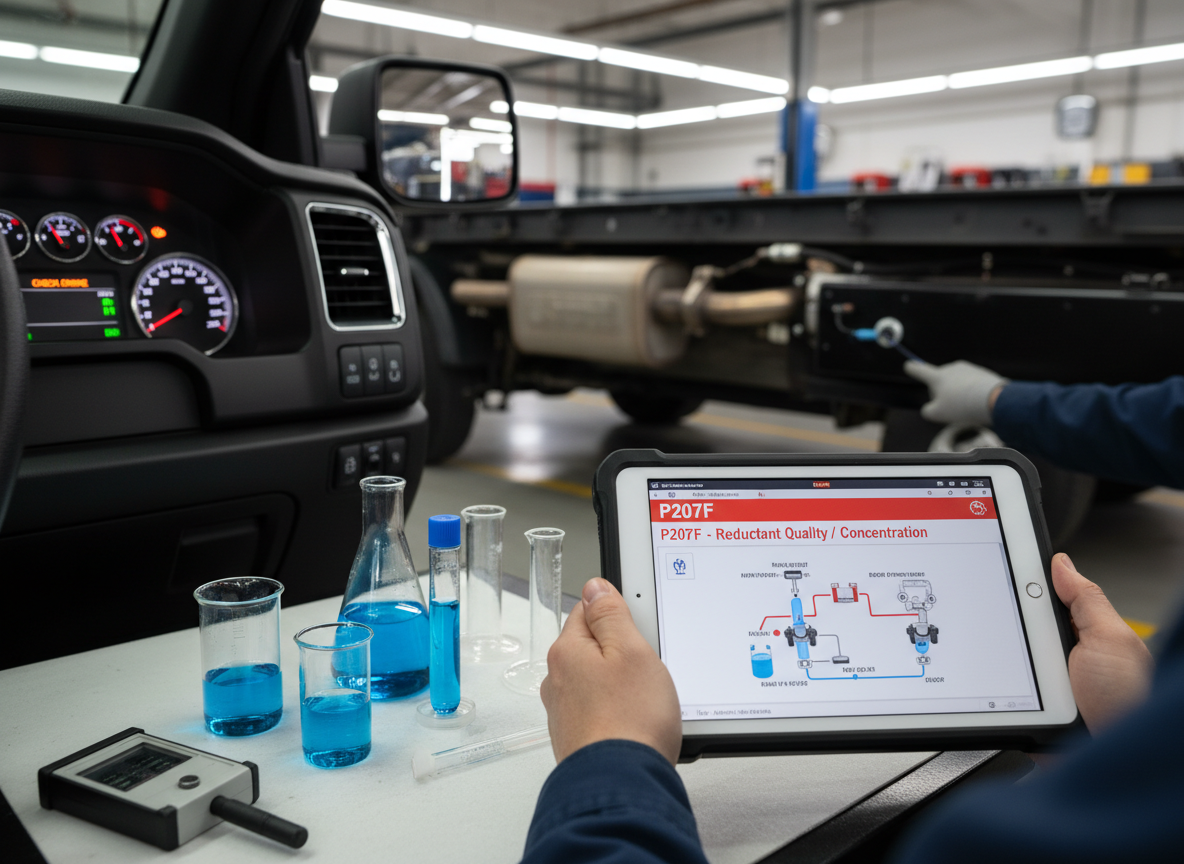
Contaminated or weak fluid usually shows up as a quality or efficiency fault code. Our guide to the P207F AdBlue quality code explains how we tell bad fluid apart from a failing sensor.
If you think the wrong thing has gone in, don’t keep topping up to dilute it. The tank needs draining and flushing, and the system needs checking before it is refilled with fresh fluid. That is work our AdBlue repair service handles on site.
If you have bought the right fluid, filled it properly and the light is still on, the fault is in the system, not the bottle. Our mobile AdBlue technicians cover Stoke-on-Trent, Staffordshire and Cheshire East, read the live SCR data and fix it where your vehicle is parked. Book a visit →
Frequently Asked Questions
Is supermarket AdBlue as good as branded AdBlue?
Yes, provided it is labelled AdBlue® or ISO 22241 and the seal is intact. Every product carrying the AdBlue® name has to meet the same ISO 22241 standard under the VDA licence, so the supermarket bottle and the dealer bottle are made to the same specification.
Can I use a lorry AdBlue pump for my car or van?
Usually not. HGV pump nozzles are designed for lorry filler necks to ISO 22241-4, and many only dispense when they detect a truck’s magnetic adapter. Use a car pump, which fits ISO 22241-5 filler necks on cars and vans under 3.5 tonnes, or a bottle or drum.
Is DEF the same as AdBlue?
Yes. DEF, AUS 32, ARLA 32 and AdBlue® are all names for the same 32.5 per cent urea solution. AdBlue® is the licensed trademark used in Europe and the UK; DEF is the usual North American term.
Is it cheaper to buy AdBlue at the pump?
Usually, yes. Car AdBlue pumps tend to be the cheapest way to buy per litre, followed by larger drums. Small 1.5 to 5-litre bottles from a fuel station kiosk are the most expensive, so keep one for emergencies and buy in bulk for routine top-ups.
Published: 17 November 2026 | Updated: 17 November 2026 | Author: AdBlue Specialist, mobile AdBlue and SCR repair technicians | Service area: Staffordshire, Cheshire East, Stoke-on-Trent
Featured image: Photo by Michael Pointner on Pexels