
AdBlue Fault Guide — Isuzu D-Max
Isuzu D-Max AdBlue Problems: Which D-Max Actually Has AdBlue, and What Goes Wrong
Before you chase an Isuzu D-Max AdBlue problem, check one thing: a lot of D-Max pickups on UK roads have no AdBlue system at all. Isuzu’s own press material for the 2017 truck describes a 1.9-litre engine that met Euro 6 without AdBlue — the tank only arrived with the all-new 2021 model.
Quick Answer
Isuzu D-Max AdBlue problems only affect the 2021-on model, which uses a Euro 6d SCR system with a 14-litre AdBlue tank. The 2017–2020 1.9 Ddi met Euro 6 with no AdBlue at all. On the newer truck, faults usually trace to the NOx sensors, a crystallised dosing injector, or the fluid quality sensor.
In This Guide
Does Your Isuzu D-Max Even Have AdBlue?
This is where most Isuzu D-Max AdBlue problems start — with an owner searching for a fault their truck cannot physically have. The D-Max split into two very different emissions generations, and they are only a year or so apart on the forecourt.
Isuzu’s own UK press information for the range states that the 2017 D-Max downsized to a cleaner 1.9-litre diesel meeting Euro 6 emission standards without the need for AdBlue. Isuzu marketed that heavily at the time, because every rival pickup had a blue filler cap and the D-Max did not.
The same document describes the change on the all-new truck. To reach the Euro 6d standard, the 2021 D-Max is fitted with a Selective Catalytic Reduction system to reduce nitrogen dioxide, which means AdBlue is now required.
So the practical test is simple. Look for a second, smaller filler cap beside the diesel filler. No blue cap, no AdBlue system, and whatever warning you are seeing is something else — an EGR fault, a DPF fault, or a sensor issue that shares the same amber engine light.
Watch out for the crossover year
Registration plate and model year do not always line up. A truck registered in 2021 can still be a pre-facelift build with no SCR hardware. Confirm from the filler, not the V5C.
How the 2021-On D-Max SCR System Is Laid Out
On the current D-Max, the 14-litre AdBlue tank sits underneath the body, ahead of the fuel tank, with the filler positioned next to the diesel filler. That underbody position matters more on a pickup than it does on a van.
A D-Max spends a good part of its life on farm tracks, building sites and salted winter roads. The tank, its heater, the level and quality sensors and the wiring that serves all of them are exposed to spray, grit and stone chips in a way that an underfloor tank on a road car never is.
From the tank, a pump feeds a metering injector that sprays AdBlue into the exhaust ahead of the SCR catalyst. NOx sensors sit either side of that catalyst so the ECU can compare what went in with what came out. If the two readings do not agree, the ECU decides the system is not working — regardless of whether the tank is full.
What Actually Goes Wrong on a D-Max
NOx sensor failure
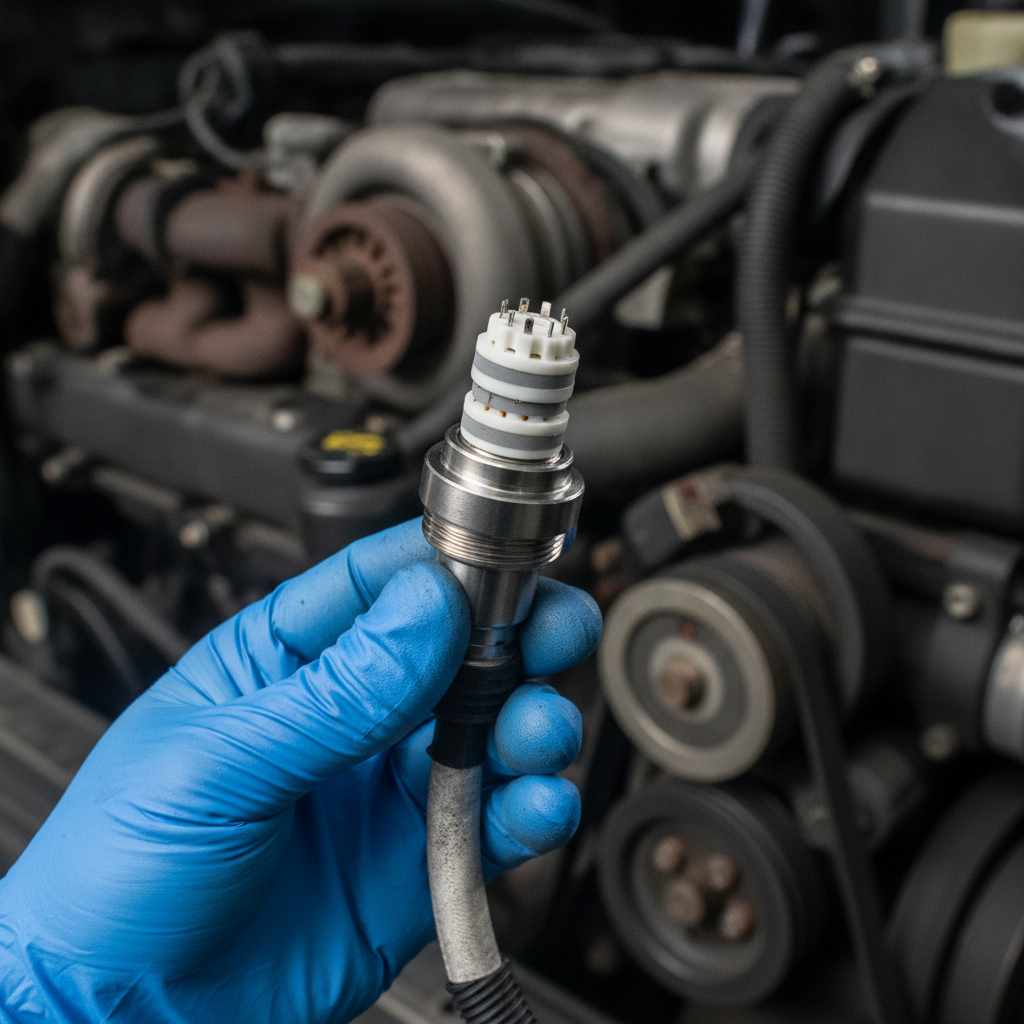
The most common single cause across the whole SCR family, and the D-Max is no exception. These sensors live in hot, filthy exhaust gas and degrade rather than fail outright. That is why the fault often appears as an efficiency complaint rather than a clean electrical failure. We cover the mechanism in more depth in our guide to how NOx sensor failures trigger AdBlue warnings.
Crystallised dosing injector
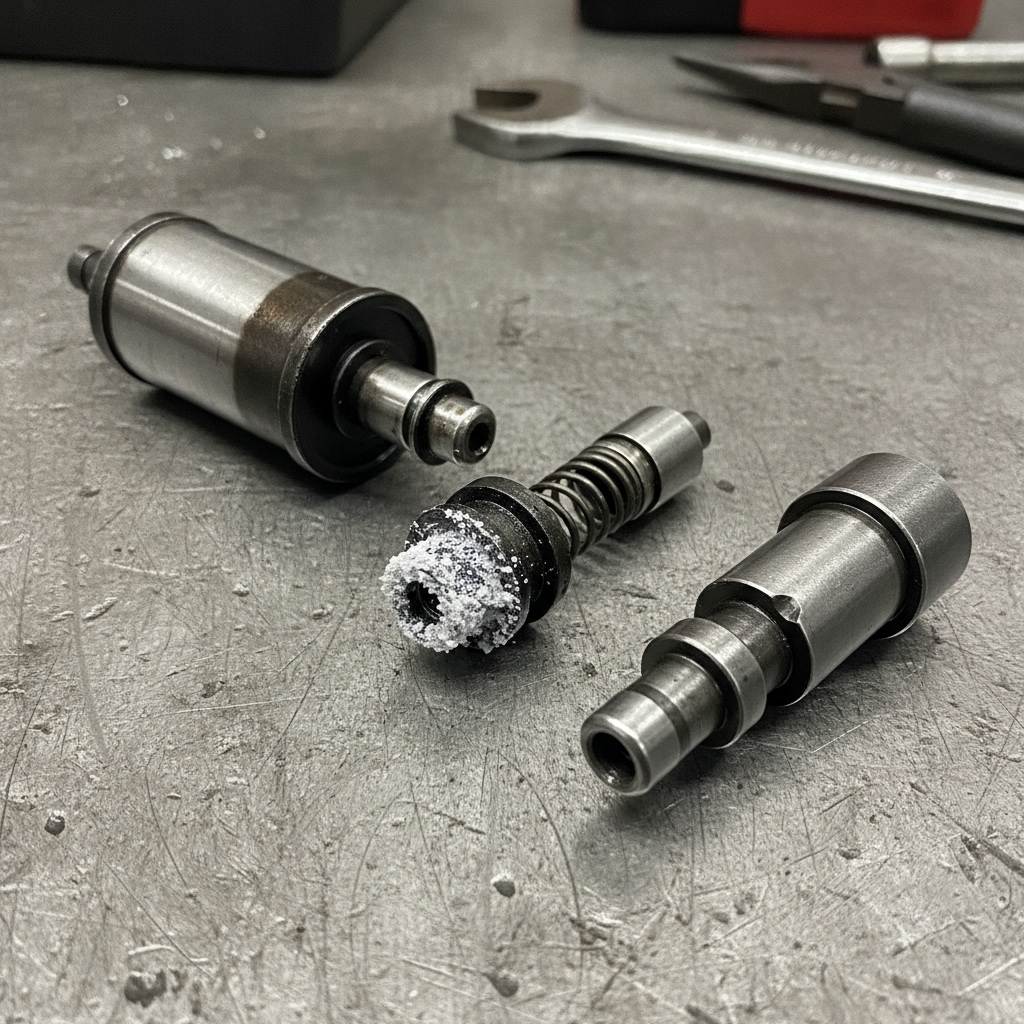
AdBlue is a urea solution. When it dries out at the injector tip — typically on a truck doing short, cold journeys that never get the exhaust properly hot — it leaves a hard white deposit that restricts or blocks the spray. Pickups used as yard trucks and site runabouts are prime candidates. Our article on AdBlue crystallisation and the damage it does to the SCR system explains how far that can go if it is left.
Fluid quality and contamination
Site vehicles get topped up from open drums and jerry cans far more often than family cars do. Once dust, diesel or plain tap water gets into the tank, the quality sensor sees it and the ECU logs a fault. This is a real and under-diagnosed cause on working pickups.
Wiring and connector damage
Underbody looms take a beating on a working D-Max. A chafed wire or a corroded connector at the tank module produces exactly the same fault codes as a failed sensor, which is how perfectly good parts end up being replaced.
The Fault Codes That Come Up Most
D-Max AdBlue faults use the same generic OBD codes as every other SCR-equipped diesel, so the codes tell you the symptom rather than the part.
| Code | What it means | Usually points at |
|---|---|---|
| P207F | Reductant quality performance | Fluid quality sensor, contaminated AdBlue, or dosing volume out of range |
| P20EE | SCR catalyst efficiency below threshold | NOx sensors, dosing injector, catalyst condition |
| P204F | Reductant system performance | Whole-system complaint — needs live data, not a parts swap |
| P20E8 | Reductant pressure too low | Pump, blocked line, crystallised injector |
P207F is the one that causes the most wasted money, because it reads like a fluid problem and often is not. Our breakdown of what P207F really means across quality, sensor and SCR faults goes through how to separate them before anything is replaced.
The important point for a D-Max owner is that no code here names a component. Replacing a NOx sensor because a scanner said P20EE is a guess, not a diagnosis.
Warnings, Countdowns and How Long You Have
An SCR fault on the D-Max escalates in stages rather than stopping you dead. You will usually see an amber warning first, then a message with a distance countdown, then a restart restriction once that countdown expires.
The countdown is not a suggestion. Once it reaches zero the truck will start only a limited number of times, and on a working pickup that tends to happen on the morning you need it most. Treating the first amber warning as the deadline rather than the last one is the difference between a roadside fix and a recovery truck.
Topping the tank up does not clear a system fault. If the warning came on with plenty of AdBlue in the tank, adding more will not reset anything — the ECU is complaining about performance, not level.
Fixing an Isuzu D-Max AdBlue Fault Properly
The right order is diagnosis, then repair, then reset. A scan tool reads stored codes and freeze-frame data; live data while the system doses tells you whether the injector is actually delivering and whether both NOx sensors are responding sensibly. Only then does replacing a part make sense.
Once the underlying fault is repaired, the SCR counters and adaptations have to be reset so the ECU stops the countdown. Skipping that step leaves the warning in place on a truck that is now mechanically fine.
It is worth being clear about the alternative. Removing or disabling the SCR system on a road-going vehicle is not a repair. The DVSA inspection manual lists emission control equipment fitted by the manufacturer that is missing, obviously modified or obviously defective as a Major defect — which means an MOT failure. If you use your D-Max on the road, repair is the only route that keeps it legal.
For most owners the honest answer is that this is a solvable fault with a known cause list, and it is nearly always cheaper to diagnose it once than to replace parts in sequence. You can see what the work involves on our AdBlue repair service page.
Isuzu D-Max AdBlue Warning On?
AdBlue Specialist is a mobile service covering Stoke-on-Trent, Staffordshire, Cheshire East and the surrounding area. We diagnose at your home, yard or site — no need to lose the truck for a day.
Frequently Asked Questions
Does the Isuzu D-Max use AdBlue?
The 2021-on D-Max does. Isuzu fitted an SCR system to meet Euro 6d, and the truck carries a 14-litre AdBlue tank. The 2017–2020 1.9 Ddi met Euro 6 without AdBlue, so those trucks have no tank, no filler and no SCR system.
Where is the AdBlue tank on an Isuzu D-Max?
On the 2021-on model it sits underneath the body, ahead of the fuel tank, with the filler neck positioned next to the diesel filler. That underbody location is why corrosion and stone damage to the tank sensors and wiring are worth checking on a working truck.
How much AdBlue does a D-Max use?
Consumption depends heavily on load, towing and journey type, so there is no single figure worth quoting. The dashboard counts down from a full tank and gives you plenty of notice. If consumption suddenly rises, that is a dosing fault symptom rather than normal variation.
Can you keep driving a D-Max with the AdBlue light on?
Briefly, yes — the system is designed to warn before it restricts anything. But once a distance countdown appears, the truck will eventually refuse to restart. Get it diagnosed while it is still an inconvenience rather than a recovery job.
Will topping up the AdBlue clear the warning?
Only if the warning was a genuine low-level alert. If it appeared with a reasonably full tank, the ECU has logged a system fault and no amount of fluid will clear it. The fault has to be found, repaired, and the counters reset.