

AdBlue Fault Guide — Mitsubishi L200
Mitsubishi L200 AdBlue Fault Guide: Warning Lights, Codes & What to Do
Your L200 AdBlue warning light is on. This guide covers every fault code, what the countdown means, and how to get it sorted without a costly main dealer visit.
Quick Answer
Mitsubishi L200 AdBlue faults are most often caused by a failing NOx sensor, contaminated AdBlue fluid, or a worn dosing pump. The system logs a fault and starts a countdown before restricting the engine. A mobile AdBlue specialist can diagnose and resolve the fault at your location, same day in most cases.
In This Guide
Why the Mitsubishi L200 Develops AdBlue Faults
The Mitsubishi L200 Series 6 (2019 onwards) uses a Euro 6 diesel engine with a Selective Catalytic Reduction (SCR) system. AdBlue is injected into the exhaust upstream of the SCR catalyst to convert NOx into harmless nitrogen and water. The L200 works hard — farm tracks, building sites, cold weather towing — and these conditions accelerate wear on AdBlue system components.
Common underlying causes include:
- NOx sensor degradation from heat cycling and vibration
- AdBlue dosing pump failure caused by crystallisation inside the lines
- AdBlue heater faults in cold weather (fluid freezes below -11°C)
- Contaminated AdBlue (wrong fluid, stale fluid, or diesel contamination)
- SCR catalyst deterioration after high-mileage use
- Software or ECU-related faults that mimic hardware failure
Mitsubishi L200 AdBlue Warning Lights
Stage 1: Low AdBlue Level
An amber warning appears with a message such as “AdBlue level low, refill soon.” The vehicle runs normally at this stage. Top up with ISO 22241 AdBlue — typically around 10 litres for a full top-up on the L200.
Stage 2: System Fault Warning
If the warning persists after topping up, or appears without a low-level trigger, a system fault is logged. Messages such as “AdBlue system fault, see dealer” indicate a sensor, pump, or dosing issue. A countdown may already be active.
Stage 3: No-Start Countdown
In serious fault conditions, the L200 displays a countdown — typically expressed as remaining engine starts. Once it hits zero, the engine will crank but not start.
Do Not Ignore a Countdown
Once the countdown reaches zero, the L200 will not restart. A mobile specialist can come to you and prevent a full lockout before it happens.
Common Mitsubishi L200 AdBlue Fault Codes
| Fault Code | Description | Likely Cause |
|---|---|---|
| P207F | Reductant quality poor | Contaminated AdBlue or faulty NOx sensor |
| P20EE | SCR NOx catalyst efficiency below threshold | Failing catalyst, incorrect dosing |
| P204F | Reductant system performance | Dosing pump failure or blocked injector |
| P20E8 | Reductant heater control circuit low | AdBlue heater failure in cold weather |
| P20BA | Reductant pressure too low | Dosing pump wear, blocked filter |
| P2202 | NOx sensor circuit low (upstream) | Failed upstream NOx sensor or wiring |
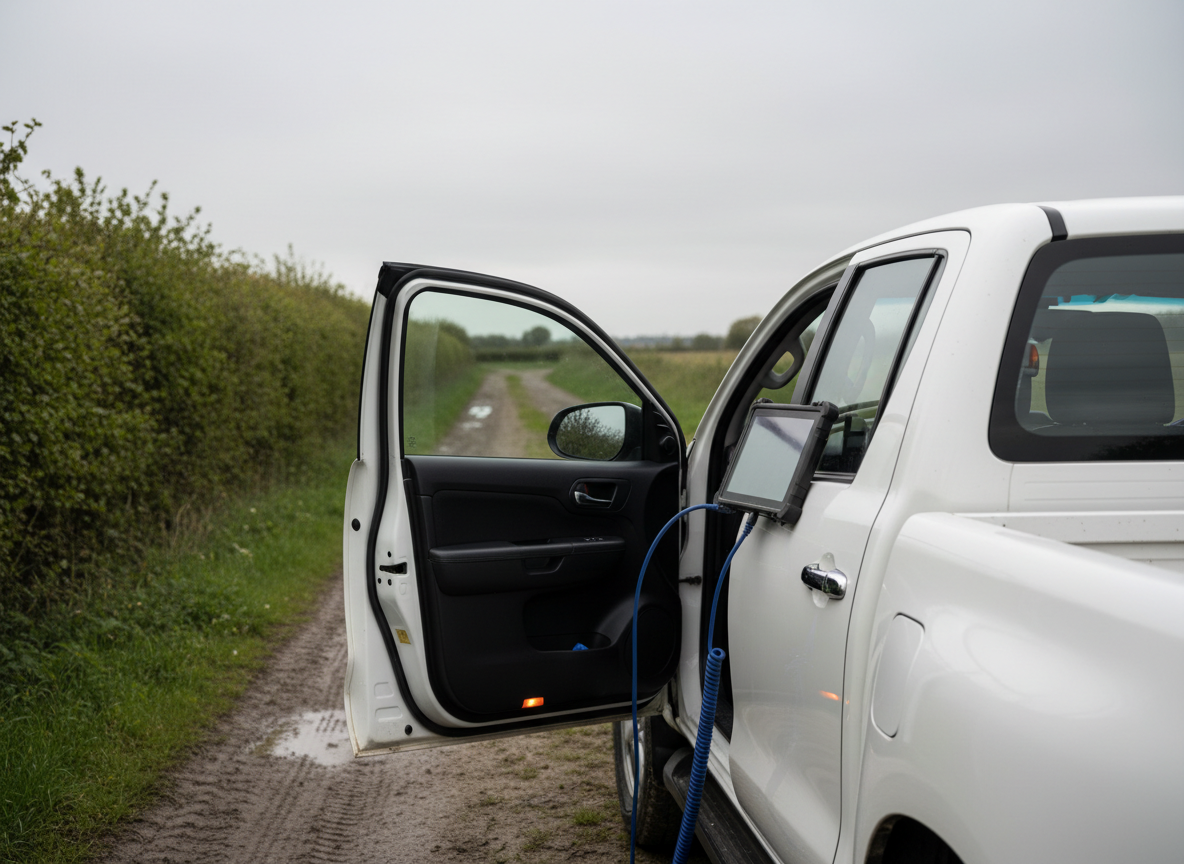
Understanding the L200 No-Start Countdown
The no-start countdown is a regulatory mechanism built into the ECU under Euro 6 rules. It typically shows as “AdBlue: 10 starts remaining” and decrements with each cold start. Once it reaches zero, the engine will crank but not fire.
A countdown reset requires specialist diagnostic software. You cannot clear it with a standard OBD reader or by disconnecting the battery. Simply topping up the AdBlue tank will not clear the countdown if there is an underlying system fault.
How AdBlue Faults Are Diagnosed
Correct diagnosis before any repair is essential. A proper process includes:
- Live data monitoring: Checking NOx sensor readings upstream and downstream of the SCR catalyst
- AdBlue fluid testing: Verifying concentration and quality
- Dosing pump pressure test: Confirming correct pressure and flow rate
- Freeze frame data: Reading conditions logged when the fault first appeared
- Actuator testing: Commanding the pump and heater on/off to confirm response
Fix Options for the Mitsubishi L200
Option 1: Repair the System
Where a specific component has failed, replacement and ECU reset restores full function. Typical costs:
- NOx sensor replacement: £250–500 including labour
- Dosing pump replacement: £400–900 including labour
- SCR catalyst replacement: £800–2,000 depending on supplier
Option 2: Software Delete (Off-Road Use Only)
For vehicles used off-road, for export, or where the SCR system is no longer required, a software delete removes the AdBlue system from ECU management. Deleted vehicles must not be driven on UK public roads.
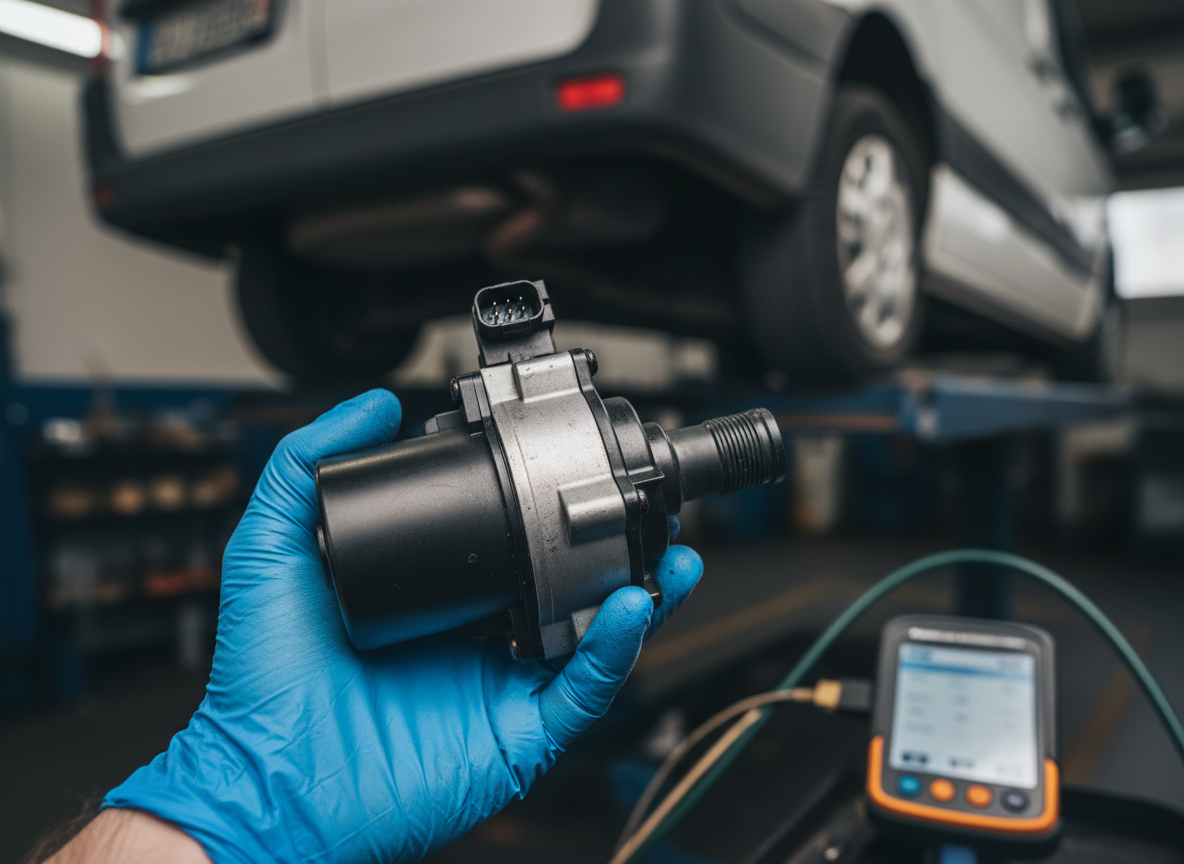
L200 AdBlue Fault? We Can Help.
AdBlue Specialist is a mobile service covering Staffordshire, Cheshire East, Stoke-on-Trent, and surrounding areas. We come to you with the right equipment to diagnose and resolve the fault the same day.
Frequently Asked Questions
Can I drive my L200 with an AdBlue warning on?
A low-level warning with no countdown: yes, carefully, until you can top up. If a countdown is active, drive only until you can arrange a fix — the vehicle will not restart once the count reaches zero.
How often does the L200 need AdBlue?
Approximately 1 litre per 600–1,000 miles. Most drivers top up every 6,000–10,000 miles. Much higher consumption suggests a dosing fault.
Will topping up clear the fault?
Only if the fault is genuinely a low tank. Sensor, pump, or SCR faults need diagnostic scanning and component repair — a top-up alone will not clear them.
Do you cover my area?
We cover Stoke-on-Trent, Staffordshire, Cheshire East, Stafford, Newcastle-under-Lyme, Crewe, Congleton, Nantwich, Sandbach, Uttoxeter, Kidsgrove and surrounding areas. Contact us to confirm your postcode.