
NOx Sensor Replacement Cost UK: Is It Worth Repairing or Better to Delete?
A failed NOx sensor is one of the most searched AdBlue-related repairs in the UK — and one of the most misunderstood. This guide covers what a NOx sensor actually costs to replace, why they fail, and the honest answer to whether repair or deletion makes more financial sense.
NOx sensor replacement in the UK costs £200–£600 per sensor including labour. Most Euro 6 diesel vehicles have two sensors, so full replacement can reach £800–£1,200. An AdBlue and NOx delete from £299 removes the sensors from the ECU monitoring loop permanently — no faults, no countdown, no repeat bill.
IN THIS GUIDE
What NOx sensors actually do
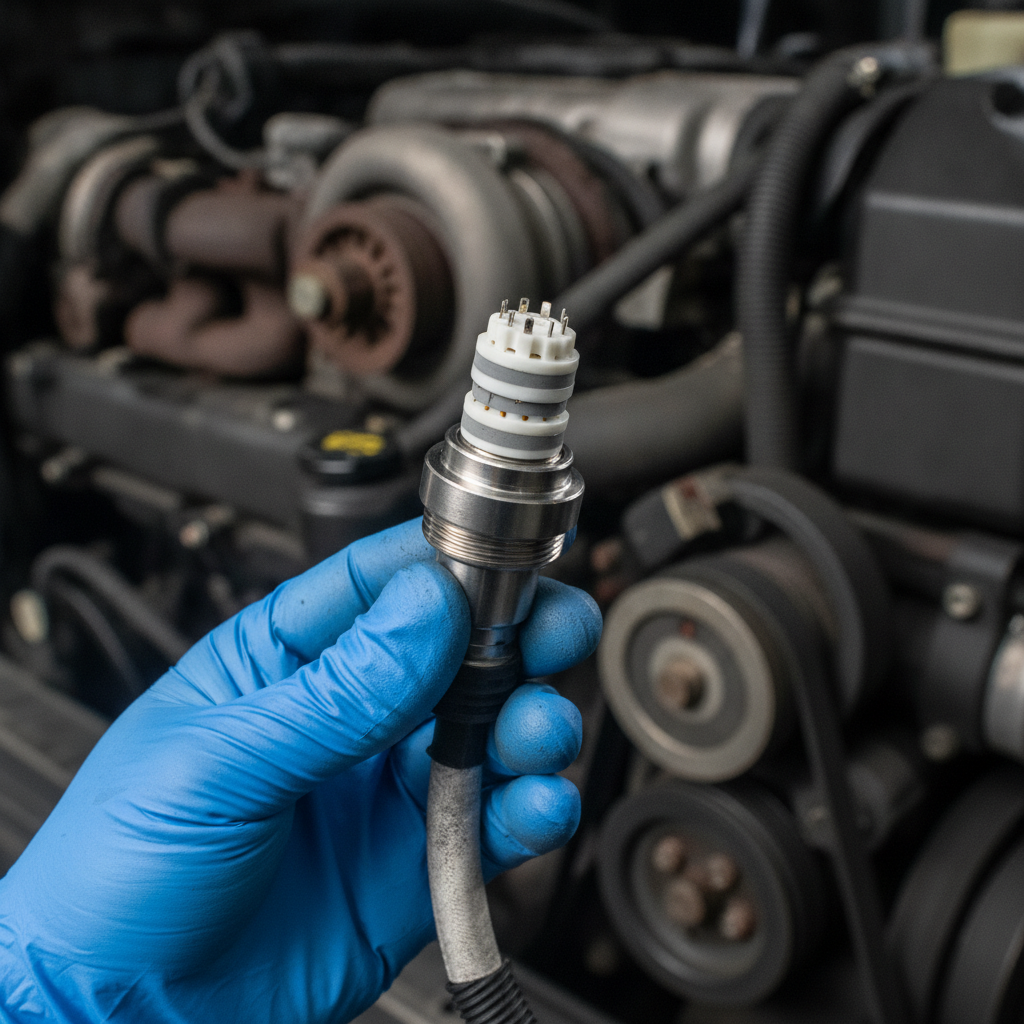
Nitrogen oxide (NOx) sensors are the eyes of the SCR (Selective Catalytic Reduction) system. Euro 6 diesel engines use two of them — one upstream of the SCR catalyst and one downstream. Their job is to measure the concentration of nitrogen oxides in the exhaust stream.
The upstream sensor tells the SCR control module how much NOx is entering the catalyst so it can calculate the correct AdBlue dosing rate. The downstream sensor confirms that the catalyst is working — by checking that NOx levels leaving the catalyst are sufficiently lower than those entering it. If the downstream NOx level is too high relative to the upstream reading, the ECU logs a P20EE fault (SCR NOx catalyst efficiency below threshold) and starts the countdown sequence.
This means a single faulty NOx sensor can trigger the same dashboard warning and no-start countdown as a faulty pump, a blocked injector, or a contaminated tank — which is why proper diagnosis before replacing any part is essential.
Why NOx sensors fail
NOx sensors operate in a hostile environment — extreme heat, vibration, exhaust gas contaminants and moisture — and they have a finite service life. The most common failure causes are:
- Heat and age — the ceramic sensing element degrades over time. Most OEM sensors have an effective life of 80,000–130,000 miles depending on driving patterns and fuel quality.
- Contamination from poor AdBlue — sub-standard AdBlue fluid or water contamination upstream affects the SCR catalyst and can deposit residue on the downstream sensor element.
- Heater circuit failure — the sensor has an internal heater that brings it to operating temperature quickly. When the heater fails, the sensor reads incorrectly until warm, producing intermittent faults that are difficult to diagnose.
- Wiring and connector corrosion — the sensor connectors are exposed to moisture and road salt. Corroded pins cause resistance changes that the ECU interprets as a failed sensor, even when the sensor itself is fine.
- Physical damage — stones and road debris can damage the sensor body or wiring on underbody-mounted sensors.
Symptoms of a failed NOx sensor
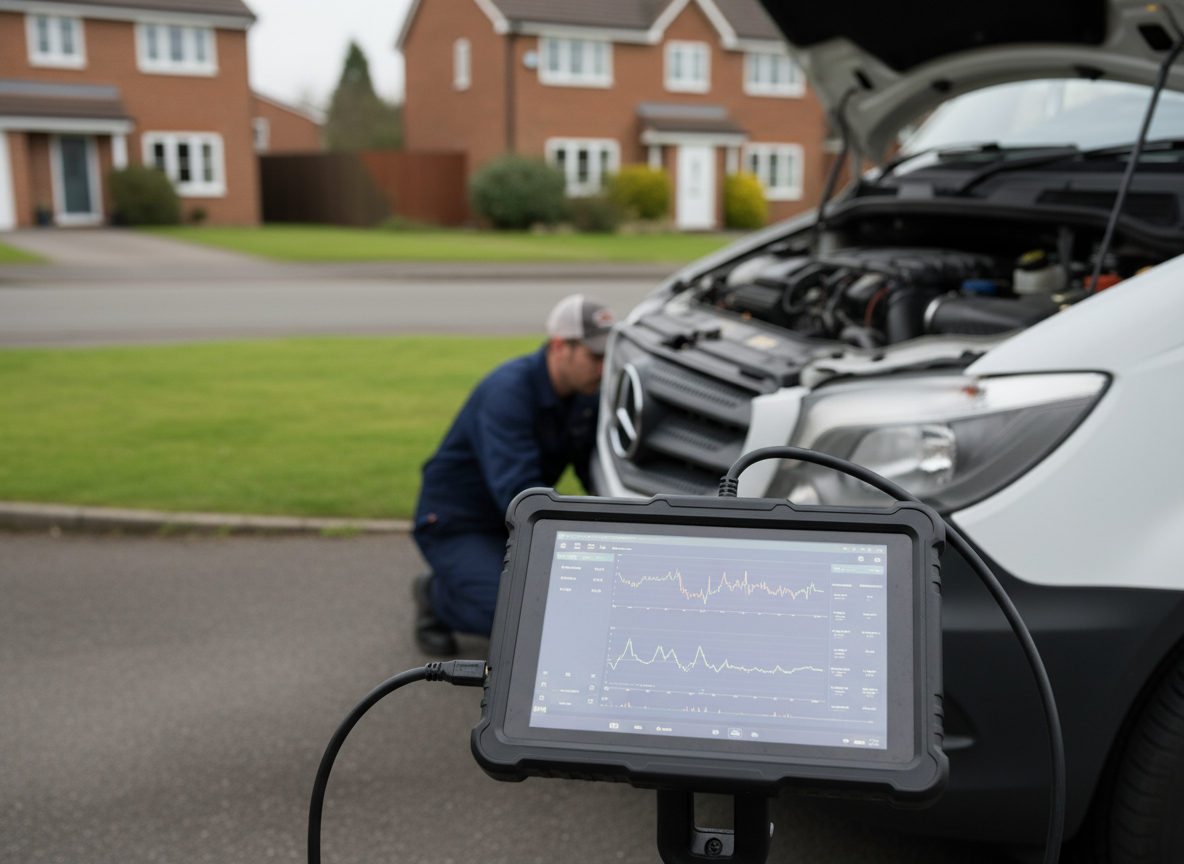
NOx sensor failure produces a recognisable pattern of symptoms, though they overlap with other SCR faults:
- P20EE fault code — the most common result of a downstream sensor failing to detect catalyst efficiency improvement
- P2201 or P2202 — NOx sensor upstream circuit faults indicating a wiring or sensor element issue
- P2A00 or P2A04 — NOx sensor downstream performance faults
- No-start countdown warning — “Engine start not permitted in X miles” triggering despite a full AdBlue tank
- Intermittent fault that clears on a long motorway run and returns in stop-start traffic — classic heater circuit failure behaviour
- High NOx live data reading from downstream sensor even after a fresh AdBlue top-up and system purge
NOx sensor replacement cost UK 2026
The total NOx sensor replacement cost in the UK depends on three factors: the vehicle make, whether one or both sensors need replacing, and whether the sensor requires coding to the ECU after fitting.
Sensor part cost
- OEM (main dealer): £120–£450 per sensor
- OEM-equivalent aftermarket (Bosch, Continental, Delphi): £80–£220 per sensor
- Budget aftermarket: £40–£80 per sensor (reliability varies significantly — we have seen these fail within 6 months)
Labour cost
Sensor access varies considerably by model. On some vehicles (Peugeot Boxer, Vauxhall Vivaro) the sensors are easily accessible and fitting takes 30–60 minutes. On others (Mercedes Sprinter, BMW 5 Series) the upstream sensor is buried in the exhaust system and may require lifting the vehicle and removing heat shields.
- Easy access (30–60 min): £40–£80 labour
- Moderate access (1–2 hr): £80–£200 labour
- Difficult access (2–3 hr): £180–£350 labour
Cost by vehicle
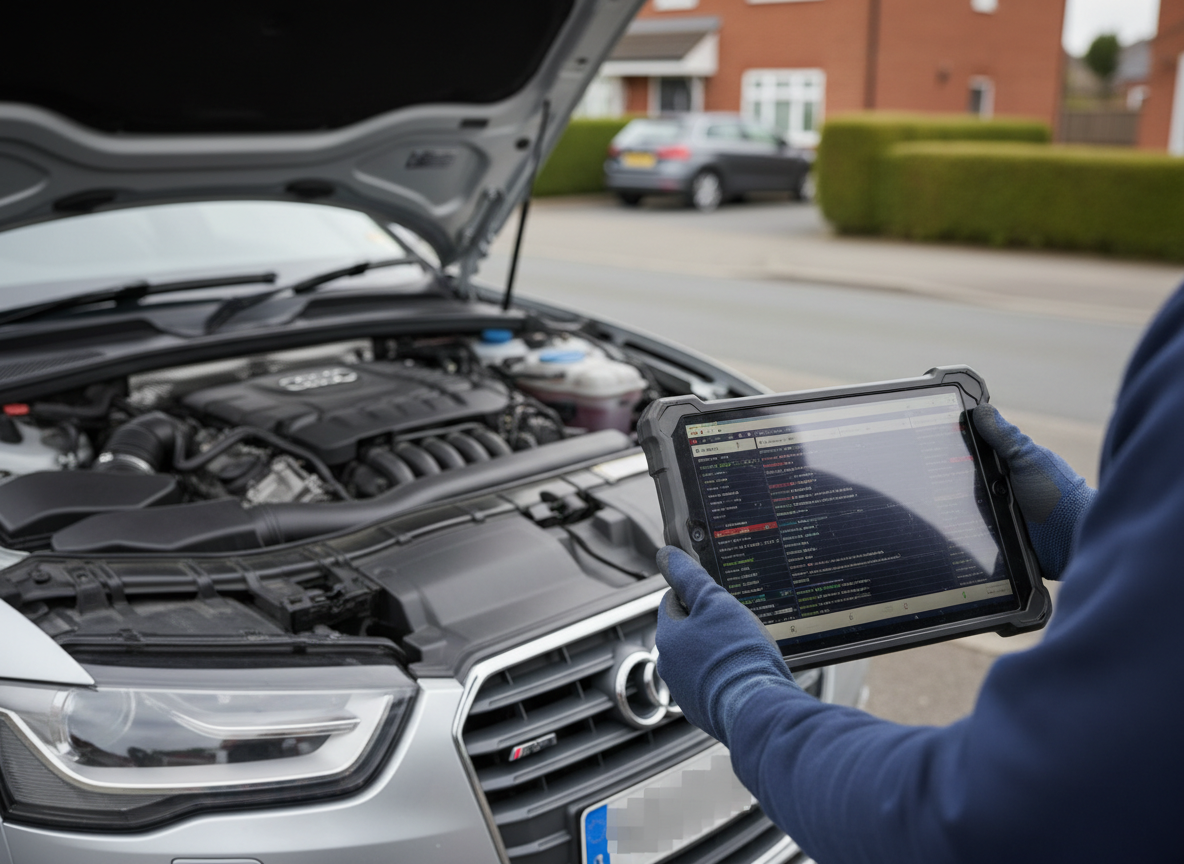
| Vehicle | Sensors typically needed | Part cost | Total incl. labour |
|---|---|---|---|
| Mercedes Sprinter (OM651) | 1–2 | £180–£380 | £350–£700 |
| VW Crafter / Transporter | 1–2 | £160–£340 | £280–£620 |
| Ford Transit EcoBlue | 1–2 | £140–£320 | £240–£580 |
| Peugeot Boxer / Citroën Relay | 1–2 | £120–£280 | £200–£500 |
| Vauxhall Vivaro / Movano | 1–2 | £110–£260 | £190–£460 |
| BMW 5/7 Series diesel | 2 | £280–£600 | £480–£1,000 |
| Audi A6 / A7 / Q7 TDI | 2 | £240–£560 | £420–£900 |
If the sensor requires coding (Mercedes, BMW, some VAG vehicles need manufacturer-level software to calibrate the new sensor to the ECU), add £50–£150 to the total. Not all independent garages have this capability — always ask before booking.
Repair vs delete: the honest comparison
This is the question we get asked most often, and we try to give a straight answer rather than one that maximises our job value.
When repair makes sense:
- The vehicle is relatively low mileage (under 60,000 miles) and has not had previous AdBlue repairs
- Only the wiring connector is corroded — a £50 repair rather than a sensor replacement
- The vehicle is still under warranty or extended warranty coverage
- You are planning to keep the vehicle for many more years and want it fully compliant
When a permanent delete makes more sense:
- The vehicle has over 100,000 miles and has already needed AdBlue repairs (pump, injector, previous sensor)
- The NOx sensor replacement quote is over £400 and the pump or injector is also showing early signs of failure
- Downtime is costly — you cannot afford to wait for parts and multiple workshop visits
- You want a permanent fix, not another repair that buys you 12–18 months before the next component fails
COST COMPARISON EXAMPLE
Mercedes Sprinter, 140,000 miles, P20EE fault:
- Dealer diagnosis: £120
- Upstream NOx sensor (OEM): £280
- Labour + coding: £320
- Downstream sensor (recommended preventively): £250 + £180 labour
- Total: £1,150
Or: AdBlue delete from AdBlue Specialist — £299. 12-month warranty. No more NOx sensor faults.
We do not push the delete as the default answer for everyone. But for a high-mileage commercial van where reliability matters more than OEM compliance, it is often the most cost-effective long-term solution — and the most honest one we can offer.
Frequently asked questions
How many NOx sensors does my vehicle have?
Most Euro 6 diesel vehicles have two — one upstream (before the SCR catalyst) and one downstream (after it). Some simpler systems use just one. Your diagnostic report will show which sensor has failed. On vehicles with two sensors, we often recommend checking the condition of both before fitting only one.
Can I drive with a faulty NOx sensor?
Yes, but the ECU will log the fault and start a no-start countdown once it is confirmed (typically after two consecutive failed drive cycles). Driving to a garage to get it diagnosed is fine — but leaving it untreated is not, as the countdown can trigger sooner than expected in cold weather or with low AdBlue.
Will a new NOx sensor fix P20EE?
Only if the sensor is the confirmed root cause. P20EE is a catalyst efficiency code — the sensor reports that NOx is not being reduced sufficiently. This can be caused by a failed sensor, but also by a blocked injector, a failing pump, contaminated AdBlue, or a degraded SCR catalyst. Replacing the sensor when the pump is the actual fault will not clear P20EE.
How long do replacement NOx sensors last?
OEM sensors typically last 80,000–130,000 miles under normal conditions. Quality aftermarket sensors (Bosch, Continental, Delphi) offer comparable life. Budget sensors from unknown manufacturers often fail within 12–24 months — we would not recommend fitting these on a working van.
Does a NOx sensor delete affect the MOT?
This is a question we always answer honestly. A software-only AdBlue delete removes the NOx monitoring from the ECU. UK MOT testing checks emissions output at the tailpipe — it does not check whether the SCR system software is active. Provided your vehicle passes the emissions test on the day, a correctly performed delete does not create an automatic MOT failure. However, emissions regulations continue to evolve, and this is a decision each owner must make informed.