P2047 and P20BD: When the AdBlue Fault Is an Electrical Circuit, Not a Blockage
Two of the most commonly misdiagnosed AdBlue codes on UK vans are not chemistry problems at all. P2047 and P20BD describe broken wiring, not blocked components — and the repair is usually a fraction of the job the driver was quoted for.
P2047 is a reductant (AdBlue) injector control circuit open fault and P20BD is a reductant heater control circuit open fault. Both are circuit codes: the ECU is reporting that it cannot see a complete electrical path to the component, not that the component is clogged with crystallised urea. The cause is most often a corroded connector, a chafed loom or a missing supply, so the correct first step is a voltage-drop and resistance test — not an injector replacement.
IN THIS GUIDE
What P2047 and P20BD Actually Describe
Both codes belong to the reductant — AdBlue — control group, and both carry the word circuit in their standard definition. That single word is the whole diagnosis.
P2047 refers to the reductant injection valve control circuit being open on bank 1. The dosing module drives the injector by switching its earth or its supply. When the ECU commands the injector and sees no current flow, it cannot distinguish between a broken wire, a disconnected plug and a burnt-out solenoid winding. It simply logs that the circuit is open.
P20BD refers to the reductant heater “B” control circuit being open. AdBlue systems carry heater elements in the tank, in the supply line and often in the injector body. Each is a resistive element driven by a relay or a solid-state output, and each has its own circuit code. P20BD is the second element in that group — usually the line heater rather than the tank heater, though the numbering varies between manufacturers.
Why the ECU Is Obliged to Watch These Circuits
Drivers often assume the van is being oversensitive. It is not. The monitoring is a type-approval requirement. The rules governing AdBlue systems on UK and European light vehicles state that malfunctions in the reagent dosing system attributed to technical failures, such as mechanical or electrical faults, are subject to the on-board diagnostic requirements. An open injector circuit is precisely that kind of technical failure, so the ECU has no discretion. It must detect it, store it and warn you.
The heater circuits exist for a reason written into the same rules. Manufacturers must prevent the reagent freezing solid during parking of up to seven days at minus fifteen degrees Celsius with the tank half full, and must make the fluid usable again within twenty minutes of starting at that temperature.
That target is only achievable with electrically heated tanks and lines. It is why a heater circuit fault is treated as seriously as a dosing fault, and why P20BD tends to surface in the first cold snap of the year rather than in July.
The Circuit Faults We Actually Find on UK Vans
Across mobile diagnostic visits in Staffordshire and Cheshire, the same handful of causes come up again and again. In rough order of how often we see them:
| What we find | Typical symptom pattern | The test that confirms it |
|---|---|---|
| Connector corrosion at the dosing module | Fault appears after wet weather or a jet wash, and may clear for days at a time | Voltage drop across the connector under load, not a static resistance check |
| Chafed loom at a chassis crossmember | Fault appears over rough ground or on full lock; intermittent at first | Wiggle test with live data on the injector command, plus a visual inspection of the loom run |
| Poor earth at the SCR module | Several unrelated SCR codes logged in the same session | Voltage drop between the module earth pin and battery negative |
| Blown supply fuse or failed relay | Every heater circuit code appears at once | Supply voltage measured at the component with the ignition live |
| Open solenoid or heater winding | Code is permanent, never intermittent, from the moment it first sets | Resistance across the component pins, compared against the manufacturer specification |
Only the last of those five is a failed part. The other four are wiring, and all four are repairable in situ. That ratio is the single most useful thing to know before authorising any work on a P2047 or a P20BD.
Corrosion deserves a special mention on older vans. AdBlue is a urea solution, and when it weeps from a union it dries into a white crystalline deposit that creeps along the loom and into connector bodies. The result looks like a component failure but is a contact failure, and cleaning and re-pinning the connector is the fix. If you are also seeing weeping or white residue, our guide on how crystallised AdBlue damages the SCR system explains how those deposits form.
How to Test the Circuit Properly
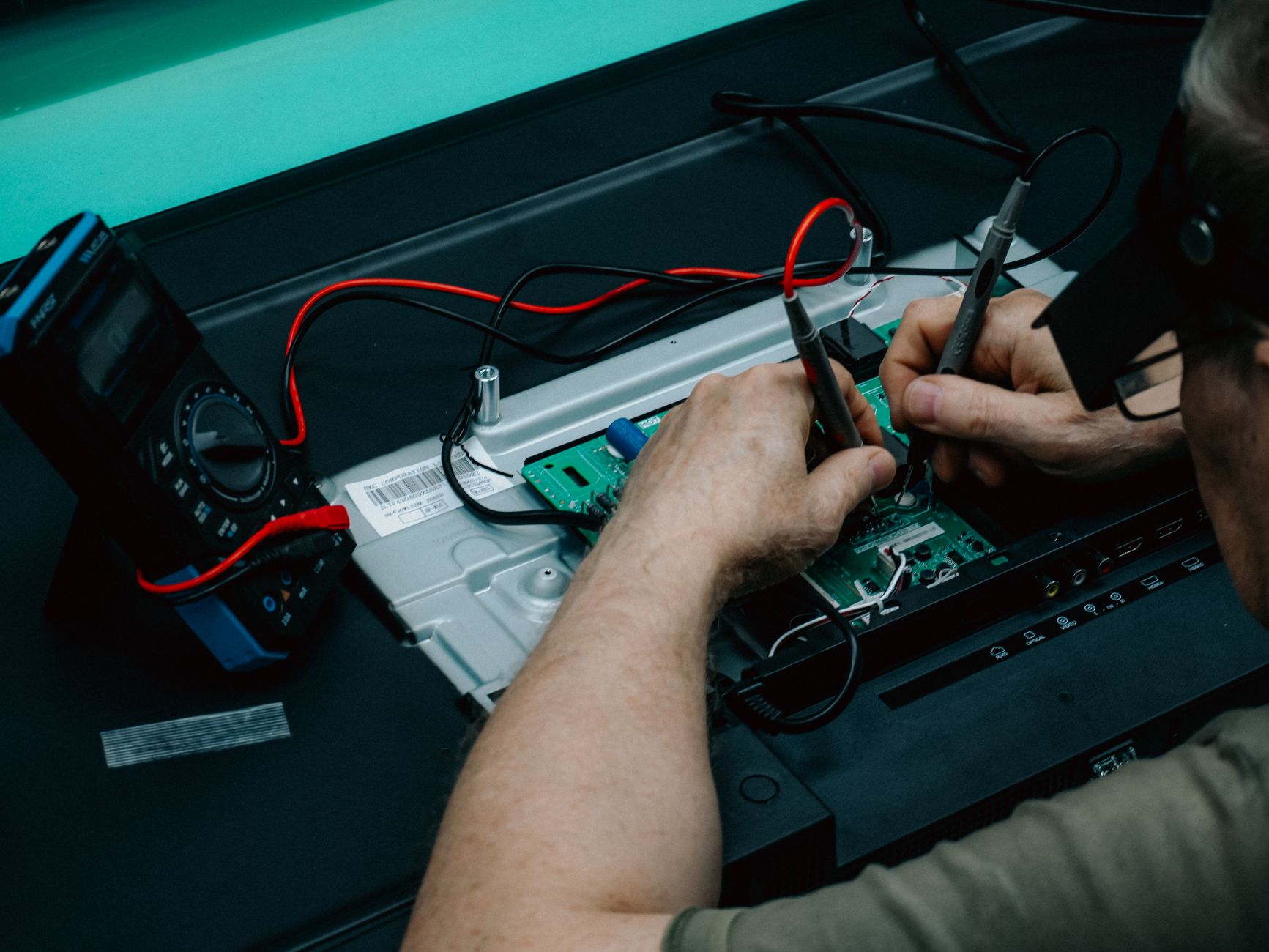
A meaningful test takes about twenty minutes and follows a fixed order. Jumping straight to the resistance check is the most common shortcut, and it is the one that produces false results — a corroded joint can read acceptably at low current and still collapse under the injector working load.
The order that works
- Read the freeze-frame data first. Ambient temperature, coolant temperature and road speed at the moment the code set will usually tell you whether you are chasing a cold-start heater fault or a vibration-related loom fault.
- Check the supply before anything else. If the feed is missing, the component is irrelevant. Confirm battery voltage at the component connector with the ignition live.
- Measure resistance across the component. Compare it against the manufacturer figure for that exact part number. An open winding reads over-range; a shorted one reads far below specification.
- Voltage-drop the earth path under load. This is the step that finds the faults a static meter reading misses entirely.
- Actuate the component with a bidirectional tool and watch the live current draw. A healthy heater or injector pulls a stable, repeatable current.
This is also where generic code readers run out of road. Plenty of cheap tools will display P2047 but cannot command the injector or the heater, which means you can read the fault but never prove the repair. If the same tool then refuses to reset the system, you are left guessing. For contrast, how a genuinely faulty AdBlue injector presents is worth reading alongside this, so the two situations can be told apart on the drive.
Why Parts-Swapping Fails, and the 50 km Trap
Here is the point most guides miss. When a garage clears the code and hands the van back, the system does not simply forgive it. The rules allow the inducement system — the countdown and no-start behaviour — to be reinitialised through the diagnostic port after a repair, but they also state that the vehicle may operate for a maximum of 50 km to validate the repair, and that the inducement system is fully reactivated if the fault persists.
That is why so many drivers report the same story. The van was fine leaving the garage, and the warning returned about thirty miles later. Nothing mysterious happened: the validation window expired and the ECU re-tested the circuit it had been asked to trust.
The practical consequence is that a two-mile road test proves nothing on an AdBlue repair. The work has to be verified either by proving the circuit electrically before the van leaves, or by a road test long enough to clear the validation distance. We do the former, because it is faster and it does not spend the customer’s fuel.
It also explains why a heater circuit repair carried out in mild weather can look successful for months. The heater is not commanded until the temperature drops, so the circuit is never properly tested. The fault has not been fixed; it has been postponed until November. If your warnings come and go with the seasons, the same logic applies across heater faults elsewhere in the AdBlue system.
What It Means for Your MOT
This is where the stakes change. The DVSA inspection manual lists an engine malfunction indicator lamp that is inoperative or indicating a malfunction as a Major defect on diesel vehicles first used on or after 1 July 2008. A Major defect is a fail. If P2047 or P20BD has lit the engine management lamp, the test is over before the smoke meter is switched on.
There is a genuine surprise in the same manual, and it catches out drivers who have been quoted for urgent work. A leak of the fluid required for selective catalytic reduction is not, in itself, a reason for failure. An AdBlue weep on its own will not fail an MOT — but the warning lamp that the weep eventually triggers absolutely will. The lamp is the test item, not the puddle.
Testers also inspect visible emission control equipment, and equipment that is missing, obviously modified or obviously defective is a Major defect in its own right. That matters if anyone has previously attempted a crude bypass of the dosing circuit rather than repairing it properly.
How We Handle These Two Codes
Our approach on a P2047 or P20BD call-out is deliberately conservative. We prove the circuit before we touch a part, because more often than not the part turns out to be innocent. That means live data, actuation, voltage drop under load and a physical inspection of the loom run, carried out at the customer’s premises rather than after a recovery truck ride.
Where the fault genuinely is a failed injector or heater element, we say so and quote for it. Where it is a connector or a chafe, which is the more common outcome, the repair is a repin, a reseal and a re-route, and the van is usually back in service within the same visit.
Full details of our mobile AdBlue system repair service are on the main service page, and our reference list of the most common AdBlue fault codes puts these two in context alongside the dosing, pressure and quality codes they are so often confused with.
We test the wiring before we sell you a part. Most P2047 and P20BD faults are proven and repaired at your location in a single visit, with no recovery and no workshop queue. Arrange a visit →
Frequently Asked Questions
Can I keep driving with P2047 stored?
Usually yes for a short period, but not indefinitely. An open injector circuit means AdBlue dosing has effectively stopped, and once the ECU is satisfied the dosing system is not working it escalates to the warning stage and then to inducement — the countdown of restarts, or a speed restriction, depending on the manufacturer. Treat it as a fault to book in this week rather than this month.
Is P2047 always a failed AdBlue injector?
No, and that assumption is the main reason these repairs get expensive. P2047 reports an open electrical circuit. The injector solenoid is only one item in that circuit, alongside the supply, the earth, the connector and the loom between them. A resistance test across the injector, compared against the manufacturer specification, settles the question in a couple of minutes.
What causes P20BD to appear only in winter?
Because the heater is only commanded in cold conditions. AdBlue systems have to keep the fluid usable at low ambient temperatures, so the ECU energises the heater elements when the temperature falls. A broken heater circuit is therefore invisible in summer and obvious in January. If the code appeared with the first frost, the fault was almost certainly present long before that.
Will clearing the code fix it?
Only if the circuit has genuinely been repaired. Clearing a code resets the stored fault and can reset the inducement countdown, but the ECU re-tests the circuit within a short validation distance and reinstates everything if the fault is still there. That is why a code cleared without a repair typically returns within a few dozen miles of ordinary driving.
How is this different from a blocked injector?
A blocked injector still answers the ECU electrically — the solenoid works, the fluid does not flow properly. That produces dosing, pressure or quality codes rather than a circuit code. P2047 means the ECU got no electrical response at all. The two faults look identical on the dashboard and are completely different jobs, which is why the code group matters more than the warning lamp. A failing AdBlue delivery pump produces a third, distinct pattern again.
Published: 22 September 2026 | Updated: 22 September 2026 | Author: AdBlue Specialist | Service area: Staffordshire, Cheshire East, Stoke-on-Trent