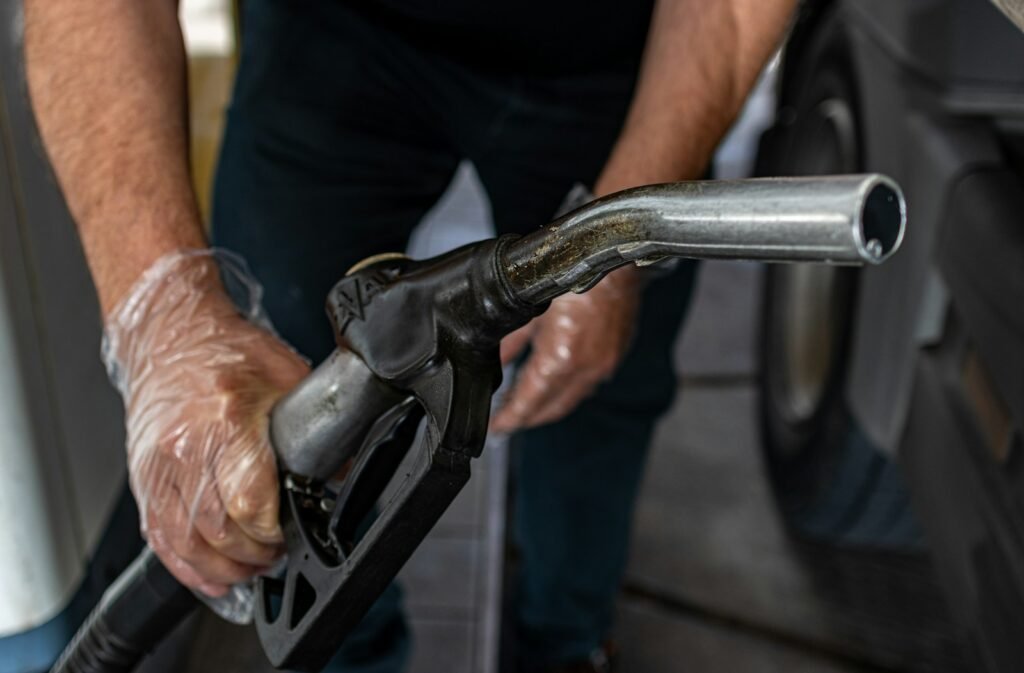
Put AdBlue in the diesel tank by mistake? Stop and do not start the engine.
This page is for the first ten minutes: what happens inside the fuel system, the steps to take straight away, and how to handle the insurance claim.
You’ve just realised you’ve put AdBlue in the diesel tank instead of the AdBlue filler. Panic sets in. Will the engine start? Is the fuel system ruined? How much is this going to cost? Stop. Do not start the engine. If you haven’t turned the key yet, you can avoid thousands of pounds in repair bills. AdBlue in the diesel tank is one of the most expensive fuelling mistakes you can make—worse than petrol in diesel—because AdBlue is corrosive to fuel system components and crystallises when it dries, blocking injectors, pumps and filters. But if you act fast and follow the steps below, you can limit the damage to a tank drain and flush (£150–£400) instead of a full fuel system replacement (£2,000–£8,000). This guide covers exactly what happens when AdBlue mixes with diesel, the immediate steps to take, insurance claims, and how to prevent it happening again. If the damage is already done and you need to budget for it, our AdBlue in diesel tank repair cost guide breaks the bill down stage by stage.
What happens when AdBlue gets in the diesel tank?
AdBlue is 32.5% urea (a crystalline solid) dissolved in 67.5% deionised water. Diesel is a petroleum-based hydrocarbon fuel. They don’t mix. When you pour AdBlue into a diesel tank, it sinks to the bottom (AdBlue is denser than diesel) and sits there as a separate layer. If you start the engine, here’s what happens:
Stage 1: AdBlue enters the fuel system (first 5–10 seconds)
- The fuel pump draws AdBlue from the bottom of the tank
- AdBlue enters the fuel lines, fuel filter and high-pressure pump
- The engine may start briefly, then stall or misfire as AdBlue reaches the injectors
- You’ll see white smoke from the exhaust (water vapour from the AdBlue evaporating)
Stage 2: AdBlue corrodes and blocks components (first 10–30 minutes)
- AdBlue corrodes aluminium and brass components in the fuel system (pump seals, injector nozzles, fuel rail sensors)
- Water in the AdBlue causes rust in steel fuel lines and tanks
- Urea crystallises as it dries, blocking fuel filters, injector nozzles and the high-pressure pump
- The engine loses power, runs rough, or won’t restart
Stage 3: Catastrophic damage (if you keep driving)
- Injectors seize or leak (£400–£1,200 each to replace—most vans have 4–6 injectors)
- High-pressure fuel pump fails (£800–£2,500 to replace)
- Fuel rail cracks or corrodes (£300–£800 to replace)
- Fuel tank needs replacing (corroded or crystallised residue can’t be fully cleaned—£400–£1,500)
- Total repair cost: £2,000–£8,000+
The key point: The longer AdBlue stays in the fuel system, and the more you run the engine, the worse the damage. If you catch it before starting the engine, you can avoid 90% of the repair cost.
Immediate steps: What to do right now
Follow these steps in order. Time is critical—every minute counts.
Step 1: Do NOT start the engine (or turn it off immediately if running)
If you realise you’ve put AdBlue in the diesel tank before starting the engine:
- Do not turn the key to the “on” position (this primes the fuel pump and draws AdBlue into the system)
- Do not try to start the engine “just to see if it runs”
- Leave the key out of the ignition
If the engine is already running when you realise:
- Turn off the engine immediately
- Do not try to “drive it to clear the system” or “burn off the AdBlue”—this will cause catastrophic damage
- Put the van in neutral, apply the handbrake, and turn off the ignition
Why this matters: If AdBlue hasn’t been pumped through the fuel system yet, you can drain the tank and flush the lines for £150–£400. If you start the engine, AdBlue reaches the injectors and high-pressure pump within 10–30 seconds, and repair costs jump to £2,000–£8,000.
Step 2: Call for emergency fuel drain (do not drive)
You need a mobile fuel drain service immediately. Do not attempt to drive to a garage—even starting the engine to move 10 metres can cause thousands of pounds of damage.
Options:
- Mobile fuel drain specialist (us): We come to you (home, work, petrol station, roadside) and drain the tank on-site. Cost: £150–£250 for drain + flush in Stoke-on-Trent and surrounding areas. Call 07503 134 362 for same-day emergency service.
- AA/RAC/Green Flag: If you have breakdown cover, call them. Most policies cover misfuelling (check your policy—some exclude AdBlue contamination). They’ll either drain on-site or recover you to a garage. Recovery + drain: £0–£300 depending on cover level.
- Main dealer: Will recover you to the workshop and drain the tank. Cost: £300–£600+ (recovery + drain + diagnostics). Slowest option—may take 1–3 days to get a slot.
Do NOT:
- Try to siphon the AdBlue out yourself (you won’t get it all, and residue will still damage the system)
- Add more diesel to “dilute” the AdBlue (this makes it worse—AdBlue sinks to the bottom, so adding diesel on top doesn’t help)
- Drive to a garage “slowly” or “in low gear” (any engine running = damage)
Step 3: Document everything (for insurance claim)
While you’re waiting for the fuel drain service, take photos and notes:
- Photo of the AdBlue bottle or pump nozzle you used
- Photo of the diesel filler cap (showing it was open/accessible)
- Photo of the fuel receipt (if you filled up at a petrol station)
- Write down exactly how much AdBlue you added (1 litre? 5 litres? Full tank?)
- Note whether you started the engine, and if so, for how long
Why this matters: If you need to make an insurance claim (see below), you’ll need evidence of what happened, when, and what steps you took to mitigate damage.
Step 4: Get the tank drained and flushed
A proper fuel drain for AdBlue contamination involves:
- Drain the diesel tank completely (siphon or drop the tank and drain via the drain plug)
- Flush the tank with clean diesel (5–10 litres) to remove residual AdBlue
- Replace the fuel filter (AdBlue will have contaminated it)
- Flush the fuel lines (if the engine was started, AdBlue may be in the lines and fuel rail)
- Refill with fresh diesel (at least 10–20 litres to ensure good fuel reaches the pump)
- Prime the fuel system (bleed air from the lines and injectors)
- Start the engine and check for leaks, misfires or warning lights
Time required: 1–2 hours for a tank-only drain (if engine wasn’t started). 3–5 hours if the fuel system needs flushing (if engine was started briefly).
Repair costs: How much will this cost?
Cost depends on how much AdBlue you added, whether you started the engine, and how long it ran before you turned it off.
| Scenario | Damage | Repair Cost | Time |
|---|---|---|---|
| Caught before starting engine | Tank contamination only | £150–£400 (drain + flush + filter) |
1–2 hours |
| Engine started, ran for 5–30 seconds, turned off immediately | Tank + fuel lines + filter contaminated | £400–£800 (drain + line flush + filter + diagnostics) |
3–5 hours |
| Engine ran for 1–5 minutes (idling or slow driving) | Tank + lines + filter + possible injector/pump damage | £800–£2,000 (drain + flush + filter + injector clean/test + pump inspection) |
1–2 days |
| Engine ran for 5+ minutes or driven several miles | Injectors seized/corroded, high-pressure pump failed, fuel rail damaged | £2,000–£5,000 (4–6 injectors @ £400–£1,200 each + pump £800–£2,500 + rail £300–£800 + tank drain/flush) |
3–7 days |
| Driven until engine seized or won’t restart | Complete fuel system replacement + possible engine damage | £5,000–£8,000+ (injectors + pump + rail + tank + lines + possibly engine rebuild) |
1–3 weeks |
Real-world example (Stoke-on-Trent, 2024): Transit driver at Tesco Longton added 5 litres of AdBlue to the diesel tank, realised immediately, did not start the engine. We drained the tank on-site (1.5 hours), flushed with 10 litres of clean diesel, replaced the fuel filter, refilled with 40 litres of fresh diesel. Total cost: £220. Van back on the road same day, no damage.
Worst-case example: Sprinter driver in Hanley added 10 litres of AdBlue, didn’t notice, drove 15 miles to Newcastle-under-Lyme. Engine started misfiring, lost power, wouldn’t restart. All 4 injectors seized (£4,800), high-pressure pump failed (£1,800), fuel rail corroded (£600), tank needed replacing (£800). Total: £8,000. Insurance paid out, but excess was £500 and premium increased by £300/year.
Will insurance cover AdBlue in diesel tank?
Maybe. It depends on your policy and how the damage occurred.
When insurance usually covers it:
- You have comprehensive cover (third-party only won’t cover misfuelling)
- Your policy includes “accidental damage” or “misfuelling cover” (check your policy documents or call your insurer)
- The damage was accidental (not deliberate or due to gross negligence)
- You took reasonable steps to mitigate damage (didn’t keep driving after realising, called for help immediately)
When insurance usually doesn’t cover it:
- You only have third-party or third-party fire & theft cover
- Your policy specifically excludes misfuelling or “wrong fuel” claims
- You continued driving after realising the mistake (insurer may argue this is negligence)
- The damage is below your excess (e.g. £250 drain cost vs £500 excess)
How to claim:
- Call your insurer immediately (before arranging repairs—some policies require pre-approval)
- Explain exactly what happened, when, and what steps you’ve taken
- Provide photos, receipts and evidence (fuel receipt, AdBlue bottle, repair invoice)
- Get a written quote from the garage or mobile service before repairs start
- Keep all invoices and documentation for the claim
Cost vs benefit:
If repair cost is under £1,000: Consider paying yourself rather than claiming. Most policies have a £250–£500 excess, and making a claim will increase your premium by £200–£400/year for 3–5 years. Total cost of claiming: £600–£2,000 over 5 years.
If repair cost is over £2,000: Claim on insurance. Even with excess and premium increase, you’ll save money overall.
Tip: Some breakdown cover policies (AA, RAC, Green Flag) include misfuelling cover as standard or as an add-on. Check your breakdown policy before calling your car insurance—breakdown cover claims don’t affect your no-claims bonus.
How to prevent AdBlue in diesel tank (it’s easier than you think)
AdBlue-in-diesel mistakes happen because the filler caps are close together, the nozzles are similar sizes, and you’re in a rush at the petrol station. Here’s how to avoid it:
1. Know where your AdBlue filler is (and mark it)
On most modern vans, the AdBlue filler is next to the diesel filler (Sprinters, Transits, Crafters) or under the bonnet (some Boxers, Relays). The AdBlue cap is usually blue and smaller than the diesel cap.
Prevention tip: Put a bright sticker or label on the AdBlue cap saying “AdBlue ONLY – NOT DIESEL” so you (or anyone else driving the van) can’t miss it.
2. Use the right nozzle
AdBlue pumps at petrol stations have a smaller nozzle (19mm diameter) than diesel pumps (22–25mm). The AdBlue nozzle should be too small to fit the diesel filler neck properly, but on some vans (especially older models), it fits just enough to pour AdBlue in.
Prevention tip: Always check the pump label before you start. AdBlue pumps are clearly marked “AdBlue” or “DEF” (Diesel Exhaust Fluid). If you’re using a bottle, check the label twice before opening.
3. Never rush refuelling
Most AdBlue-in-diesel mistakes happen when you’re in a hurry, distracted, or someone else is driving your van and doesn’t know where the AdBlue filler is.
Prevention tip: If you’re letting someone else drive your van (employee, family member, hire driver), show them where the AdBlue filler is before they set off. Take 30 seconds to explain—it could save you £2,000–£8,000.
4. Keep AdBlue bottles away from the diesel filler
If you carry spare AdBlue bottles in the van, store them away from the fuel area (e.g. in a toolbox or storage compartment, not next to the diesel jerry can). This prevents grab-the-wrong-bottle mistakes.
“Was filling up at the Shell in Burslem at 6am, half asleep, grabbed the blue nozzle thinking it was diesel,” Mike the courier told me. “Squeezed about 3 litres in before I realised the nozzle felt different. Looked up—’AdBlue’ in massive letters on the pump. Heart sank. Didn’t start the engine, called you straight away. You were there in 40 minutes, drained the tank in the petrol station car park, flushed it, new filter, refilled with diesel. £180 all in, van back on the road by 8am. Could’ve been £5,000 if I’d tried to drive it. Lesson learned—never refuel when you’re tired.”
What if I put diesel in the AdBlue tank (the reverse mistake)?
This is less common (diesel nozzles are too big to fit most AdBlue fillers), but it still happens if you’re using a jerry can or bottle.
What happens:
- Diesel contaminates the AdBlue tank, pump and dosing injector
- The SCR system detects contamination and triggers P20EE / P204F faults
- AdBlue warning light comes on, countdown starts
- Diesel clogs the AdBlue injector nozzle (it’s designed for water-based fluid, not oil-based fuel)
Repair required:
- Drain and flush the AdBlue tank
- Replace the AdBlue pump (diesel damages the seals—£200–£400)
- Replace or clean the dosing injector (£150–£400)
- Clear fault codes and reset the system
Cost: £400–£1,200 depending on how much diesel was added and how long the system ran before you noticed.
Prevention: Label your jerry cans clearly (“DIESEL ONLY” / “AdBlue ONLY”) and store them separately. Never decant fuel or AdBlue into unmarked bottles.
AdBlue in Diesel Tank FAQ
What happens if you put AdBlue in a diesel tank?
AdBlue sinks to the bottom of the tank (it’s denser than diesel) and sits there as a separate layer. If you start the engine, the fuel pump draws AdBlue into the fuel system, where it corrodes metal components, blocks injectors and damages the high-pressure pump. Repair costs range from £150 (tank drain only, if caught before starting) to £2,000–£8,000 (full fuel system replacement if you keep driving).
Can I drive with AdBlue in the diesel tank?
No—do not start the engine or drive. Even starting the engine for 10 seconds can cause thousands of pounds of damage. If you’ve already started the engine, turn it off immediately and call for an emergency fuel drain. Every minute the engine runs with AdBlue in the fuel system increases the repair cost.
How much does it cost to fix AdBlue in diesel tank?
Caught before starting: £150–£400 (tank drain + flush + filter)
Engine started briefly (under 30 seconds): £400–£800 (drain + line flush + diagnostics)
Engine ran for 1–5 minutes: £800–£2,000 (drain + injector clean + pump inspection)
Driven several miles: £2,000–£5,000 (injectors + pump + rail replacement)
Driven until engine seized: £5,000–£8,000+ (complete fuel system + possible engine damage)
Will insurance cover AdBlue in diesel tank?
It depends on your policy. Comprehensive insurance with “accidental damage” or “misfuelling cover” usually covers it, minus your excess (typically £250–£500). Third-party policies don’t cover it. Check your policy documents or call your insurer. If repair cost is under £1,000, consider paying yourself to avoid premium increases.
How do you get AdBlue out of a diesel tank?
You need a professional fuel drain service. The process involves: draining the tank completely (siphon or drop the tank), flushing with clean diesel to remove residual AdBlue, replacing the fuel filter, flushing the fuel lines (if engine was started), refilling with fresh diesel, priming the fuel system, and testing for leaks or faults. Do NOT attempt to siphon it yourself—you won’t remove all the AdBlue and residue will still damage the system.
Can you dilute AdBlue in diesel by adding more diesel?
No—this makes it worse. AdBlue is denser than diesel, so it sinks to the bottom of the tank. Adding more diesel on top doesn’t dilute it—it just means there’s more contaminated fuel to drain. The only fix is to drain the tank completely and flush it.
How long does AdBlue stay in the diesel tank?
AdBlue doesn’t evaporate or “go away” on its own. It will sit at the bottom of the tank indefinitely until you drain it. Over time (days to weeks), the urea in AdBlue will start to crystallise and the water will cause rust in the tank, making the problem worse.
What does AdBlue do to diesel injectors?
AdBlue corrodes the metal nozzles and seals inside diesel injectors, and the urea crystallises when it dries, blocking the tiny spray holes. This causes misfires, loss of power, and eventually the injectors seize completely. Replacing diesel injectors costs £400–£1,200 each, and most vans have 4–6 injectors (total: £1,600–£7,200).
For related emergency guides, see our what to do if your car won’t start due to AdBlue issues guide, AdBlue warning light won’t go off troubleshooting, or AdBlue sensor fault diagnosis.
⚠️ EMERGENCY: Put AdBlue in diesel tank?
DO NOT START THE ENGINE
We provide same-day emergency fuel drain across Stoke-on-Trent, Newcastle-under-Lyme, Stafford and Crewe. We come to you—petrol station, home, work or roadside.
07503 134 362 – CALL NOW
Available 7 days a week | Average response time: 30–60 minutes