
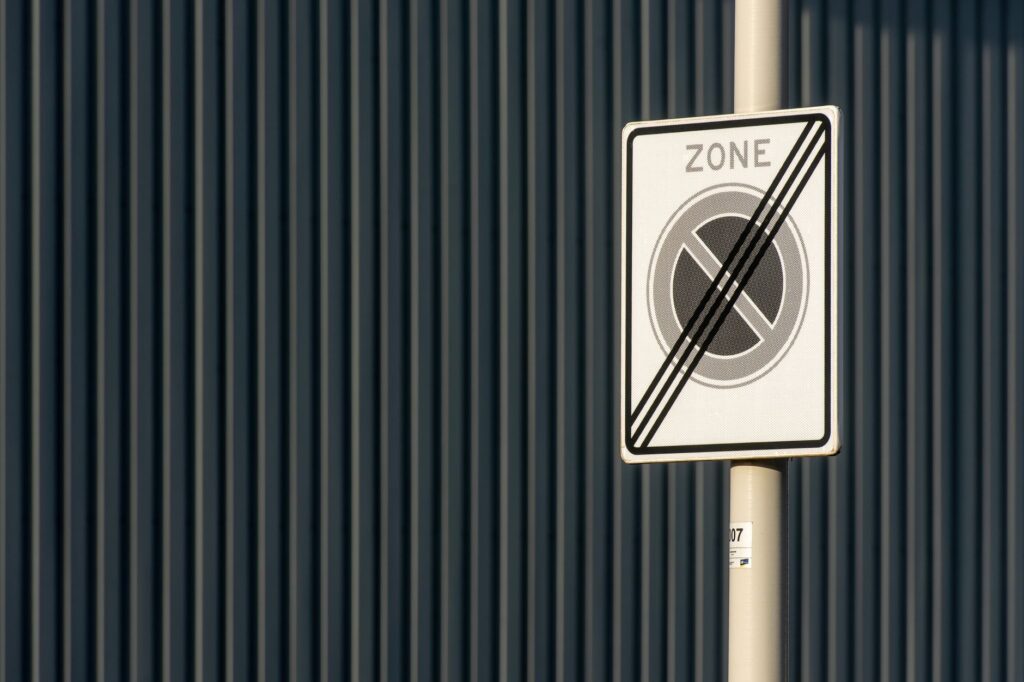
Compliance — Clean Air Zones & SCR
AdBlue Faults and Clean Air Zones: Will a Broken SCR System Cost You at the Barrier?
Drivers ask us this constantly, and the honest answer surprises most of them. A Clean Air Zone charge is decided by what your vehicle is recorded as, not by what is coming out of the exhaust today. That single fact changes what an AdBlue fault costs you — and where the real risk actually sits.
Quick Answer
An AdBlue fault does not by itself trigger a Clean Air Zone charge. Charging is based on the emissions standard recorded for your vehicle — Euro 6 for a diesel van or car — which comes from the V5C, not from a live emissions reading at the camera. The cost of a faulty SCR system shows up as breakdown, MOT failure and repair, not as a daily charge.
Contents
What a Clean Air Zone Actually Charges On
There is a persistent belief that Clean Air Zone cameras somehow measure your emissions. They do not. They read your number plate and look the vehicle up.
Government guidance is explicit that each vehicle type has a minimum emission standard, and that you can find your vehicle’s emission standard in your vehicle log book or from the manufacturer. For vans, minibuses, taxis and cars the minimum standard is Euro 6 for a diesel and Euro 4 for a petrol. Buses, coaches and heavy goods vehicles need Euro VI.
So a Euro 6 van with a dead NOx sensor and a dashboard full of warnings is still, in the eyes of the zone, a Euro 6 van. It is charged exactly the same as an identical van in perfect health, which is to say not charged at all.
That is not a loophole and it is not permission to ignore the fault. It simply means the penalty for a broken SCR system arrives somewhere else.
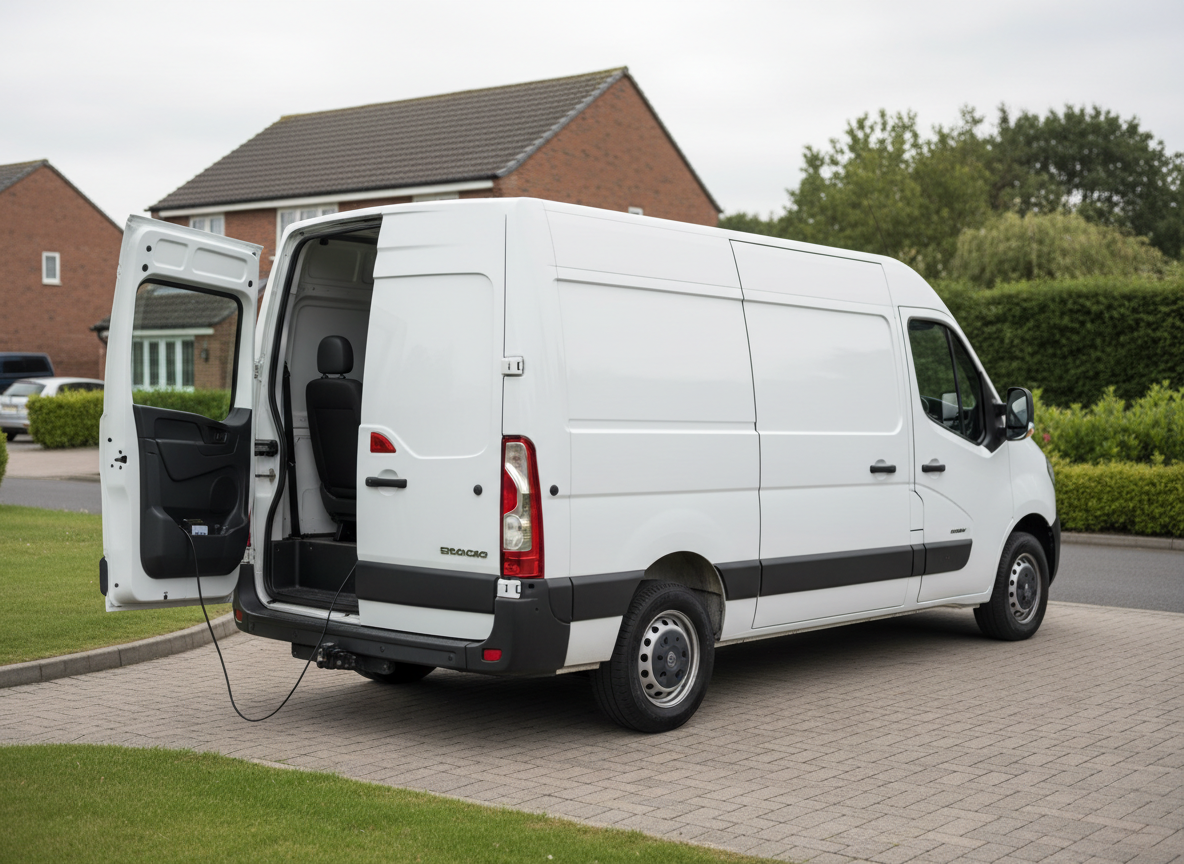
Where the Zones Are and Who Pays
England currently has seven charging Clean Air Zones, and the class decides which vehicles are in scope:
| City | Class | Vans and cars in scope? |
|---|---|---|
| Bath | C | Vans yes, cars no |
| Birmingham | D | Vans and cars |
| Bradford | C | Vans yes, cars no |
| Bristol | D | Vans and cars |
| Portsmouth | B | Neither — HGVs, buses, taxis |
| Sheffield | C | Vans yes, cars no |
| Tyneside | C | Vans yes, cars no |
Class C zones cover buses, coaches, taxis, private hire vehicles, heavy goods vehicles, vans and minibuses. Class D adds cars. That is why a Stoke-based van doing a delivery run into Birmingham or Sheffield needs checking, while the same driver’s private car may be irrelevant outside Birmingham and Bristol.
Worth knowing for anyone working across the north west: Greater Manchester was removed from the charging list in 2025 following agreement to a non-charging plan. Zones do change, so check the vehicle rather than relying on what was true two years ago.
Paying, and the deadline people miss
The zones run 24 hours a day, every day of the year, and the charge must be paid by 11:59pm on the sixth day after you drove in. Miss that window and a penalty charge notice follows. You can also pay up to six days in advance, which is the sensible option for a planned job.
London Is a Separate System
The Ultra Low Emission Zone is not a Clean Air Zone and is not run by the same service. It is the Mayor of London’s scheme, covering almost all of Greater London, and it has its own vehicle checker run by Transport for London.
The principle is the same though: compliance is assessed against the emissions standard the vehicle meets on paper. A diesel van that meets Euro 6 is ULEZ compliant whether or not its AdBlue system is currently working.
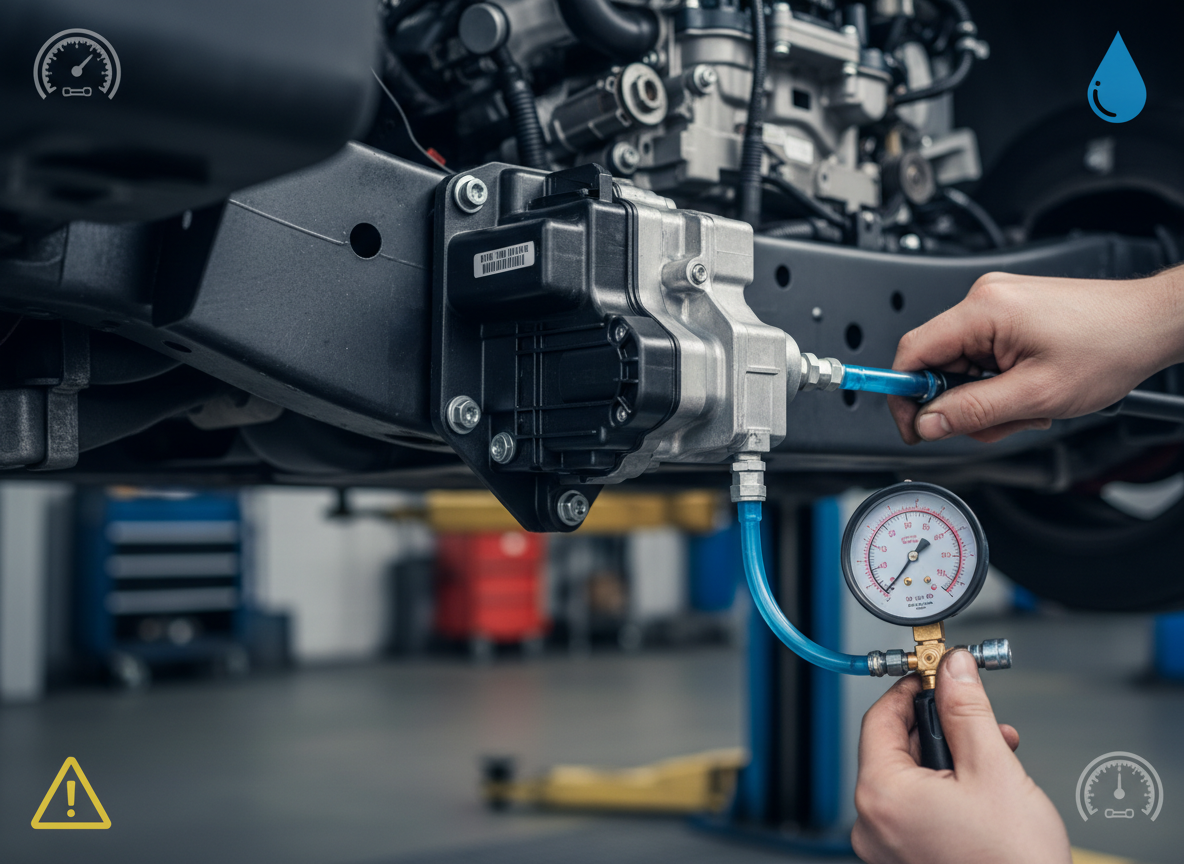
So What Does an AdBlue Fault Really Cost You?
If the zone will not charge you, why bother fixing it? Because the bill turns up in three other places, and all of them are worse than a daily charge.
It will eventually stop the vehicle
SCR systems are designed to escalate. A warning becomes a range countdown, and once that countdown expires the vehicle will not restart. Being immobilised on the far side of a city you drove into for work costs a day, not a fee. Our guide to what actually happens when you ignore the AdBlue warning sets out the usual sequence.
It is an MOT failure
Under the DVSA inspection manual, an engine malfunction indicator lamp indicating a malfunction is a Major defect, and manufacturer-fitted emission control equipment that is missing, obviously modified or obviously defective is a Major defect too. A van you cannot MOT is a van you cannot legally drive into any zone, charged or not.
It gets more expensive while you wait
Most of the costly AdBlue repairs we attend started as something small. A weeping injector seal or a heater fault left running through a winter turns into crystallisation, and crystallisation is what takes out pumps and tanks. Fixing the cheap fault early is the whole game.
Where a Delete or Emulator Genuinely Bites
Here is the part that catches people out. Because the zone charges on the recorded standard, a road-going vehicle with the SCR system disabled still shows as compliant at the camera — which is precisely why some drivers think a delete is a clean workaround for emissions rules.
It is not. Removing or disabling emission control equipment on a road vehicle means it no longer meets the standard it was approved to, the modification is a Major defect at MOT in its own right, and the vehicle is presenting a compliance status it does not deserve. That is a very different position from a genuine fault waiting on a part.
AdBlue and NOx system removal has a legitimate place for vehicles used exclusively off-road, for competition, or for export markets with different requirements, and we carry that work out on that basis. For a van that drives into Birmingham on a Tuesday, the answer is repair. If you want the legal picture in more detail, we set it out in our guide to the legal status of NOx sensor deletes.
The Light Is On and You Are Driving Into a Zone Tomorrow
Practical order of events, assuming the vehicle is still driveable:
- Read the message properly. A range countdown and an emissions fault are different problems with different urgency.
- Check the fluid level and quality before assuming the worst. Topping up with correct-specification AdBlue and completing a proper drive cycle clears a genuine low-level warning.
- Check the vehicle’s zone status using the government checker with the registration, so you know whether the trip is chargeable at all.
- Get the codes read if the warning stays. Guessing at parts is how a sensor fault becomes a four-figure bill.
- Do not clear the fault and hope. Clearing a code resets the display, not the condition, and the countdown restarts.
If the countdown has already expired and the van will not restart, it needs the fault diagnosed where it stands, which is what our mobile AdBlue service exists for. That is the situation we are called out to most often, and it is very rarely as bad as the driver fears by the time they phone.
Fix the Fault, Not the Symptom — Mobile AdBlue Diagnostics
AdBlue Specialist attends vans and cars at your yard, your home or the roadside across Stoke-on-Trent, Newcastle-under-Lyme, Crewe, Stafford, Congleton, Nantwich and Sandbach. We diagnose the SCR system properly before anything is ordered, and we will tell you when the answer is simply correct fluid and a drive cycle. Call 07503 134 362.
FAQs
Will an AdBlue warning light make me pay a Clean Air Zone charge?
No. The charge is determined by the emissions standard recorded for the vehicle, which for a diesel van or car means Euro 6. A warning light does not change that record, so a compliant vehicle stays compliant at the camera.
Is my van Euro 6? How do I check?
The emissions standard is shown in the V5C log book, and the manufacturer can confirm it. You can also enter the registration into the government’s Clean Air Zone vehicle checker, which tells you directly whether a charge applies in each zone.
Does an AdBlue delete make a van Clean Air Zone compliant?
No. It changes nothing about the vehicle’s recorded emissions standard, and it makes the vehicle non-compliant with the standard it was approved to. Removing manufacturer-fitted emission control equipment is also a Major defect at MOT. Removal is only appropriate for off-road, competition or export use.
Do Clean Air Zones apply in Stoke-on-Trent?
There is no charging Clean Air Zone in Stoke-on-Trent. The relevance for local drivers is travel: Birmingham, Sheffield and Bradford are all within a normal working radius, and vans are in scope in every Class C and Class D zone.