AdBlue Injector Fault: Symptoms, Diagnosis & Replacement Cost UK

  • Home
  • AdBlue Injector Fault: Symptoms, Diagnosis & Replacement Cost UK

AdBlue Injector Fault: Symptoms, Diagnosis & Replacement Cost UK

Your AdBlue injector is a precision component that sprays a fine mist of urea solution into the exhaust stream. When it blocks or fails, you get fault codes, warning lights, and eventually a no-start countdown — even if your pump, sensor and tank are all fine.

Quick answer:
An AdBlue injector fault typically triggers codes P20EE, P20E8, P207F or P2BAD alongside a dashboard warning. Injector replacement costs £350–£750 at a dealership. A permanent AdBlue delete by AdBlue Specialist costs from £299 and removes the fault entirely — with a 12-month software warranty.

What the AdBlue injector actually does

The AdBlue (DEF) injector — also called the dosing injector or SCR injector — is a small, electrically-controlled nozzle mounted in the exhaust pipe upstream of the SCR catalyst. Its job is to spray a precise amount of AdBlue solution into the hot exhaust gases so the urea breaks down into ammonia. That ammonia then reacts with harmful nitrogen oxides (NOx) inside the SCR catalyst, converting them into harmless nitrogen and water.

This process happens continuously at engine operating temperature. The injector opens and closes hundreds of times per driving cycle, controlled by the SCR control module based on NOx sensor readings, exhaust temperature and engine load. It is a high-precision component — the spray pattern, droplet size and injection timing all affect how efficiently the SCR system operates.

Because the injector sits in a hot, chemically reactive environment, it is vulnerable to three main failure modes: crystallisation from AdBlue residue, heat damage to the solenoid, and internal blockage from contaminated or degraded fluid. Each produces slightly different symptoms and fault codes, which is why proper diagnosis matters before you order parts.

AdBlue injector fault symptoms

The symptoms of an AdBlue injector fault can look identical to a pump fault or a NOx sensor fault at first glance — which is why so many drivers end up replacing the wrong part. Here are the specific signs that point toward the injector:

  • AdBlue warning light illuminates at low mileage after a fresh top-up — the system is dosing incorrectly so consumption appears abnormal
  • Fault codes P20EE, P20E8, P207F or P2BAD with no fault in the pump circuit (confirmed on live data)
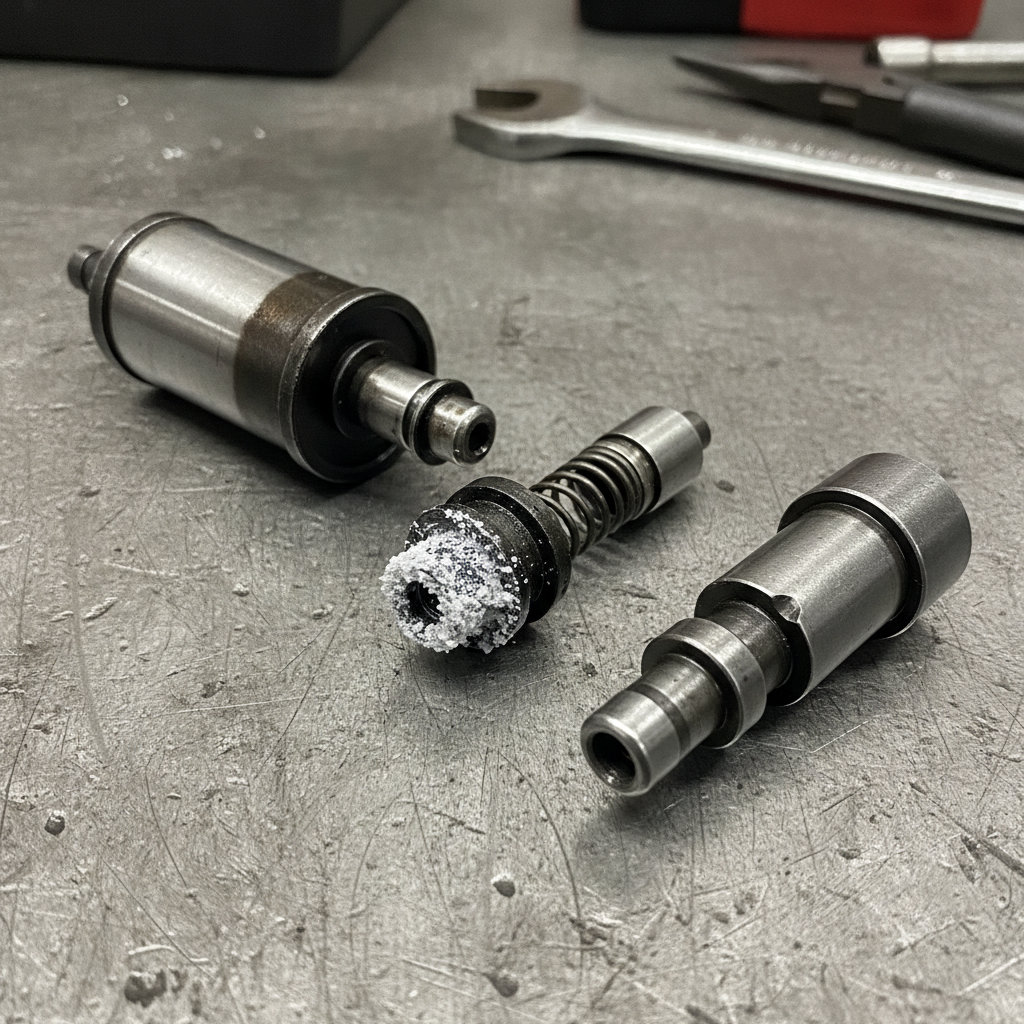
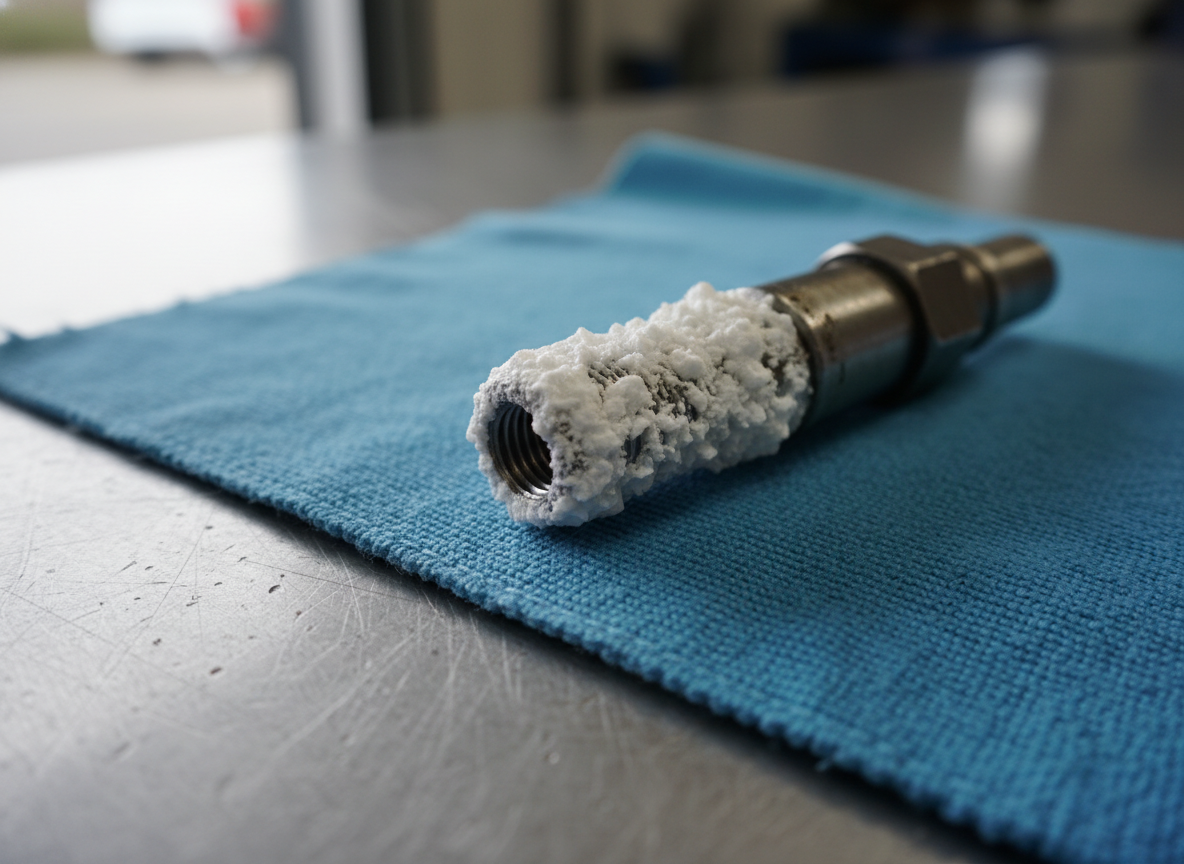
  • White crystalline residue visible around the injector tip when inspected — a hallmark of blockage from dried AdBlue
  • Countdown timer appearing despite an adequate fluid level — the ECU detects poor SCR performance and starts the no-start sequence
  • High NOx readings on live data even after a fresh AdBlue top-up and system purge
  • Injector circuit open or short fault — solenoid has failed electrically
Important: An AdBlue injector fault often stores alongside pump and NOx sensor codes. Always check live data to identify which component is actually causing the SCR efficiency drop — replacing parts without diagnosis wastes money and won’t clear the fault.

AdBlue injector showing white urea crystal build-up from a dosing system blockage

Fault codes linked to injector failure

Code Description Injector link
P20EE SCR NOx catalyst efficiency below threshold Injector underdosing — catalyst not receiving enough AdBlue
P20E8 Reductant injection system — low flow or pressure Blocked injector tip restricting flow
P207F Reductant quality — poor detected Injector contaminating exhaust with partial blockage debris
P2BAD Reductant injection system valve stuck closed Injector solenoid seized — no spray occurring
P204F Reductant system performance Can indicate injector or pump — live data separates the two
P20B9 Reductant heater performance Injector heat shield damage causing heater faults

These codes appear across all Euro 6 diesel vehicles — Mercedes, Ford, VW, Peugeot, Citroën, Vauxhall and more. The injector design varies by manufacturer but the failure patterns are consistent.

How we diagnose an AdBlue injector fault

At AdBlue Specialist we carry out a structured diagnostic process before recommending any repair. Rushing straight to parts replacement is the single biggest cause of repeat call-outs in the AdBlue trade.

Step 1: Full fault code read

We connect OBD diagnostic equipment capable of reading SCR-specific live data — not just generic OBD2 readers. We record all stored and pending codes, including manufacturer-specific codes that a standard reader would miss.

Step 2: Live data analysis

With the engine running, we monitor AdBlue pump pressure, injection duty cycle, dosing quantity requested vs actual, and upstream/downstream NOx sensor readings. A functioning pump with low or zero actual dosing quantity points directly to the injector. A pump pressure fault points elsewhere.

Step 3: Injector circuit test

We test the injector solenoid resistance and actuation signal. An open circuit (very high resistance) means the solenoid coil has burned out. A short to ground or supply means wiring damage — often caused by heat near the exhaust. This step rules out wiring faults before condemning the injector itself.

Step 4: Physical inspection

We inspect the injector tip for crystalline deposits and check the mounting sleeve for heat damage. A blocked tip can sometimes be cleared — but if the solenoid has failed or the injector body is cracked, replacement is necessary.

Gloved hand connecting a blue OBD scanner to a Peugeot van for AdBlue fault diagnosis

Prefer to skip the parts lottery? Call us on 07503 134 362 — we come to you across Staffordshire, Cheshire East and the surrounding region. Most AdBlue faults are diagnosed and resolved in under two hours on site.

AdBlue injector replacement cost UK

If your injector genuinely needs replacing, here is what to expect from UK garages and dealerships:

DEALERSHIP

£450 – £750+

  • OEM part (genuine manufacturer injector)
  • Injector coding to ECU required on most makes
  • Labour typically 1.5–3 hours at £90–£130/hr
  • Additional cost if mounting sleeve or heat shield damaged

INDEPENDENT GARAGE

£250 – £450

  • OEM-equivalent aftermarket part
  • Quality varies — sourcing matters
  • Coding capability needed (not all garages have SCR coding)
  • Check if the injector is included in the quote or priced separately

Additional costs to factor in:

  • Injector coding — Mercedes, BMW and some VAG vehicles require the injector to be coded to the ECU after replacement. This needs manufacturer-level diagnostic software and adds £50–£150 to the job.
  • Mounting sleeve replacement — the sleeve that seals the injector to the exhaust pipe corrodes and often needs replacing at the same time. Budget £30–£80 for the part plus additional labour.
  • AdBlue system flush — if contaminated fluid caused the blockage, a system flush before fitting the new injector reduces the risk of the problem recurring. Add £50–£100.
Watch out for: Garages that quote injector replacement without performing live data diagnostics first. P20EE and P20E8 are frequently caused by pump failure, not injector failure. Fitting a new injector when the pump is at fault will not clear the fault and you will be back within weeks.

Is replacement always the right answer?

For many UK diesel van owners — especially those with high-mileage commercial vehicles — the economics of repeat AdBlue repairs simply do not add up. An AdBlue injector fault is rarely the first repair the system has needed. Many of our customers have already spent money on NOx sensors, pumps or top-ups before calling us, only to find the injector is next on the failure list.

The SCR system has several interdependent components: the pump, the heater, the quality sensor, the NOx sensors (upstream and downstream), the injector, and the SCR catalyst itself. Repairing one component does not protect the others from age-related failure.

A permanent AdBlue delete and ECU remap from AdBlue Specialist costs from £299 and eliminates the entire SCR system from the ECU’s monitoring loop. No injector, no pump, no sensor, no countdown. The software edit is reversible and comes with a 12-month warranty. For a van that has already seen multiple AdBlue repairs, this is often the most cost-effective long-term solution.

Worth knowing: We cover Stoke-on-Trent, Staffordshire, Cheshire East, and travel to you — no recovery truck, no workshop wait. If you are weighing up injector replacement vs a permanent fix, call us and we will give you an honest assessment based on your vehicle, mileage and fault history.

Frequently asked questions

Can I drive with an AdBlue injector fault?

Yes, but only until the countdown reaches zero. Once the ECU logs a confirmed SCR efficiency fault, it starts a restart countdown — typically 500 miles. When that reaches zero, the engine will not restart after the next switch-off. Do not ignore the warning.

Can a blocked AdBlue injector be cleaned rather than replaced?

Sometimes. If the blockage is purely crystalline build-up at the tip and the solenoid is still functioning, an ultrasonic clean or chemical soak can restore flow. However, many injectors have internal O-rings and seals that degrade with heat, so a cleaned injector may not remain reliable. We assess on a case-by-case basis.

How long does AdBlue injector replacement take?

Typically 2–3 hours on site. The injector itself is usually accessible without major disassembly, but the mounting sleeve and heat shield add time if corroded. Coding the new injector adds 20–30 minutes where required.

Which vehicles are most prone to AdBlue injector faults?

Mercedes Sprinter (OM651/OM642 engines), VW Crafter, Ford Transit EcoBlue, Peugeot Boxer and Citroën Relay (2.2 HDi) are among the most commonly affected commercial vehicles. BMW and Audi diesel cars also see injector faults, particularly on higher-mileage examples above 80,000 miles.

Will a new AdBlue injector fix P20EE?

Only if the injector is confirmed as the root cause. P20EE (SCR NOx catalyst efficiency below threshold) is a result code — it tells you the catalyst is not performing, but not specifically why. The injector is one possible cause; the pump, NOx sensors and catalyst itself are others. Proper live data diagnosis is essential before replacing any part.

AdBlue injector fault on your van? We diagnose and fix AdBlue faults across Staffordshire, Cheshire East and beyond — mobile, same day, no towing. Call 07503 134 362 or book online today.

AdBlue injector showing deposits and wear — diesel exhaust fluid injector fault guide

Table of Contents

Recent Comments

No comments to show.

Never Miss News

AdBlue Specialist Services

You land here when the dash starts shouting and you need a clear next step.

Pick the service that fits your problem. Then book a mobile visit.

Mobile visit Stoke-on-Trent Staffordshire 09:00–20:00 Mon–Sun

Start here if you are not sure

If you have a countdown or start prevented message, use this guide first: No start in 500 miles.
Then book a visit so we can confirm the cause and stop it returning.

Core services

AdBlue Fix

Best when you want the main route from warning to working vehicle.

  • Diagnosis based on live data, not guesses
  • Fix plan that matches your fault and budget
  • Clear next steps if a part is needed

AdBlue Repair

Best when the fault keeps returning or you have a stored code like P20EE, P204F, P207F, P20E8.

  • Pinpoint the real cause
  • Mobile repair where possible
  • Verify with a road test and re-check

Same Day Service

Best when you need a fast visit and the van must move today.

  • Urgent help for countdowns and start prevented
  • Roadside, home, or workplace
  • Quick triage and clear fix path

AdBlue Removal Stoke on Trent

Best when you are actively searching for removal and want to talk through options.

  • Mobile visit in Stoke-on-Trent and nearby areas
  • Clear steps from booking to completion
  • Explain what you can expect on the day

System-specific help

SCR System Repair

Best when the system flags efficiency issues and you need the root cause found.

  • SCR efficiency faults and repeat warnings
  • Checks that rule out sensors vs dosing issues
  • Fix plan you can act on

NOx Sensor Solutions

Best when NOx readings look wrong or you keep seeing sensor-related faults.

  • Testing and verification with live data
  • Fix routes that match the fault pattern
  • Reduce repeat codes and limp mode triggers

Quick links for common situations

Code showing (P20EE, P204F, P207F)

CALL ME
+
Call me!