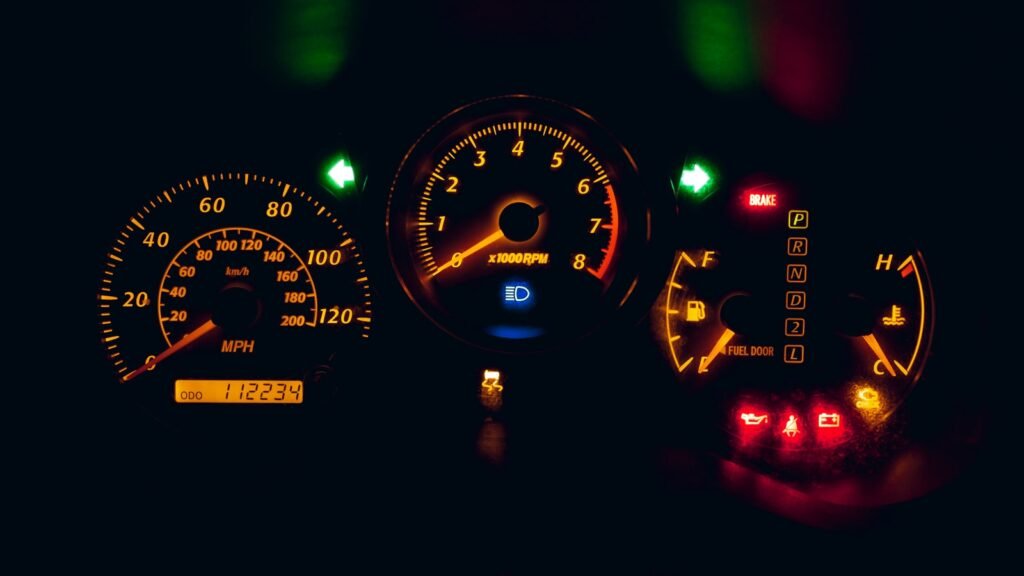
Topped up AdBlue but the warning light will not clear? You are not alone.
This usually means the car did not detect a big enough refill, or there’s a stored SCR fault that needs diagnosing and clearing.
You’ve just topped up 10 litres of AdBlue at the Tesco in Hanley, turned the key, and… the warning light is still glowing red on the dash. “AdBlue system fault – 300 miles to engine shutdown.” But you’ve just filled the tank. What’s going on? This is one of the most frustrating AdBlue issues van owners face in Stoke-on-Trent, and it’s more common than you’d think. The problem is that the AdBlue warning light doesn’t just monitor fluid level—it’s connected to sensors, pumps, heaters and the SCR system, and any one of those can trigger a persistent warning even after you’ve topped up. This 7-step guide walks you through the most common causes of a stuck AdBlue warning light, how to diagnose which component has failed, and when you need professional help to clear the fault and reset the countdown.
Why the AdBlue warning light stays on after topping up
When you top up AdBlue and the warning light stays on, it’s because the ECU has detected a confirmed fault in the AdBlue system—not just a low level. The fault code is stored in permanent memory, and topping up the tank doesn’t clear the code or reset the countdown timer.
Common causes of persistent AdBlue warnings:
- Faulty level sensor – reads “empty” even when the tank is full (P20EE, P204F, P207F)
- Air in the system – if you ran the tank completely dry before refilling, air is trapped in the pump and lines (P20E8)
- Contaminated AdBlue – water, dirt or wrong concentration triggers SCR efficiency faults (P20EE, P204F)
- Failed AdBlue pump – can’t deliver pressure to the dosing injector (P20E8, P20BA)
- Crystallised sensor or connector – dried AdBlue blocks the sensor probe or corrodes the wiring
- Heater fault – system thinks AdBlue is frozen even in summer (P13DF, P20E9)
- ECU hasn’t re-checked the system yet – some vans need 10–20 miles of driving before the warning clears
The key point: topping up only fixes low-level warnings. If there’s a hardware fault (sensor, pump, heater) or contamination, the warning will stay on until you fix the root cause and clear the fault codes.
7-step guide: How to fix a stuck AdBlue warning light
Follow these steps in order. Each step rules out a common cause, and most issues are fixed by Step 3 or 4. If you reach Step 7 and the light is still on, you’ll need professional diagnostics.
Step 1: Check the AdBlue level (again)
It sounds obvious, but double-check the tank is actually full. The filler neck on most vans holds 1–2 litres, so if you poured in 5 litres and stopped when you saw fluid at the top of the neck, the tank might still be low.
How to check:
- Turn the ignition on (engine off) and check the dash display for AdBlue range (“1,200 miles remaining” or similar)
- If it shows less than 500 miles, add another 5 litres
- If the display shows “—” or “0 miles”, the level sensor has failed (go to Step 4)
Pro tip: Most vans need the tank at least quarter-full (3–5 litres minimum) before the warning will clear. If you only added 2–3 litres, top up to at least 5 litres and restart the engine.
Step 2: Restart the engine and drive for 10–20 minutes
Some vans don’t re-check the AdBlue level immediately after topping up. The ECU waits until the engine has been running for 10–20 minutes or you’ve driven 5–10 miles before it runs a full system check.
What to do:
- Start the engine and let it idle for 30 seconds
- Drive normally for 10–20 minutes (mixed speeds, not just idling in a car park)
- After 20 minutes, turn the engine off, wait 10 seconds, then restart
- Check the dash—if the warning has cleared, the system has reset successfully
Success rate: ~30–40% of “stuck” warnings clear after a proper drive cycle, especially if the tank was run very low before topping up.
Step 3: Check for air in the system (if you ran the tank dry)
If you ran the AdBlue tank completely empty before refilling, air is now trapped in the pump and delivery lines. The pump can’t build pressure, so the ECU triggers a P20E8 fault (reductant pressure too low) even though the tank is full.
Symptoms of air in the system:
- “AdBlue pressure too low” message on the dash
- Warning appeared immediately after running the tank dry
- You can hear the AdBlue pump running (high-pitched whine under the van) but the warning won’t clear
How to bleed the system (DIY method):
- Top up the tank to at least half-full (10 litres)
- Turn the ignition on (engine off) and listen for the AdBlue pump priming (you’ll hear a whirring sound for 10–15 seconds)
- Turn the ignition off, wait 10 seconds, then turn it on again (don’t start the engine)
- Repeat this cycle 5–10 times to purge air from the pump
- Start the engine and drive for 10 minutes—the warning should clear once pressure builds
Success rate: ~50–60% for air-related faults. If this doesn’t work, the pump may need manual bleeding using a diagnostic tool (see Step 7).
Step 4: Inspect and clean the AdBlue level sensor
If the dash shows “AdBlue empty” or “0 miles remaining” even after topping up, the level sensor has failed or is covered in white crystals (dried AdBlue). This is the most common cause of persistent warnings.
How to access and clean the sensor:
- Sprinters (W906/W907): Sensor is inside the AdBlue tank, accessed via a hatch under the van (driver’s side, behind the rear wheel). You’ll need to jack up the van and remove 4–6 bolts.
- Transits (Mk7/Mk8): Sensor is in the load bay under a plastic cover, or under the van near the spare wheel.
- Crafters/Boxers: Usually under the van, accessed from underneath (you’ll need ramps or a lift).
Cleaning procedure:
- Remove the sensor from the tank (you may need to drain some AdBlue first—use a siphon pump)
- Rinse the sensor probe in warm water (not hot—thermal shock can crack the plastic)
- Use a soft brush (old toothbrush) to scrub white crystals off the probe and ultrasonic sensor face
- Clean the electrical connector with contact cleaner spray and a cotton bud
- Dry thoroughly with compressed air or kitchen roll
- Refit the sensor, tighten the retaining ring, and reconnect the plug
Success rate: ~60–70% of “faulty” level sensors are just dirty. If cleaning doesn’t work, the sensor electronics have failed and you’ll need a replacement (£80–£200 + fitting).
Step 5: Clear the fault codes with a diagnostic scanner
Even if you’ve fixed the root cause (topped up, cleaned the sensor, bled the air), the fault codes are still stored in the ECU. The warning light won’t go off until you clear the codes.
What you need:
- A basic OBD2 code reader (£20–£50 from Halfords, Amazon or eBay)
- Or a smartphone app + Bluetooth OBD2 adapter (Torque Pro, Car Scanner, etc.)
How to clear codes:
- Plug the scanner into the OBD2 port (usually under the dash, driver’s side)
- Turn the ignition on (engine off)
- Read the fault codes and write them down (you’ll need these if the warning returns)
- Select “Clear codes” or “Erase DTCs”
- Turn the ignition off, wait 10 seconds, then start the engine
- Check the dash—if the warning is off, you’ve successfully cleared the fault
Common AdBlue fault codes:
- P20EE – SCR NOx catalyst efficiency below threshold (low level, contaminated fluid, or failed sensor)
- P204F – Reductant system performance (level sensor, pump or contamination)
- P20E8 – Reductant pressure too low (pump fault or air in system)
- P207F – Reductant level sensor circuit (sensor wiring or connector fault)
- P13DF – Reductant heater control circuit (heater fault, common in winter)
Important: If the warning returns within 10 minutes of clearing codes, you haven’t fixed the root cause. Go to Step 6.
Step 6: Check for contaminated AdBlue
If you’ve topped up with old, opened or contaminated AdBlue (water, diesel, dirt), the SCR system will detect low NOx reduction efficiency and trigger P20EE or P204F faults. Clearing the codes won’t help—the warning will return immediately.
Signs of contaminated AdBlue:
- Warning appeared immediately after topping up (not before)
- AdBlue bottle was opened, expired (over 18 months old) or stored in direct sunlight
- Fluid looks cloudy, yellow-tinged or has sediment at the bottom of the tank
- You accidentally added a small amount of diesel, water or screenwash to the AdBlue tank
How to fix contaminated AdBlue:
- Drain the AdBlue tank completely (use a siphon pump or remove the tank drain plug)
- Flush the tank with 5 litres of fresh AdBlue, then drain again
- Refill with fresh, sealed ISO 22241 AdBlue (10–15 litres)
- Clear the fault codes with a scanner
- Drive for 20–30 minutes to allow the SCR system to re-calibrate
Cost: £20–£40 for fresh AdBlue + 1–2 hours labour if you do it yourself. Main dealers charge £150–£300 for a tank drain and flush.
Prevention: Only use sealed AdBlue bottles marked ISO 22241. Don’t buy opened drums, expired stock or “budget” fluid from unknown sources. Store AdBlue indoors, away from sunlight, and use within 12 months of purchase.
Step 7: Get a dealer-level reset (for countdown timers and recalibration)
If you’ve followed Steps 1–6 and the warning is still on, or if the countdown timer won’t reset (“Engine start prevented in 300 miles”), you need dealer-level diagnostics to force a reset and recalibrate the sensors.
What dealer tools can do that basic scanners can’t:
- Reset the AdBlue countdown timer (stored in the SCR module, not the main ECU)
- Recalibrate the level sensor (tell the ECU to re-learn the tank capacity and sensor range)
- Perform a forced regeneration (clears soot from the DPF and SCR catalyst)
- Bleed the AdBlue pump electronically (purges air without manual cycling)
- Read live data from the AdBlue system (pressure, temperature, dosing rate) to diagnose intermittent faults
Options for dealer-level reset:
| Option | Cost | Pros | Cons |
|---|---|---|---|
| Main dealer (Mercedes, Ford, VW, Peugeot) | £80–£150 diagnostics + £60–£120/hour labour | Genuine tools, full warranty, access to latest software updates | Expensive, often need to book days in advance, may insist on replacing parts you don’t need |
| Independent specialist with dealer tools | £50–£80 diagnostics + reset | Cheaper than main dealer, faster turnaround, more flexible | Need to take van to workshop, may not have tools for all brands |
| Mobile AdBlue specialist (us) | £60–£80 including call-out | Come to you (home, work, roadside), same-day service, Autotuner + cloned dealer tools for most brands | Limited to Stoke-on-Trent and surrounding areas |
Our mobile AdBlue reset service covers Stoke-on-Trent, Newcastle-under-Lyme, Stafford, Crewe and surrounding areas. We carry Autotuner and cloned dealer tools (XENTRY for Mercedes, IDS for Ford, ODIS for VW/Audi, Diagbox for Peugeot/Citroën) so we can reset countdown timers, recalibrate sensors and clear permanent codes on-site. Call 07503 134 362 for same-day service.
When you need to replace parts (not just reset)
If you’ve tried all 7 steps and the warning keeps coming back, you have a hardware fault that needs replacing:
Failed AdBlue level sensor
Symptoms: Dash always shows “0 miles remaining” or “—” even with a full tank. Cleaning the sensor doesn’t fix it.
Cost: £80–£200 for the sensor + £50–£150 fitting (1–2 hours labour).
Lifespan: 5–8 years or 100,000–150,000 miles. Cheap aftermarket sensors often fail within 12 months.
Failed AdBlue pump
Symptoms: “AdBlue pressure too low” warning, fault code P20E8, pump doesn’t make any noise when ignition is turned on.
Cost: £200–£500 for the pump + £100–£200 fitting (2–3 hours labour).
Lifespan: 6–10 years or 120,000–200,000 miles. Running the tank dry repeatedly shortens pump life.
Failed AdBlue heater
Symptoms: Warning only appears in cold weather (below 5°C), fault code P13DF or P20E9, AdBlue temperature reads -40°C even in summer.
Cost: £100–£300 for heater element + £80–£150 fitting. On some vans the heater is integrated into the pump, so you need to replace the whole pump assembly (£300–£600 total).
Lifespan: 5–8 years. Heaters fail more often on vans that do short trips in winter (heater cycles on/off frequently).
Alternative to expensive repairs: If the repair cost is over £500 and your van is high-mileage (150,000+ miles), some owners choose AdBlue system removal instead. This is a permanent software solution that disables the AdBlue system and removes the warning lights. Important: AdBlue delete is only legal for off-road, export or show vehicles in the UK. Road-legal vans must have a working AdBlue system to pass MOT.
“Topped up my Boxer at Asda in Longton, drove 5 miles to the next job, and the warning was still flashing red,” Craig the electrician told me. “Tried restarting the engine, tried disconnecting the battery—nothing worked. Turned out the level sensor was caked in white crystals and reading zero even though I’d just put in 10 litres. We pulled the sensor out through the hatch under the van, cleaned it with warm water and a toothbrush, cleared the codes with Autotuner, and the light went off instantly. Total time: 30 minutes. He’d been quoted £450 by the dealer for a new sensor that didn’t need replacing.”
AdBlue Warning Light FAQ
Why won’t my AdBlue warning light go off after topping up?
The most common causes are: a faulty level sensor (reads empty even when full), air in the system (if you ran the tank dry), contaminated AdBlue, or fault codes stored in the ECU that need clearing with a diagnostic scanner. Topping up only fixes low-level warnings—if there’s a hardware fault, the warning stays on until you fix it and clear the codes.
How long does it take for the AdBlue warning to clear after topping up?
If the tank was just low (no other faults), the warning should clear within 30 seconds of restarting the engine. Some vans need 10–20 minutes of driving before the ECU re-checks the system. If the warning is still on after 20 minutes, you have a fault that needs diagnosing.
Can I drive with the AdBlue warning light on?
Yes, but only until the countdown reaches zero. Once the warning appears, you’ll see a message like “AdBlue system fault – engine start prevented in 500 miles.” You can keep driving until the countdown hits zero, but once it does, the engine won’t restart. Get the fault diagnosed and fixed before you run out of miles.
Will disconnecting the battery clear the AdBlue warning?
On most modern vans (2018+ Euro 6d), no—fault codes and countdown timers are stored in permanent memory and survive a battery disconnect. On older vans (2014–2017), it might work if the fault was temporary, but success rate is only 30–40%. See our battery disconnect guide for full details.
How much does it cost to fix an AdBlue warning light?
Depends on the cause:
Low level (just needs topping up): £10–£20 for AdBlue
Dirty sensor (needs cleaning): £0–£80 (DIY or mobile service)
Failed sensor: £130–£350 (parts + fitting)
Failed pump: £300–£700 (parts + fitting)
Contaminated AdBlue (tank flush): £40–£300 (DIY or dealer)
Diagnostics + code clearing: £50–£150 (independent) or £80–£150 (main dealer)
What does it mean when the AdBlue light is red instead of amber?
Amber/yellow warning: Low AdBlue level or minor fault detected. You can keep driving but should top up or investigate soon.
Red warning: Critical fault detected, countdown active. The engine will not restart once the countdown reaches zero. Get it fixed urgently.
Why does my AdBlue warning come on and off intermittently?
Intermittent warnings are usually caused by: a loose or corroded sensor connector (vibration causes the connection to drop in and out), a failing level sensor (intermittent signal), contaminated AdBlue (sediment blocks the sensor intermittently), or a wiring fault (chafed wire touching the chassis intermittently). Use a diagnostic scanner to check for stored fault codes—even if the light is currently off, the codes will tell you what’s failing.
Can I clear AdBlue fault codes without a scanner?
No—on modern vans (2016+), fault codes are stored in permanent memory and can only be cleared using a diagnostic tool. Battery disconnect rarely works. The only exception is if the warning was purely due to low level—topping up and restarting will clear it without needing a scanner.
For related troubleshooting guides, see our AdBlue sensor fault diagnosis, will disconnecting battery reset AdBlue guide, AdBlue pump vs heater fault comparison, or top AdBlue fault codes explained.
AdBlue warning still won’t go off?
We diagnose and fix stuck AdBlue warnings on-site across Stoke-on-Trent, Newcastle-under-Lyme, Stafford and Crewe. Sensor cleaning, code clearing and countdown resets using dealer-level tools. Same-day service available.
07503 134 362 | ✉ info@adbluespecialist.co.uk
Hours: Mon–Sun 09:00–20:00