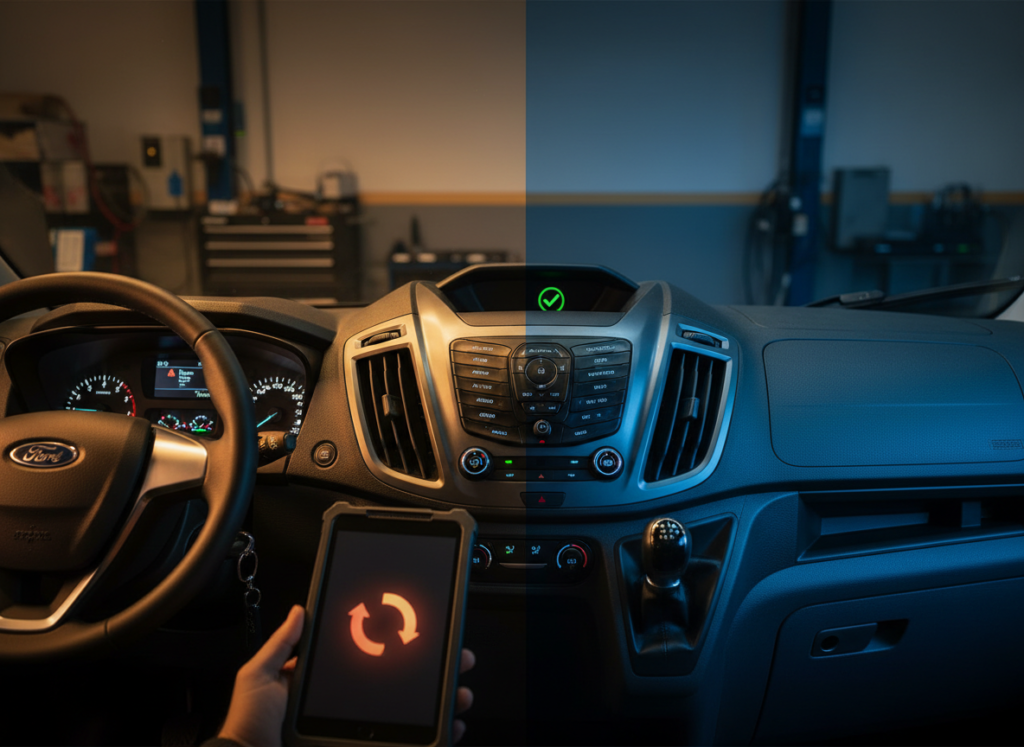
SID212EVO P20EE SCR Efficiency Fault: Why It Keeps Coming Back
P20EE means the ECU thinks the SCR system is not reducing NOx enough.
On SID212EVO, it often returns because the root cause sits upstream of the part you replaced.
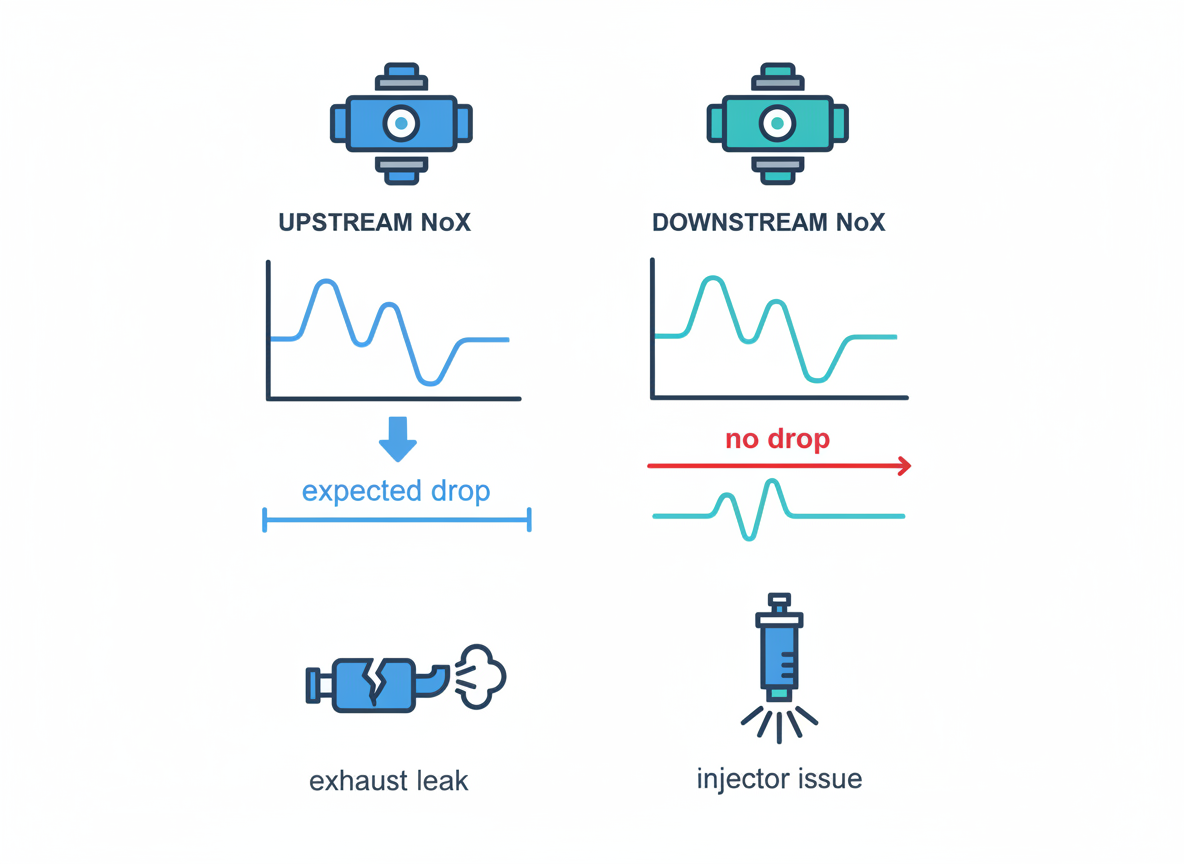
Common triggers include NOx sensor drift, AdBlue dosing issues, small exhaust leaks, and pressure/flow problems that make dosing inconsistent.
P20EE is one of the most expensive fault paths because it pushes people into parts roulette.
A NOx sensor gets replaced.
The fault clears.
A few days later it returns.
That usually means the ECU test still fails under load, not that the new part is “bad”.
If your dash says “no start in X miles”, go here first:
SID212EVO no-start countdown guide.
P20EE is often a “result” code.
These pages cover the common causes that sit underneath it.

What P20EE means on SID212EVO
P20EE is an SCR efficiency fault.
In plain English, the ECU expected the SCR system to cut NOx by a certain amount.
It didn’t see enough reduction.
So it flags the system as “below threshold”.
The key detail is this.
P20EE does not always point to one single part.
It points to a failed result.
That result depends on multiple inputs working at the same time.
You prove what failed during the efficiency test under load.
Not at idle.
Not on the driveway.
Under the conditions where the ECU runs the test and decides “pass” or “fail”.
Why P20EE keeps coming back
If you clear the code and it returns, the ECU ran the same check again and it still failed.
These are the causes we see most on SID212EVO.
| Cause bucket | What’s really happening | Why it triggers P20EE | What to check next |
|---|---|---|---|
| NOx sensor drift | Sensor values look “ok” at idle but drift under load | Upstream/downstream relationship looks wrong, so efficiency appears low | NOx sensor guide |
| AdBlue dosing inconsistency | Injector spray pattern poor, restriction, or intermittent flow | Not enough ammonia generation, so NOx reduction falls short | Check for crystals and dosing behaviour, plus P204F |
| Pressure supply issues | Weak prime, low pressure, or pressure drop during demand | Dosing becomes inconsistent so efficiency fails over a drive cycle | P20E8 |
| Exhaust leaks | Small leaks affect sensor readings and calculated efficiency | ECU thinks NOx reduction is worse than it is | Check joints, flexi sections, clamps, and sensor bungs |
| Quality logic issues | AdBlue quality plausibility or dosing calculation fails | System doesn’t dose correctly or the ECU distrusts the data | P207F |
| Software threshold changes | Monitoring becomes stricter after an update | Borderline parts that “just passed” now fail | Updates guide |
Fast checks before you replace parts
You want proof, not guesses.
These checks help you decide where to look first.
Look for “supporting” codes
- P20E8 suggests a supply problem.
Start with pressure and demand behaviour. - P204F suggests dosing/performance mismatch.
Look for restriction and injector issues. - P207F suggests quality logic.
Check refill history and system behaviour.
Hub overview:
SID212EVO faults explained.
Don’t test at idle only
- P20EE decisions often happen during steady cruise and load changes.
- NOx sensor drift shows up when the exhaust is hot and flowing.
- A “good” reading on the driveway can still fail on the road.
If you keep clearing it, read:
Reset guide.
Replacing a NOx sensor because it’s mentioned in the code description, without checking whether dosing and pressure are stable first.
If dosing is inconsistent, the efficiency check can fail even with brand new sensors.
The misdiagnoses that keep P20EE in the loop
These patterns explain why P20EE is famous for coming back.
You fix one piece, but the real failure sits elsewhere.
“It must be the NOx sensor”
Sometimes it is.
But if pressure is unstable or dosing is restricted, the system still won’t reduce NOx enough.
The ECU then blames the result again.
“It’s the SCR catalyst”
Catalyst replacement gets suggested early because it’s expensive and it’s a clean “answer”.
In reality, you should rule out pressure, dosing, leaks, and sensor behaviour first.
If the fault started after dealer work, read:
SID212EVO software updates.
What to do next
Choose the next move based on what you’re seeing.
This keeps you out of repeated parts swaps.
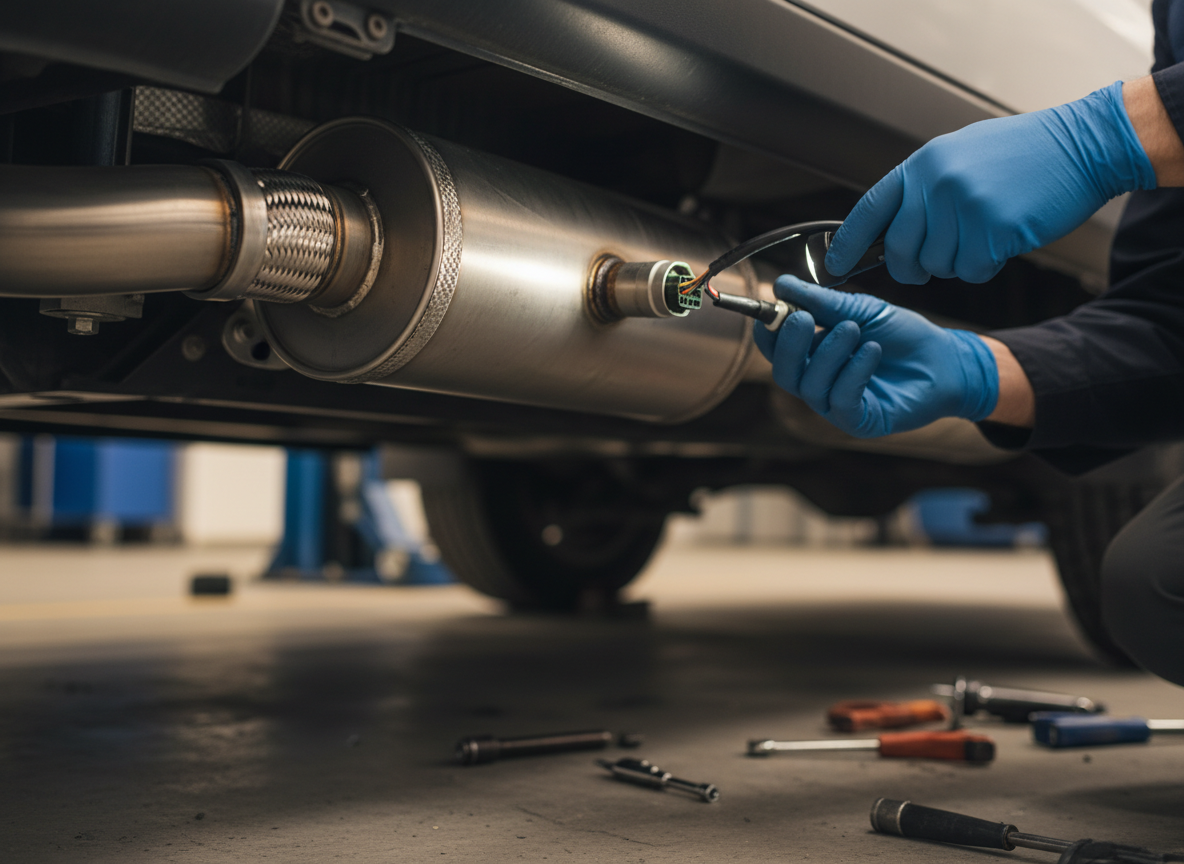
- If P20EE is on its own: check for small exhaust leaks, then verify upstream/downstream NOx behaviour under load.
- If P20EE sits with P20E8: treat pressure and demand stability as priority.
P20E8 guide. - If P20EE sits with P204F or P207F: treat it as dosing/performance first.
P204F
and
P207F. - If a countdown is active: go to
no-start countdown.
Want the full hub map?
SID212EVO master guide.
We test the system under the conditions where the ECU decides pass or fail, then confirm the fix holds.