

SID212EVO P20E8 Fault Code: Low AdBlue Pressure Causes & Fixes
P20E8 on SID212EVO means the ECU has seen low reductant (AdBlue) pressure.
The cause is often a weak pump, a restriction from crystallisation, or pressure dropping under demand.
The fastest fix comes from proving where pressure is lost, not guessing parts.
If you’ve got P20E8 and an AdBlue warning that keeps coming back, you’re dealing with a supply problem.
The van needs stable AdBlue pressure for dosing.
If pressure drops, the ECU logs the fault and can escalate into a no-start countdown.
This guide shows what P20E8 means, the common causes on Ford EcoBlue, and the checks that stop repeat faults.
P20E8 is one of the most common SID212EVO triggers.
For the full map of symptoms and linked codes, use:
SID212EVO AdBlue faults explained.
What P20E8 means on SID212EVO
P20E8 translates to low reductant pressure.
Reductant is AdBlue.
The ECU expects the pump to build and hold pressure within a set range.
When it can’t, it logs P20E8.
It can happen on start-up prime.
It can happen while dosing under load.
It can also happen after the van has sat for a few days, when crystallisation or a weak pump shows itself.
P20E8 is not “change the pump”.
It is “pressure didn’t meet the target”.
The target can fail because of the pump, a restriction, a leak, or wiring that makes the pump behave wrongly.
Common symptoms you’ll see with P20E8
Dash messages
- AdBlue warning that returns soon after clearing.
- “No start in X miles” countdown can appear if it repeats.
- Engine light plus emissions message.
Behaviour changes
- Feels fine at first, then escalates over a few drive cycles.
- Fault appears more often in cold weather.
- Returns after motorway load or towing.
Most common causes of P20E8 on Ford EcoBlue
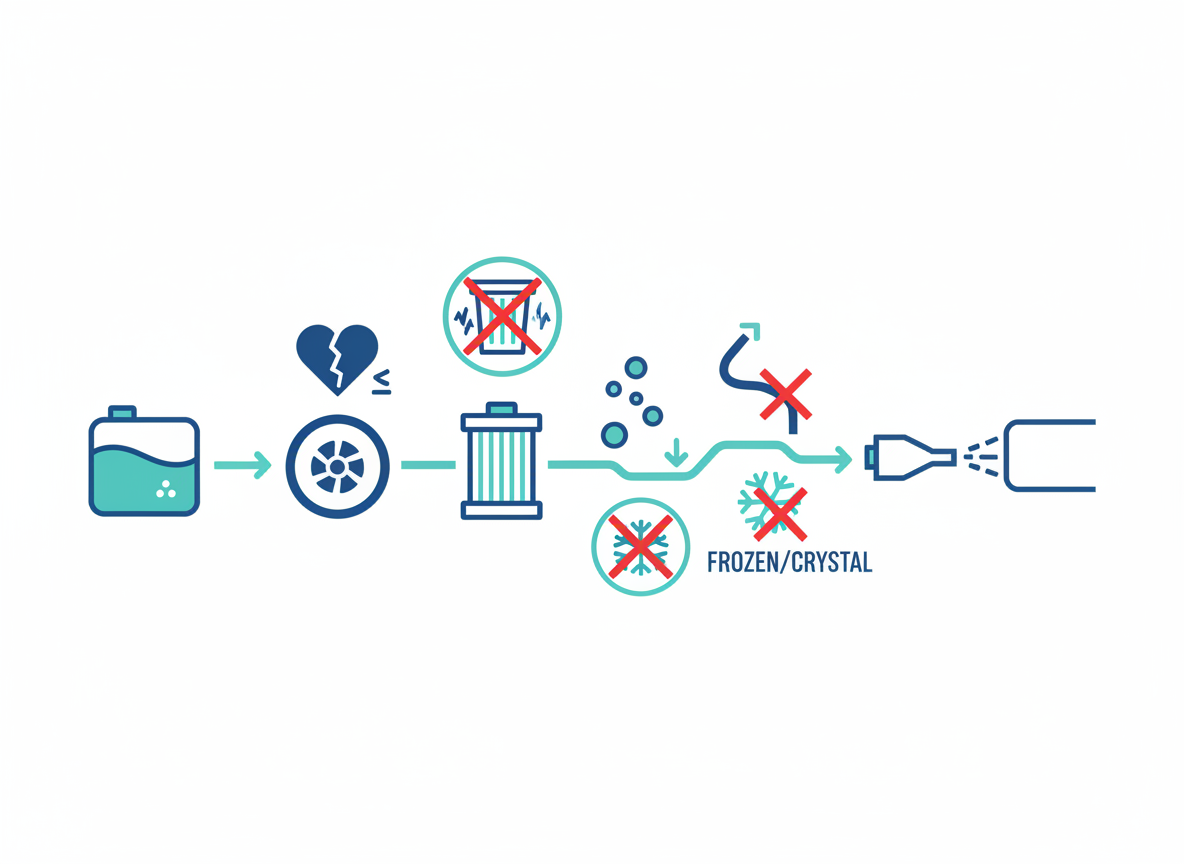
In the real world, P20E8 usually comes from one of the causes below.
The mistake is assuming it’s always the pump.
Restrictions and crystallisation can create the same low-pressure result.
| Cause | What it looks like | Why it triggers P20E8 | What to check |
|---|---|---|---|
| Weak AdBlue pump | Pressure builds slowly or drops quickly | Cannot meet or hold target pressure | Prime behaviour, pressure drop under demand, repeat pattern after sitting |
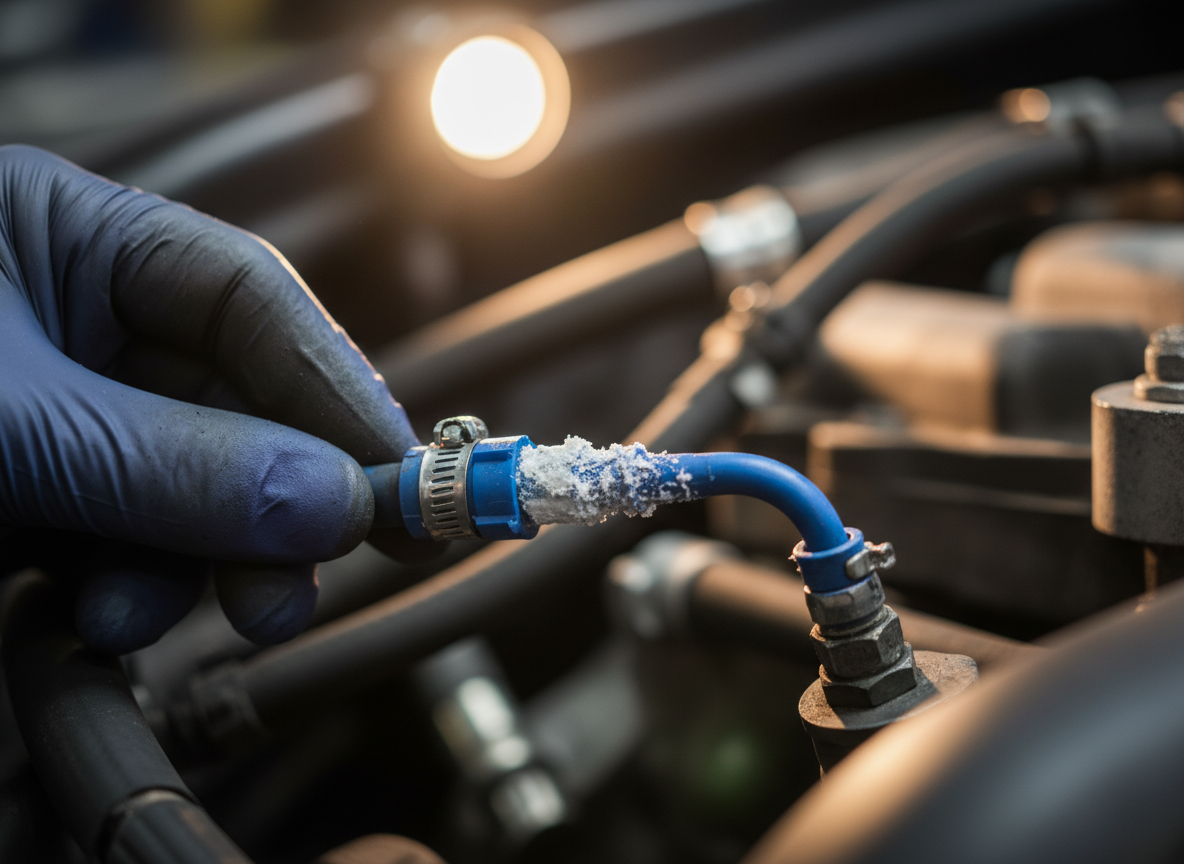
| Crystallisation / restriction | White crystals around filler neck, injector area, or lines | Flow restriction causes pressure instability | Inspect dosing point, line condition, tank neck area, injector deposits |
| Blocked or restricted dosing injector | Build-up at dosing point, uneven spray patterns | Pressure behaves oddly when dosing starts | Check injector deposits, confirm dosing behaviour with live data |
| Leak / pressure loss | Smell or residue, dampness near lines (not always obvious) | Pressure bleeds away before or during dosing | Visual inspection, pressure hold checks, line joints |
| Wiring / connector faults | Intermittent, weather-related, vibration-related returns | Pump or sensor signal becomes unreliable | Connector condition, corrosion, loom damage points |
P20E8 can lead into other codes because poor dosing affects system checks.
If you see these too, read them as a chain:
- P204F (performance) can show when dosing results do not match what the ECU expects.
- P20EE (efficiency) can appear when NOx reduction stays low because dosing is inconsistent.
Use:
P204F guide
and
P20EE guide.
Checks that stop you wasting money
If you want a clean, repeatable process, use this checklist.
It’s designed to stop parts roulette.
- Confirm the code is active and note freeze-frame data (temp, speed, load).
- Check whether it happens on prime (start-up) or only when driving under load.
- Inspect for crystallisation around filler neck and dosing point.
- Look for pressure drop patterns (builds then collapses) which can point to restriction or pump weakness.
- Don’t clear it and assume it’s gone. Drive it and check for pending faults returning.
If you’re short on time, this is where booking diagnosis pays for itself:
AdBlue repair and diagnostics.
Why P20E8 keeps coming back after a “fix”
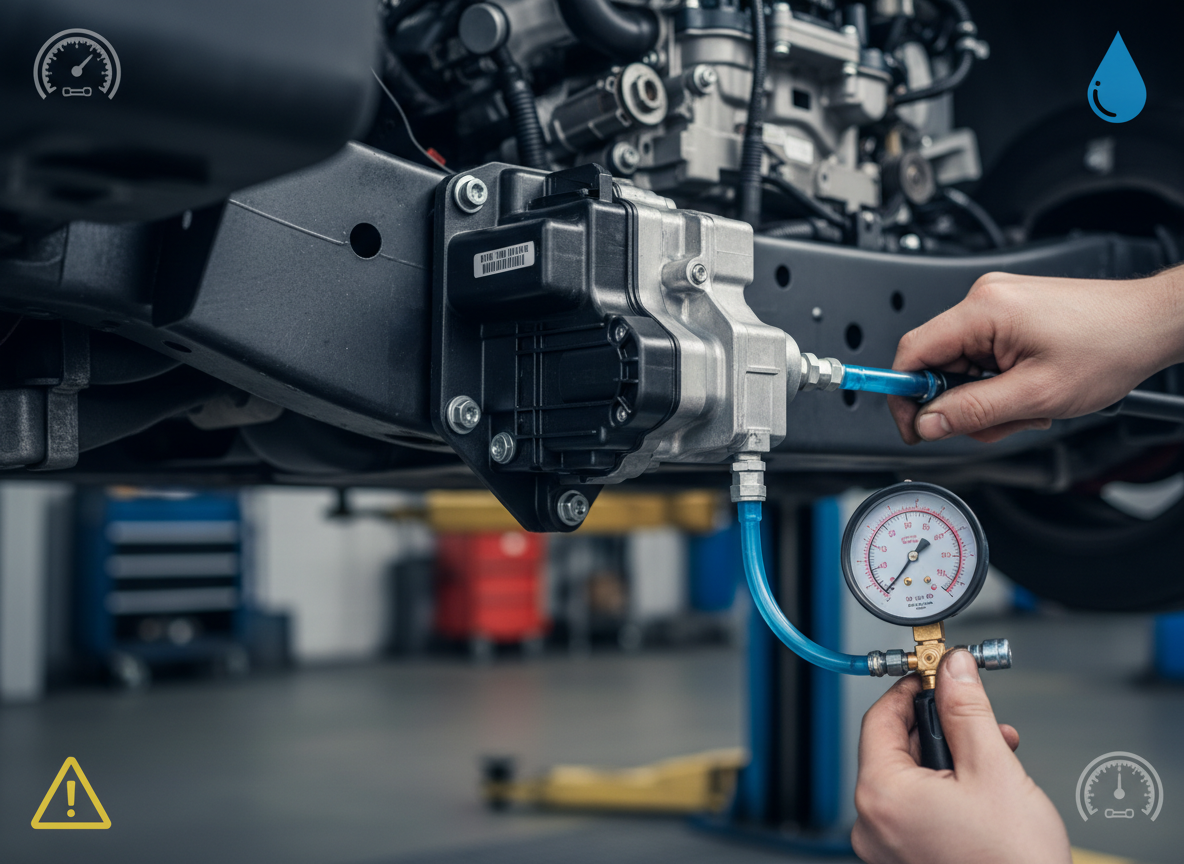
P20E8 usually returns for one of three reasons.
The root cause did not get fixed.
A linked fault got left behind.
Or the system got reset without proving pressure stability under real dosing demand.
Replace the pump, but leave crystallisation in the lines or at the injector.
The new pump still struggles, so the ECU logs P20E8 again.
Clear the code with a scanner and assume it’s fixed.
The ECU runs the same check again.
If it fails, it returns quickly.
Use the reset guide to understand what clears temporarily and what clears for good:
Reset SID212EVO faults: what works.
What to do next
Keep your next step simple.
Match your situation, then follow the right path.
If you have a countdown
- Don’t wait for it to hit zero.
- Read codes, confirm pressure behaviour, act quickly.
- Use the countdown guide for triage.
Go to:
No-start countdown.
We diagnose the pressure fault properly and fix what has actually failed, so the warning stops returning.