
P207F or P20EE: Which AdBlue Fault Code to Fix First
If both codes are stored, fix P207F first — poor AdBlue quality or dosing is what drags SCR efficiency down and triggers P20EE behind it. Clearing P20EE while P207F is live means the countdown to start prevented comes straight back. This page is for deciding the repair order, not for diagnosing either code on its own.
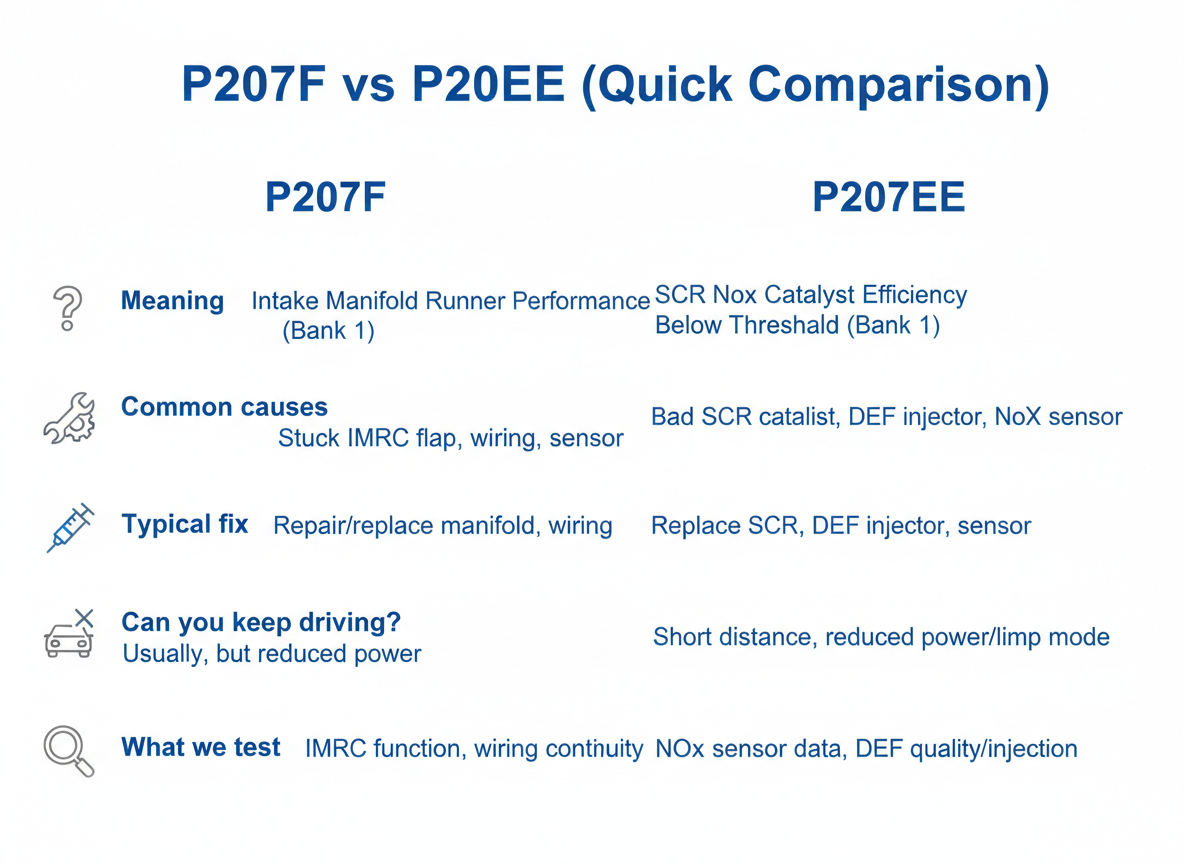
These two codes often show up together, which makes the fix confusing. This guide shows you what each code means, what to check first, and when you need a mobile repair visit to stop the countdown.
If you’re seeing “no start in 500 miles” or similar, do not wait for it to hit zero. Use this guide first: No start in 500 miles.
These codes can appear together, even though they point to different causes. Check DPF or AdBlue fault before committing to a fix.
Quick diagnosis: what your AdBlue fault code actually means
P207F and P20EE often appear together on diesel vehicles with SCR systems. Although they seem similar, they refer to different parts of the emissions system. Understanding the difference helps avoid replacing expensive components unnecessarily.
| Code | What it means | Most common cause | Next step |
|---|---|---|---|
| P207F | AdBlue quality performance | Incorrect fluid concentration, contaminated AdBlue, sensor plausibility issue | Read full P207F guide |
| P20EE | SCR efficiency below threshold | NOx sensor drift, injector spray issues, catalyst logic failure | Read P20EE explanation |
P207F vs P20EE: Side-by-Side Comparison
| Code | Meaning | Main cause | Typical fix | Urgency |
|---|---|---|---|---|
| P207F | Reductant quality performance | AdBlue quality, contamination, or dosing not matching expected values | Drain/refill with fresh AdBlue, flush if contaminated, confirm dosing and reset properly | High. Often triggers a countdown |
| P20EE | SCR NOx catalyst efficiency below threshold | NOx sensor readings, injector spray pattern, SCR catalyst condition, exhaust leaks | Live-test sensors, clean/replace injector, fix leaks, verify catalyst performance | High. Can trigger start prevention |
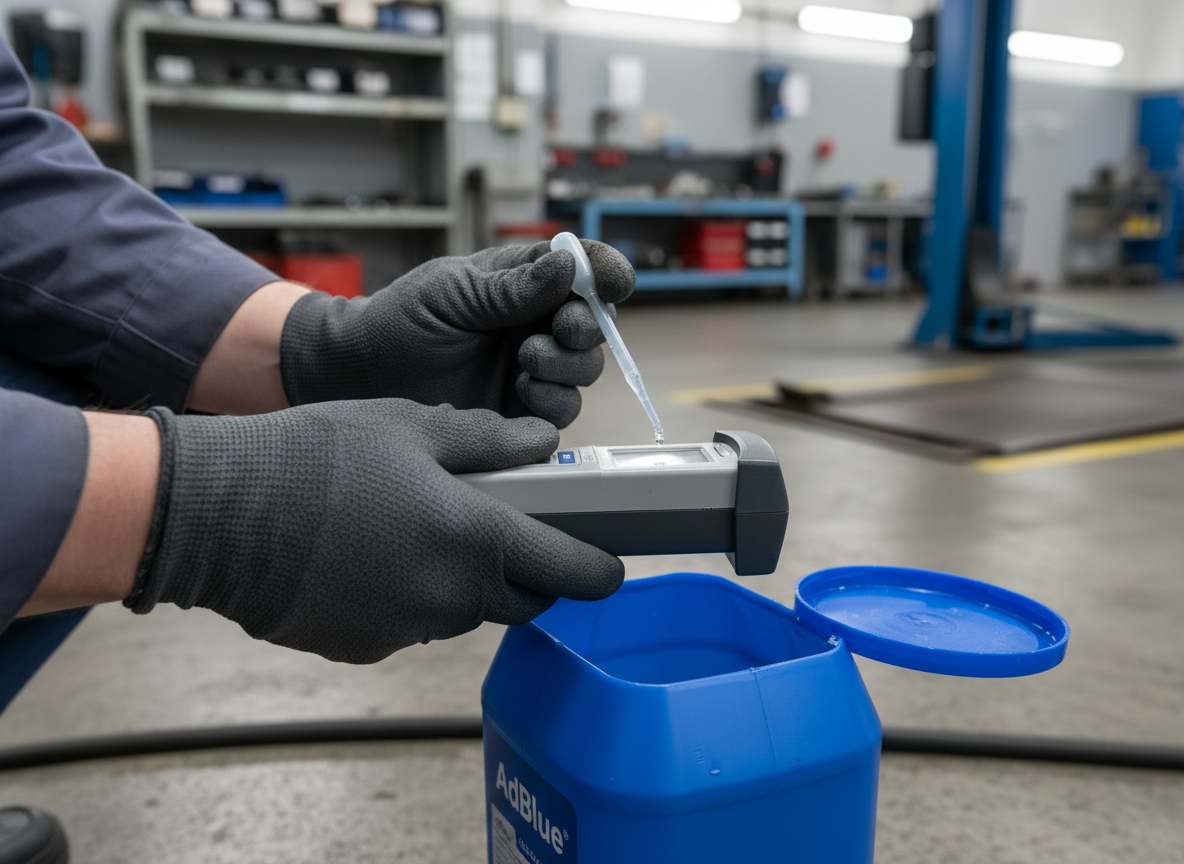
What Triggers Each Code?
P207F triggers
- Old AdBlue left in the tank for too long (especially in warm months).
- Contamination from water or dirt during topping up.
- Crystallisation affecting dosing flow.
- Quality sensor readings that don’t match expected concentration.
- Low dosing pressure or weak pump behaviour on prime tests.
If you topped up and the message came straight back, treat it as a dosing/quality issue, not a level issue.
P20EE triggers
- NOx sensor drift (upstream or downstream) giving false efficiency readings.
- Blocked or leaking AdBlue injector causing a poor spray pattern.
- Exhaust leak before the SCR catalyst affecting readings.
- SCR catalyst contamination or ageing.
- Incorrect dosing strategy on some ECUs until updated.
Read the Peugeot-focused version here: Peugeot P20EE fault code fix.
Symptoms to Watch For
- “AdBlue quality poor” or “emissions fault” message.
- “No start in 500 miles” style countdown.
- Codes stored together (P207F + P20EE) after a refill.
- AdBlue consumption changes (too high or unusually low).
- Limp mode on some vehicles.
If the countdown is active, use: No start in 500 miles.
Which Code Should You Fix First?
Fix P207F first. If dosing is wrong, the SCR system cannot reduce NOx properly. That can trigger P20EE even if the catalyst is fine.
Then re-test. If P20EE returns after P207F is truly resolved, you move onto sensor/injector/catalyst checks.
How to Fix P207F (Quality / Dosing Issue)
What you can do before booking a visit
- Check the AdBlue level is genuinely above minimum (not just a small top-up).
- If the fluid is old or unknown, plan a drain and refill with sealed, in-date AdBlue.
- Do not keep clearing the code without fixing the cause. It usually comes straight back.
- If the vehicle shows a countdown, do not let it hit zero.
What we check on-site
- Freeze-frame data to see the trigger conditions.
- Dosing pressure behaviour on prime and load tests (where supported).
- Quality readings and plausibility against expected values.
- Injector condition if crystallisation is likely.
That usually means it needs proper dosing checks and a verified reset.
How to Fix P20EE (SCR Efficiency Fault)
Start with the simple checks
- Fix P207F first if it’s present.
- Look for exhaust leaks before the SCR catalyst.
- Check for injector tip crystallisation and poor spray pattern signs.
What we verify with live data
- Upstream vs downstream NOx readings (do they make sense?).
- Temperature behaviour across the system (where supported).
- AdBlue dosing behaviour during tests and road verification.
If you want the Peugeot-specific fix path: Peugeot P20EE tank fault fast mobile fix.
How Our Mobile Team Fixes P207F & P20EE
- Dealer-level scan with freeze-frame review.
- Live data checks for NOx sensors and SCR plausibility.
- Dosing / pressure checks where supported.
- Drain/refill and flush work if contamination is likely.
- Injector clean or replacement if the spray pattern is poor.
- Verified reset so the countdown clears and stays cleared.
If you’re in a countdown, book same-day help before it hits zero.
We don’t cut or drill. We diagnose first, then fix what’s actually failed.
Related Faults & Resources
Can You Keep Driving?
Usually yes, for a limited distance. Many vehicles will run during the countdown and then block starting once it hits zero.
If you rely on the vehicle for work, treat a countdown as urgent and get the cause confirmed early.
Prevention Tips
- Use sealed, in-date AdBlue from reputable suppliers.
- Keep the filler cap tight to reduce contamination risk.
- Run the vehicle long enough to reach full operating temperature.
- Don’t ignore early warnings. Crystallisation gets worse when left.
Mobile Help Across Stoke-on-Trent & Staffordshire
We’re mobile across Stoke-on-Trent, Staffordshire, and nearby areas. If you’re stuck in a countdown or the warning keeps returning, the quickest route is usually a verified repair visit.
If your vehicle shows “no start in X miles”
Both P207F and P20EE can eventually trigger a countdown warning on vehicles equipped with SCR emissions systems. This message appears when the ECU believes the emissions system is no longer operating within legal limits.
Once the countdown reaches zero, many vehicles will block engine starting until the issue is resolved. If you are already seeing this message, follow the dedicated troubleshooting guide below.
Frequently Asked Questions
P207F is usually AdBlue quality or dosing not matching expected values. P20EE is SCR efficiency being too low, often caused by NOx sensors, injector issues, leaks, or catalyst condition.
Fix P207F first. Poor dosing can cause P20EE. Once dosing/quality is correct, re-test. If P20EE returns, move onto NOx sensor and injector checks.
A reset without fixing the cause usually clears it briefly and it returns. The system needs a verified repair and proper reset so the countdown stays cleared.
Yes. We diagnose with live data and fix the root cause on your driveway, workplace, or roadside. Many jobs are completed on the same visit.
They can. Many vehicles start a countdown and then block starting once it reaches zero. Treat any countdown as urgent.